
- admin
Skin Irritation After Grooming: What’s Happening and How to Fix It
Key Takeaways:
|
Skin irritation after grooming is one of the most frustrating issues pet owners face because everything seems fine during the process, yet problems appear shortly after. A calm, clean pet suddenly starts scratching, licking, or showing signs of redness on the skin. This reaction is not random. It is usually the result of the skin barrier’s response to grooming stress, product exposure, and physical handling.
A pet’s skin is far more delicate than it looks. When grooming is done without aligning with its natural structure, even small mistakes can lead to discomfort. Understanding what triggers these reactions and how to correct them is essential for maintaining both skin health and overall well-being.
What Happens to Your Pet’s Skin During Grooming?
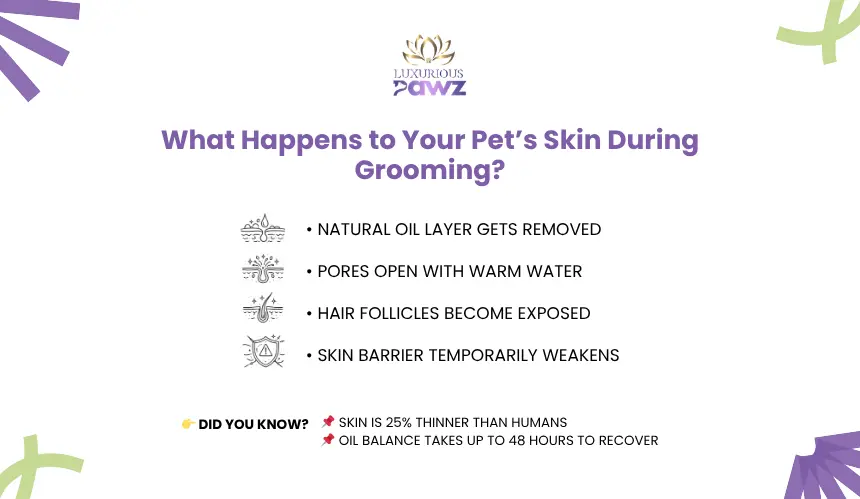
During grooming, the skin goes through multiple changes at once. It is exposed to water, friction, temperature shifts, and chemical ingredients.
- The natural oil layer gets partially removed
- Pores open due to warm water
- Hair follicles become more exposed
- The skin barrier temporarily weakens
If handled correctly, grooming supports skin health. If not, it disrupts the protective balance and leads to irritation.
Do you know? A dog’s skin is 25% thinner than human skin, making it more prone to irritation. The natural oil layer takes up to 48 hours to fully rebalance after bathing. Over 60% of grooming-related skin issues are linked to product misuse or residue |
What Are the Most Common Causes of Skin Irritation After Grooming in Pets?
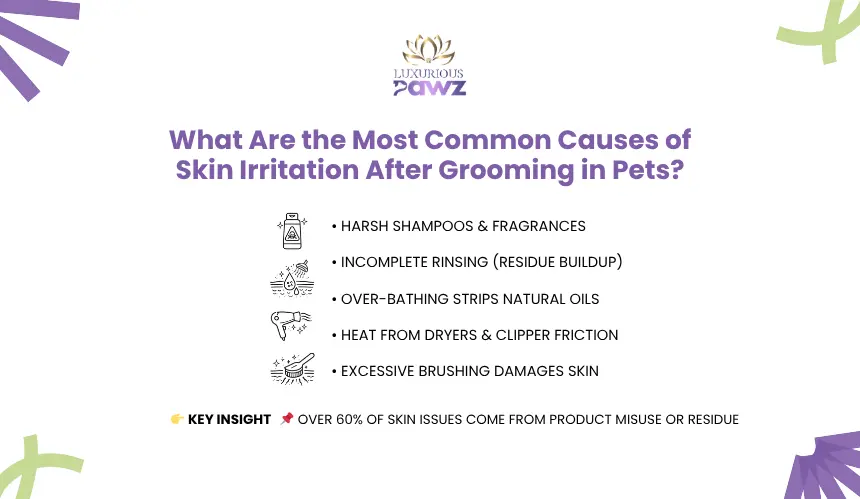
Skin irritation rarely comes from one single factor. It is usually a combination of product choice, technique, and frequency.
Primary Triggers
- Harsh shampoos with sulfates or artificial fragrance
- Incomplete rinsing leaves residue behind
- Over-bathing that strips natural oils
- High heat from dryers
- Dull clipper blades are causing friction
- Excessive brushing creates micro-abrasions
Secondary Contributors
- Pre-existing dry or sensitive skin
- Poor diet affects skin resilience
- Environmental factors like low humidity
Cause vs Impact Table
Skin Type | Reaction to Grooming | Recommended Care |
Sensitive skin | Redness and itching | Hypoallergenic products |
Dry skin | Flaking and tightness | Moisturizing shampoos |
Oily skin | Greasy buildup | Gentle cleansing formulas |
Allergy-prone | Rashes and swelling | Limited ingredient products |
Normal skin | Minimal to no irritation | Balanced grooming routine |
Infection-prone | Hot spots, odor, redness | Medicated shampoos and vet guidance |
Why Does My Pet Itch More After a Bath?
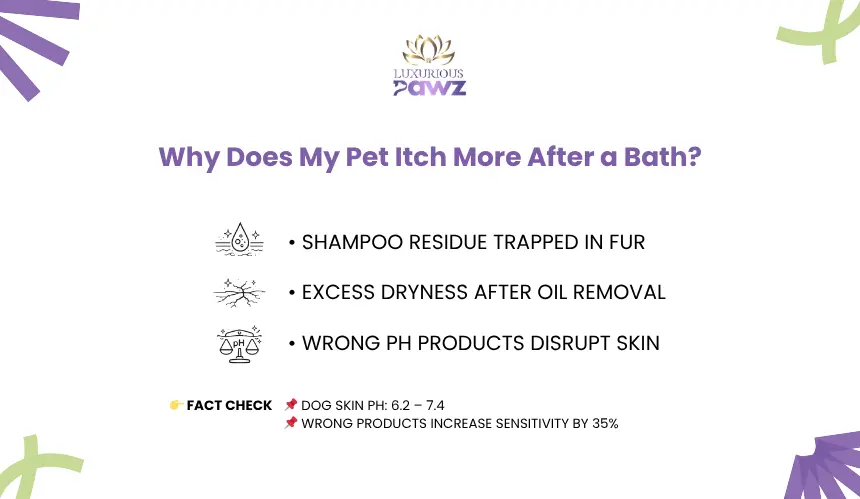
Post-bath itching is one of the clearest signs that the skin barrier has been disrupted.
This happens because:
- Shampoo residue stays trapped under dense fur
- The skin becomes too dry after oil removal
- The product pH does not match canine skin
Using the wrong pH shampoo can increase skin sensitivity by up to 35%, according to veterinary dermatology observations.
Fact Box: Dogs have a skin pH between 6.2 and 7.4, while many human products fall outside this range. This imbalance leads to irritation and itching shortly after grooming. |
Can Grooming Tools Cause Skin Damage in Pets?
Yes, tools are a major but often overlooked cause of irritation.
Tool-Related Risks
- Brushes with hard bristles scratch the skin’s surface
- Clippers generate heat and cause burns
- Dirty tools introduce bacteria
- Improper technique increases friction
Even when products are perfect, poor tool handling can still trigger irritation.
Do you know? Clipper blades can heat up to over 50°C within minutes, which is enough to irritate sensitive skin if not cooled. |
How to Identify the Type of Skin Irritation in Pets?
Recognizing the pattern helps you pinpoint the exact cause.
Common Symptoms and Their Meaning
- Red patches: friction or clipper irritation
- Flaky skin: dryness and oil loss
- Small bumps: follicle inflammation
- Excessive licking: localized discomfort
- Swelling: allergic reaction
Symptom Diagnosis Table
Symptom | Likely Cause | Severity Level |
Mild itching | Dryness | Low |
Redness | Tool irritation | Medium |
Bumps | Clipper burn | Medium |
Swelling | Allergy | High |
Open sores | Infection | Critical |
How to Fix Skin Irritation After Grooming in Pets?
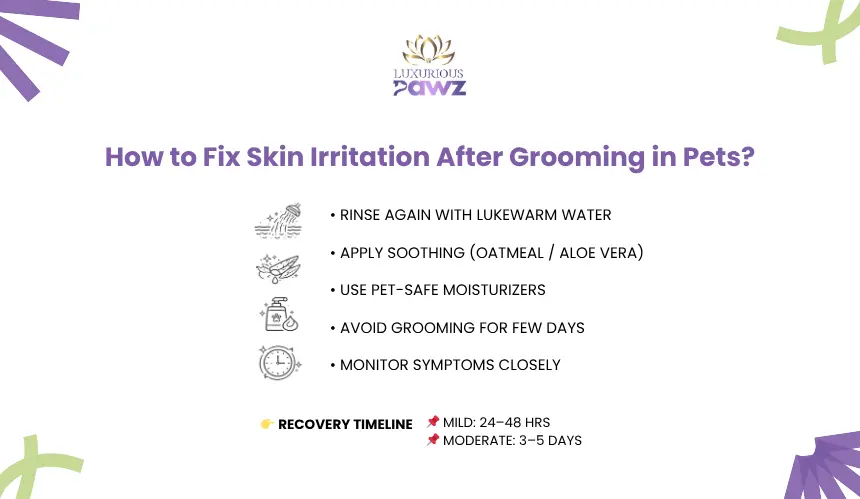
Fixing irritation requires immediate and gentle action. The goal is to restore the skin barrier without adding more stress.
Step-by-Step Recovery
- Rinse the coat again with lukewarm water
- Apply soothing treatments like oatmeal or aloe vera
- Keep the skin moisturized with pet-safe products
- Avoid brushing or grooming for a few days
- Monitor for worsening symptoms
Recovery Timeline
- Mild irritation: resolves in 24–48 hours
- Moderate irritation: improves within 3–5 days
- Severe cases: may require veterinary care
How to Prevent My Pet From Skin Irritation in Future Grooming Sessions
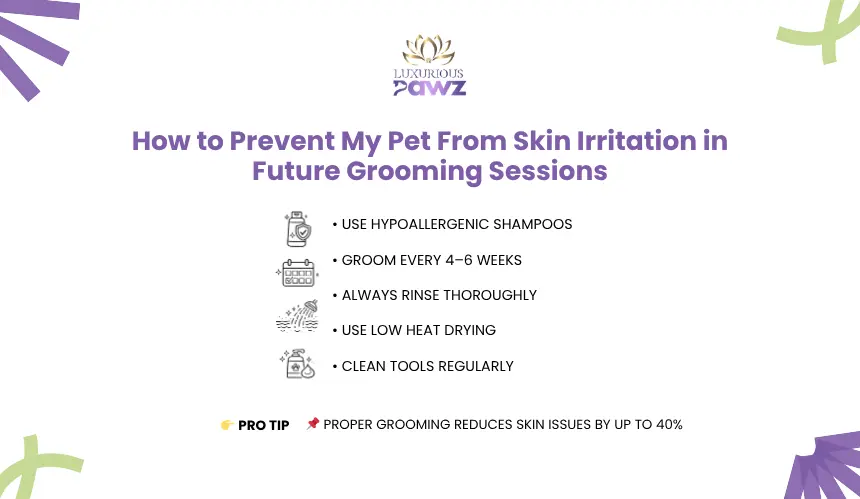
Prevention is always easier than treatment. A well-balanced grooming routine reduces the risk significantly.
Best Practices
- Use hypoallergenic, sulfate-free shampoos
- Maintain grooming frequency every 4–6 weeks
- Always rinse thoroughly
- Use lukewarm water only
- Dry gently with low heat
- Clean tools regularly
Do you know? Dogs groomed with proper techniques experience up to 40% fewer skin issues, according to grooming industry reports. |
Does Diet Affect My Pet’s Skin Reaction After Grooming?
Yes, diet plays a major role in how the skin responds to grooming.
A well-nourished pet has a stronger skin barrier, which reduces sensitivity.
Key Nutrients for Skin Health
- Omega-3 fatty acids improve hydration
- Protein supports skin repair
- Vitamin E reduces inflammation
- Zinc strengthens the skin barrier
Pets with balanced diets show noticeably fewer post-grooming reactions.
Nutrition Impact Table
Nutrient | Benefit for Skin |
Omega-3 | Reduces inflammation |
Protein | Repairs skin tissue |
Vitamin E | Protects against damage |
Zinc | Strengthens skin barrier |
When Should You Be Concerned for Your Pet?
Not all irritation is harmless. Some signs indicate deeper issues.
Warning Signs
- Irritation lasting more than 48 hours
- Bleeding or open wounds
- Severe swelling
- Strong odor from the skin
- Behavioral changes like aggression
These symptoms may indicate infection, allergies, or underlying skin conditions.
Can Professional Grooming Reduce Skin Irritation in Pets?
Professional groomers understand coat structure, skin sensitivity, and proper techniques. This reduces risks significantly.
However, quality matters.
What to Look For in a Groomer
- Uses high-quality, skin-safe products
- Maintains clean tools
- Adjusts techniques based on skin type
- Communicates openly about issues
A skilled groomer not only prevents irritation but can also detect early skin problems.
How Local Climate Can Cause Irritation in Pets
Local climate in areas like Altadena, Pasadena, and La Cañada Flintridge often brings warm, dry conditions that can strip moisture from a pet’s skin, leading to dryness and itching. In urban zones such as Glendale, Eagle Rock, and Highland Park, added heat and lower humidity can further increase skin sensitivity, especially for outdoor pets.
In places like Sunland, Tujunga, and Shadow Hills, dust and dry winds can irritate the skin and cause buildup on the coat. Meanwhile, Burbank, Montrose, and La Crescenta experience mild seasonal shifts that can disrupt the skin’s balance. These environmental changes make regular grooming and hydration essential to keep a pet’s skin healthy.
Give your pet the care it truly deserves with Luxurious Pawz, where grooming goes beyond routine and becomes a refined experience. With climate-aware treatments and premium, skin-safe products, every session is designed to protect, nourish, and elevate your pet’s skin health. Give your pet the care it truly deserves with a grooming experience designed to protect, nourish, and elevate skin health.
Frequently Asked Questions
Why does my pet scratch nonstop after grooming?
This usually happens due to dryness, leftover shampoo, or mild allergic reactions. When natural oils are stripped or residue stays on the skin, it creates irritation that triggers constant scratching. Heat from dryers or friction from tools can also make the skin more sensitive.
Is frequent grooming bad for pets?
Yes, over-grooming can remove essential oils that protect and hydrate the skin. This weakens the skin barrier and makes it more prone to dryness, itching, and irritation. A balanced grooming schedule helps maintain both cleanliness and skin health.
Can I use natural remedies for irritation?
Yes, natural remedies like oatmeal and aloe vera are commonly used to calm irritated skin. They help reduce inflammation, soothe itching, and restore moisture without harsh side effects. Always ensure the ingredients are safe and pet-friendly before use.
How long should I wait before grooming again?
Yes, early grooming helps them get used to brushing and handling. Puppy coats are softer and require gentler tools and shorter sessions.
Are some breeds more prone to irritation?
Yes, breeds with sensitive or thin skin are more likely to experience irritation after grooming. Pets with allergies or specific coat types also react more easily to products and techniques. Understanding breed-specific needs helps reduce the risk.