
- admin
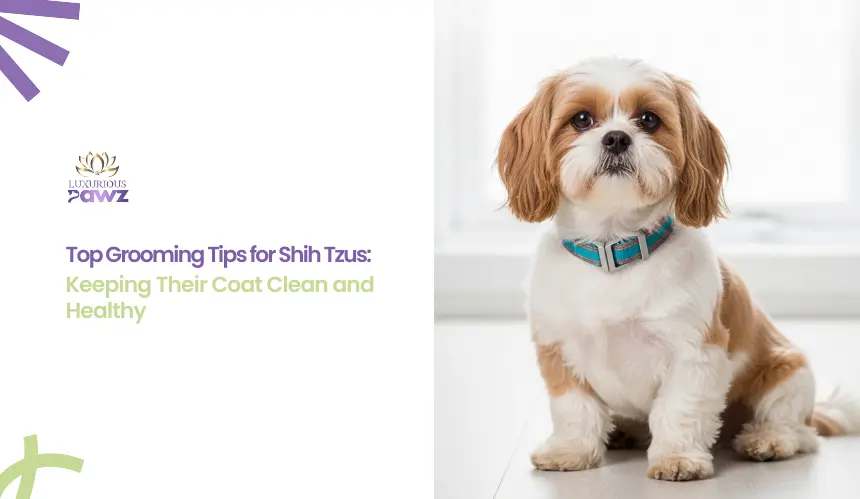
Top Grooming Tips for Shih Tzus: Keeping Their Coat Clean and Healthy
Key Takeaways:
Regular daily, weekly, and monthly grooming prevents matting, skin irritation, and dental disease. Because their hair grows continuously, skipping care quickly leads to knots and hygiene problems. Structured routines reduce stress and make grooming manageable. Prevention is far easier than correcting severe matting or infections.
Using the correct brushes, combs, and detangling products ensures the coat is maintained safely. Line brushing from the skin outward prevents hidden mats close to the skin. Surface brushing alone is ineffective. Technique directly impacts coat health and skin comfort.
Pre-bath brushing, pH-balanced canine shampoo, thorough rinsing, and complete drying are critical. Improper bathing can worsen matting and cause dryness or irritation. Moisture left near the skin increases infection risk. Structured bathing supports long-term coat integrity.
Shih Tzu grooming includes tear stain management, ear care, and dental hygiene. Their brachycephalic face and small jaw structure increase risks of staining and periodontal disease. Preventive care reduces infections and systemic health complications. Grooming supports overall well-being, not just appearance.
Choosing between a puppy cut and a long show coat depends on time, environment, and maintenance ability. Longer coats demand daily disciplined care. Shorter trims reduce mat risk and grooming time. Healthy grooming aligns with realistic owner commitment. |
Shih Tzus are known for their flowing coats and expressive faces, but that signature look requires structured care. Their hair grows continuously, similar to human hair, and without consistent maintenance it tangles quickly, traps debris, and irritates the skin. Proper grooming is not only about appearance. It protects skin integrity, reduces infection risk, and supports overall comfort.
Fact: Shih Tzus were bred for Chinese royalty, and their long, flowing coat symbolized elegance and status. This emphasizes that their coat is central to the breed’s identity, not just cosmetic. Their high grooming needs are built into their design. Proper coat care preserves both their health and historical heritage. |
This guide explains exactly how to maintain a Shih Tzu’s coat using breed-specific techniques, appropriate tools, and a realistic schedule.
Why Do Shih Tzus Require Specialized Grooming Care?
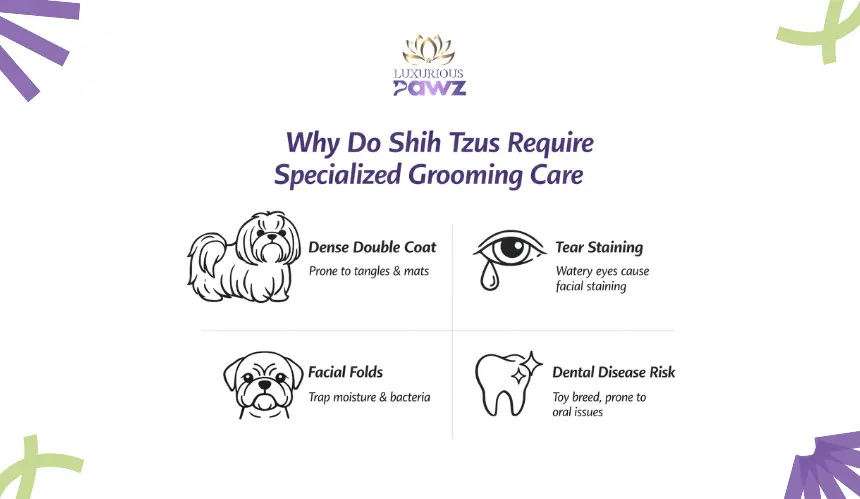
Shih Tzus have a dense double coat made of a soft undercoat and a longer outer layer. Unlike short-haired breeds that shed out loose fur easily, this breed’s loose strands remain trapped within the coat, creating knots close to the skin.
Because they are brachycephalic, they are prone to tear overflow, which leads to staining around the eyes. Their compact facial structure also allows moisture to collect in folds around the muzzle, increasing bacterial growth if not cleaned properly.
Toy breeds are particularly vulnerable to periodontal disease. According to the American Veterinary Dental College, over 80 percent of dogs show signs of dental disease by age three, with small breeds at higher risk. Grooming for a Shih Tzu therefore includes coat care, facial hygiene, ear maintenance, and dental attention.
What Is the Ideal Grooming Routine for a Shih Tzu
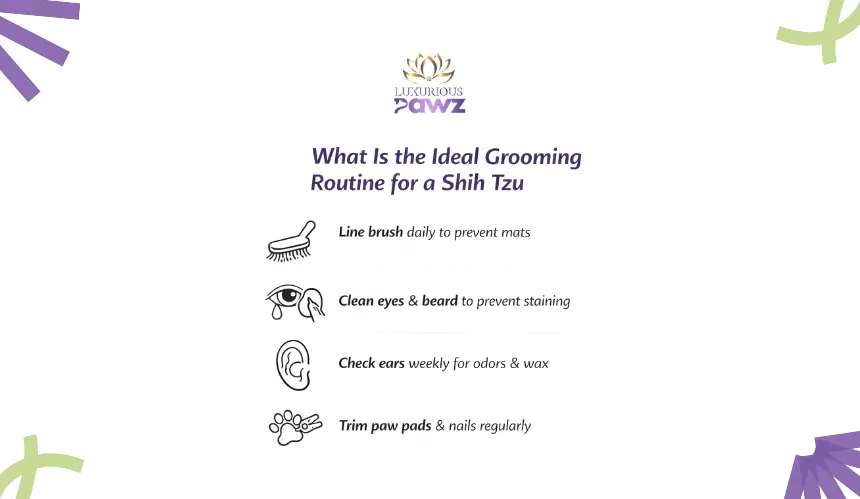
Consistency prevents matting and reduces stress during longer sessions.
Daily Maintenance Tasks
- Perform line brushing by separating the coat into horizontal sections and brushing from the skin outward.
- Wipe the eye corners with a vet-approved saline solution to reduce porphyrin buildup.
- Clean the beard area after meals to prevent odor and discoloration.
Weekly Grooming Essentials
- Comb through the entire coat using a stainless steel comb to detect hidden knots.
- Inspect ears for redness, odor, or excess wax.
- Trim hair between paw pads to improve traction and reduce debris collection.
Monthly Care Requirements
- Trim nails every three to four weeks. Overgrown nails alter gait mechanics.
- Perform a sanitary trim around the rear area.
- Monitor for scooting or discomfort that may indicate anal gland fullness.
How to Bathe a Shih Tzus: Step-by-Step
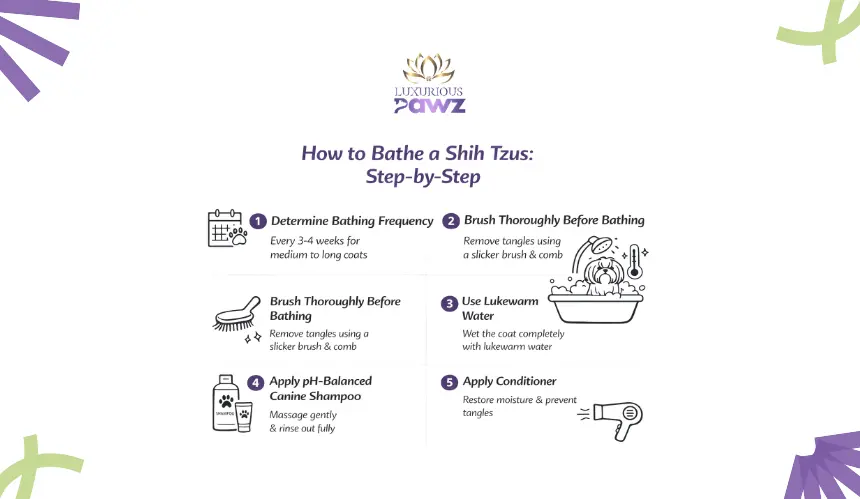
Bathing a Shih Tzu is not just about keeping the coat smelling fresh. Because this breed has continuously growing hair and a dense double layer, improper washing can lead to matting, dryness, or skin irritation. A structured bathing process protects the skin barrier, maintains coat texture, and prevents post-bath tangles. Follow these steps to ensure the bath supports both hygiene and long-term coat health.
Step 1: Determine the Right Bathing Frequency
Bathe a Shih Tzu with a medium to long coat every three to four weeks. If the coat is kept in a shorter trim, the interval can be adjusted slightly based on outdoor activity, coat texture, and exposure to dirt. Avoid excessive bathing, as it weakens the skin barrier and strips protective oils.
Step 2: Brush Thoroughly Before Bathing
Remove all tangles and small knots using a slicker brush followed by a stainless steel comb. Water tightens existing mats, making them harder to remove later. Ensuring the coat is fully detangled before washing prevents compacted knots near the skin.
Fact: When mats get wet, they tighten and harden as they dry, similar to felt fabric. This makes post-bath detangling significantly more painful if brushing was skipped beforehand. It reinforces the importance of pre-bath brushing with a practical consequence. |
Step 3: Use Lukewarm Water
Wet the coat completely using lukewarm water. Make sure water penetrates through the dense outer layer and reaches the undercoat. Incomplete saturation leads to uneven cleansing.
Step 4: Apply a pH-Balanced Canine Shampoo
Use a shampoo formulated specifically for dogs. The skin of a Shih Tzu has a different pH level than human skin. Human shampoos disrupt the acid mantle and increase transepidermal water loss, which can lead to dryness and irritation.
Dilute the shampoo slightly with water for even distribution. Massage gently into the coat without scrubbing harshly.
Step 5: Rinse Completely
Rinse until the water runs clear and no residue remains. Leftover product can cause itching and flaking. Pay close attention to the chest, armpits, and belly where residue often remains trapped.
Step 6: Apply Conditioner
Use a canine conditioner to restore moisture and maintain coat elasticity. Conditioner reduces friction during brushing and helps preserve the smooth texture associated with the breed. Distribute evenly and rinse thoroughly after the recommended contact time.
Step 7: Remove Excess Water
Gently squeeze the coat with your hands to remove excess moisture. Use an absorbent towel to blot rather than rub. Rubbing causes tangling and friction damage.
Step 8: Blow Dry Thoroughly
Dry the coat using a blow dryer set to moderate heat. Direct airflow while brushing in sections to ensure the undercoat dries fully. Moisture trapped near the skin creates an environment that encourages fungal growth and hotspots.
Continue drying until the coat is completely dry from root to tip.
Best Brushes and Tools for a Shih Tzu Coat
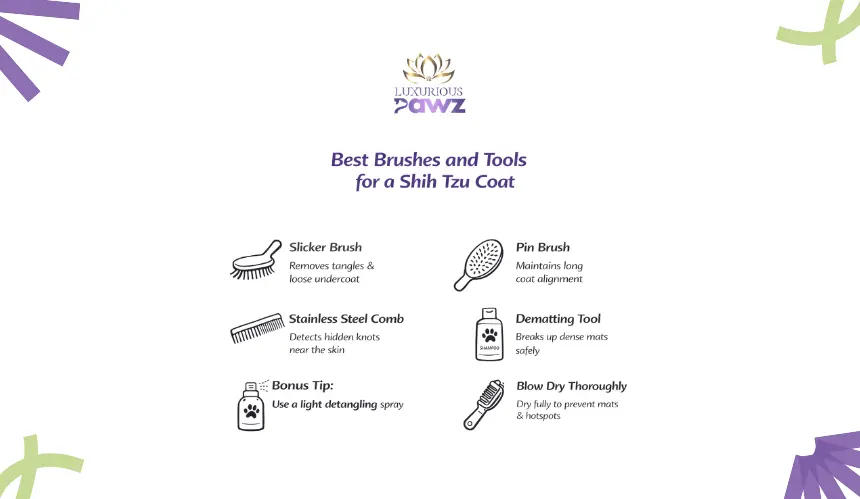
Slicker Brush
Definition:
A slicker brush is a grooming tool designed with fine, slightly angled wire bristles that penetrate dense double coats. It is specifically useful for breeds like Shih Tzus that have continuously growing hair. The structure allows it to reach beneath the surface layer without cutting the coat.
Primary Use:
Its main function is to remove surface tangles and separate compact sections of hair before they turn into mats. It prepares the coat for detailed combing. It also helps lift trapped loose hair from the undercoat.
Coat Length Suitability:
Most effective on medium to long Shih Tzu coats. It works well for both puppy cuts and longer maintained styles. Very short trims may not require daily slicker use.
Key Benefits:
Reduces early mat formation, improves coat volume, and keeps the hair aerated. It supports healthier skin by preventing dense knot buildup. Regular use improves grooming efficiency over time.
Technique Recommendation:
Use short, gentle strokes while line brushing in small sections. Always brush from the skin outward rather than skimming the top layer. Work methodically across the entire body.
Common Mistakes to Avoid:
Pressing too hard against the skin can cause irritation. Brushing only the surface layer leaves hidden mats underneath. Skipping high-friction areas like behind the ears leads to knot formation.
Pin Brush
A pin brush features rounded metal pins spaced evenly across a cushioned base. It is designed to smooth and maintain longer coat strands. This tool is more for maintenance than heavy detangling.
Primary Use:
It maintains coat alignment after tangles have been removed. It helps keep long hair flowing and neat. It is ideal for daily light grooming sessions.
Coat Length Suitability:
Best suited for long show coats and properly maintained puppy cuts. It is less effective on compact mats. It performs well on coats that are already detangled.
Key Benefits:
Distributes natural oils along the hair shaft, which enhances shine. Reduces static and keeps the coat looking polished. Supports overall coat presentation.
Technique Recommendation:
Brush gently in the direction of hair growth. Ensure all knots are removed beforehand. Use controlled strokes without rushing.
Common Mistakes to Avoid:
Using it on matted areas will not solve tangles. Assuming it replaces a slicker brush leads to incomplete grooming. Applying excessive force may break hair strands.
Stainless Steel Comb
A stainless steel comb has both coarse and fine teeth to address different coat densities. It is a precision grooming tool. It confirms whether the coat is fully detangled.
Primary Use:
Its primary role is to detect hidden mats close to the skin. It acts as a final verification step after brushing. It ensures complete smoothness from root to tip.
Coat Length Suitability:
Appropriate for all Shih Tzu coat lengths. It is especially important for longer coats prone to hidden knots. Even shorter trims benefit from routine comb checks.
Key Benefits:
Improves grooming accuracy and prevents unnoticed mat development. Encourages thorough coat maintenance. Reduces the likelihood of painful compacted tangles.
Technique Recommendation:
Glide the comb slowly from the skin to the ends. If resistance is felt, stop and return to brushing that section. Work in organized sections to avoid skipping areas.
Common Mistakes to Avoid:
Forcing the comb through resistance causes discomfort. Skipping the comb step leaves hidden mats behind. Ignoring friction zones increases mat risk.
Dematting Tool
A dematting tool is designed with specialized blades that break apart tight knots. It is intended for controlled correction rather than routine brushing. It should be used carefully and sparingly.
Primary Use:
It targets isolated, compact mats that cannot be separated with a brush or comb. It prevents the need for shaving large areas. It is a problem-solving tool.
Coat Length Suitability:
Best used on medium to long coats with specific problem areas. Not needed for routine maintenance. Should not be used across the entire coat.
Key Benefits:
Allows selective removal of dense tangles. Preserves surrounding coat length. Reduces coat loss when used properly.
Technique Recommendation:
Hold the hair near the base to reduce skin tension. Work slowly on one knot at a time. Maintain controlled, gentle motions.
Common Mistakes to Avoid:
Overusing across wide areas thins the coat unevenly. Pulling aggressively causes discomfort. Using it as a daily grooming tool damages coat texture.
Detangling Spray
A detangling spray is a conditioning mist formulated to reduce friction during brushing. It supports coat elasticity. It is a supplemental grooming aid.
Primary Use:
Applied before brushing to improve glide and minimize breakage. It prepares dry coats for easier handling. It supports smoother grooming sessions.
Coat Length Suitability:
Most beneficial for medium to long Shih Tzu coats. It helps manage static in longer hair. Short trims may require minimal use.
Key Benefits:
Reduces hair breakage and split ends. Maintains softness and flexibility. Enhances overall brushing efficiency.
Technique Recommendation:
Lightly mist the coat before sectioning. Distribute evenly without soaking the hair. Allow slight absorption before brushing.
Common Mistakes to Avoid:
Applying to heavily matted areas without manual separation is ineffective. Oversaturating the coat makes brushing difficult. Relying on spray alone without proper brushing reduces results.
How Do You Prevent Matting in Shih Tzus?
Matting in Shih Tzus develops quickly because their fine, continuously growing hair tangles easily and traps loose strands within the double coat. Friction, moisture, and movement cause strands to wrap around each other, especially in high-contact areas. Without structured maintenance, small knots tighten close to the skin and become difficult to remove safely.
Matting most commonly forms behind the ears, under collars or harness straps, inside the armpits, around the neck, and along the inner thighs. These zones experience constant rubbing during walking, lying down, and scratching. Humidity further increases the risk because damp hair expands and binds together more easily than dry hair.
Effective prevention requires consistent technique rather than occasional brushing.
Brush systematically using the line brushing method.
Part the coat into horizontal layers and brush from the skin outward in small sections. Surface brushing alone leaves compact tangles underneath, which later develop into dense mats. Always follow brushing with a stainless steel comb to confirm smoothness from root to tip.
Increase brushing frequency during damp weather.
Rain, morning dew, and high humidity soften the hair shaft, making it more prone to knotting. After outdoor exposure in wet conditions, dry the coat fully and perform a light brush-through once the hair is dry.
Apply a light detangling spray before grooming.
A conditioning mist reduces friction between hair strands and minimizes breakage. It also helps the brush glide through dense areas more efficiently. Use a fine mist rather than saturating the coat.
Remove collars and harnesses immediately after walks.
Constant pressure from straps compresses the coat and creates friction mats. Allowing the coat to remain flattened for hours increases knot formation along the neckline and chest.
Maintain a consistent professional grooming schedule.
Booking grooming every four to six weeks helps control coat length and ensures early mat detection. Professional trimming in friction zones reduces the likelihood of compact buildup.
When mats are ignored, they tighten and restrict airflow to the skin. This creates a warm, moist environment that may lead to irritation, inflammation, and bacterial growth. Preventive care protects both the appearance of the coat and the health of the skin underneath.
Should You Keep a Shih Tzu in a Puppy Cut or Long Show Coat?
Choosing between a puppy cut and a long show coat depends on your lifestyle, grooming commitment, and your Shih Tzu’s daily environment. Both styles can be healthy when maintained correctly, but the level of maintenance differs significantly. Coat length directly influences brushing time, bathing frequency, mat risk, and professional grooming needs.
Puppy Cut Maintenance Level
A puppy cut typically keeps the coat trimmed to about one to two inches in length across the body, with slightly longer hair around the face and ears if desired. This style reduces the surface area where tangles can form and makes daily upkeep more manageable.
Although brushing is still required, sessions are shorter and more forgiving if a day is missed. Mats are less likely to tighten close to the skin because shorter hair does not wrap around itself as easily. Bathing and drying also become faster, which lowers the risk of moisture remaining trapped in the undercoat.
This style is ideal for active households, families with children, or owners who prefer a practical routine without compromising the breed’s soft appearance.
Show Coat Requirements
A long show coat allows the hair to grow to floor length, creating the signature flowing appearance associated with the breed standard. This style requires disciplined daily line brushing to prevent knots from forming at the roots.
Owners maintaining a full coat often use wrapping techniques, where sections of hair are carefully protected in soft wrapping papers to reduce friction and breakage. This process preserves coat length and shine but requires patience and consistency. Bathing may occur more frequently to maintain coat cleanliness and texture.
Without strict maintenance, a long coat quickly develops dense mats in high-friction zones. This grooming style is best suited for owners who can dedicate time every day to coat care.
Climate Considerations
Many owners assume shaving the coat very short improves heat tolerance. In reality, dogs regulate body temperature primarily through panting and limited sweat glands in their paw pads. Removing too much coat does not significantly enhance cooling and may expose sensitive skin to sunburn or irritation.
A moderately trimmed coat supports airflow while still protecting the skin from environmental exposure. In hot climates, maintaining a manageable length rather than shaving excessively short helps balance comfort and protection.
How to Manage Tear Stains in Shih Tzus Safely
Tear staining is one of the most common cosmetic and hygiene concerns in Shih Tzus. Because they are a brachycephalic breed with shallow eye sockets and prominent eyes, tears often overflow onto the facial hair instead of draining properly through the tear ducts. This condition, known as epiphora, leads to reddish or brown discoloration caused by porphyrins, which are iron-containing molecules naturally present in tears.
While mild staining is common, persistent moisture around the eyes can also create an environment for yeast and bacterial growth. Proper management focuses on hygiene, underlying causes, and coat maintenance.
Clean Beneath the Eyes Daily
Gently wipe the under-eye area once or twice daily using a soft cotton pad dampened with sterile saline solution or a veterinarian-approved eye cleanser. This removes tear residue before it oxidizes and darkens the hair.
Always wipe outward from the inner corner of the eye and avoid direct contact with the eyeball. Keeping the area dry after cleaning is equally important because constant moisture promotes microbial growth.
Consistency matters more than intensity. Gentle daily cleaning prevents buildup more effectively than aggressive scrubbing done occasionally.
Keep Facial Hair Properly Trimmed
Long hair around the eyes can irritate the cornea and stimulate additional tearing. Trimming the hair slightly around the inner corners reduces friction and improves airflow.
If you prefer a longer facial style, ensure the hair is brushed away from the eyes and secured safely if necessary. Mats near the eyes hold moisture against the skin and worsen staining over time.
Regular grooming of the muzzle area also prevents trapped food particles from combining with tear residue.
Monitor Water Quality and Diet
High mineral content in tap water may contribute to staining in some dogs. Providing filtered water can reduce mineral intake that may intensify discoloration.
Nutrition also influences tear production and skin health. Diets rich in omega-3 fatty acids support skin barrier function and may help reduce inflammatory triggers. Sudden dietary changes, however, should always be discussed with a veterinarian.
Watch for Signs That Require Veterinary Attention
Clear, watery tears are common in this breed. Thick, yellow, or green discharge is not normal and may indicate infection.
Other warning signs include:
- Redness around the eyes
- Squinting or frequent blinking
- Pawing at the face
- Swelling near the tear ducts
Persistent staining despite daily care may signal blocked tear ducts, allergies, eyelid abnormalities, or dental issues affecting sinus drainage. A veterinarian can perform diagnostic testing to identify structural or medical causes.
Ear and Dental Hygiene for Shih Tzus
Proper ear and dental care plays a critical role in maintaining long-term health in Shih Tzus. Due to their physical structure and toy breed characteristics, they are more prone to ear infections and periodontal disease than many other breeds. Consistent preventive care reduces discomfort, lowers veterinary expenses, and protects overall well-being.
Ear Hygiene
Regular ear maintenance helps prevent infections that can develop quickly in this breed. Their ear structure limits airflow, making routine inspection essential rather than optional.
Why It Is Important
- Floppy ears reduce airflow inside the ear canal.
- Inner ear hair traps moisture and debris.
- Warm, damp conditions increase the risk of yeast and bacterial infections.
What Action Should be Taken
- Inspect ears weekly for redness, odor, or wax buildup.
- Clean gently with a veterinarian-approved ear solution.
- Use a cotton pad and avoid inserting objects deep into the canal.
- Dry ears completely after bathing or water exposure.
Warning Signs
- Frequent head shaking or scratching.
- Dark discharge or foul smell.
- Swelling, redness, or pain when touched.
Dental Hygiene
Oral care is a foundational part of grooming for Shih Tzus. Because they are a small toy breed with compact jaw structure, dental maintenance requires consistent attention rather than occasional care. Ignoring oral hygiene can lead to plaque accumulation, gum inflammation, and long-term systemic health concerns.
Why It Is Important
- Small jaw structure causes teeth crowding.
- Plaque accumulates quickly in toy breeds.
- Untreated dental disease can affect internal organs.
What Action Should Be Taken
- Brush teeth at least three times per week using canine toothpaste.
- Introduce brushing gradually for better tolerance.
- Use Veterinary Oral Health Council approved dental chews as support.
Warning Signs
- Persistent bad breath.
- Bleeding or inflamed gums.
- Difficulty chewing or visible tartar buildup.
Frequently Asked Questions
At What Age Should You Start Grooming a Shih Tzu Puppy?
You should begin gentle grooming routines as early as 8 weeks of age. Early exposure helps puppies become desensitized to brushing, nail trimming, facial cleaning, and blow drying. Introduce tools gradually and keep sessions short (5–10 minutes). Early grooming training significantly reduces anxiety in adulthood and makes professional grooming appointments easier.
How Long Can a Shih Tzu Safely Go Without Grooming?
A Shih Tzu should not go longer than 6–8 weeks without professional grooming, even if maintained at home. Without structured brushing, mats can form in as little as 48–72 hours, particularly behind the ears and under the legs. Severe matting may require shaving, which can irritate the skin and increase sun sensitivity.
Can Shih Tzus Develop Skin Problems From Poor Grooming?
Yes. Inadequate grooming can lead to: Hotspots (acute moist dermatitis), Fungal infections, Bacterial skin infections, Parasite concealment (fleas hide easily in dense coats), Seborrhea due to product buildup. Dense mats reduce airflow to the skin and trap moisture, creating an environment that promotes microbial growth.
Do Shih Tzus Shed Less Than Other Breeds?
Shih Tzus are considered low-shedding, but they are not non-shedding. Because their hair grows continuously and loose strands remain trapped in the coat, shedding appears minimal. However, this trapped hair contributes directly to mat formation if not brushed out regularly.