
- admin
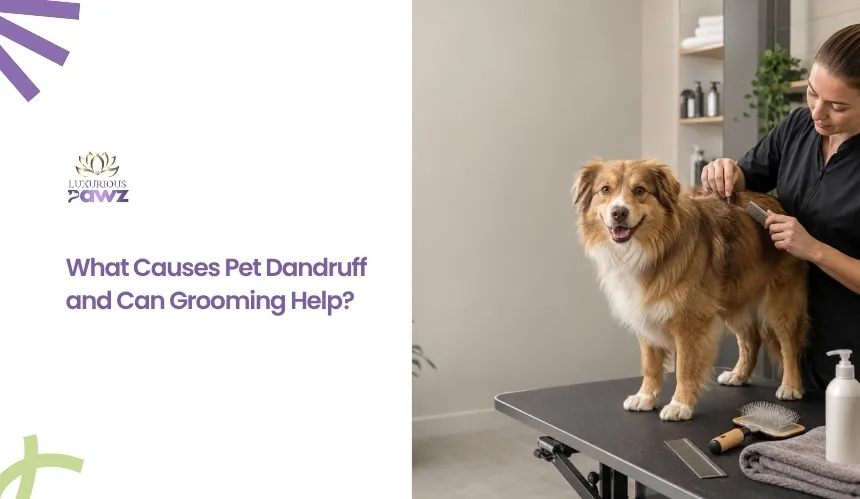
What Causes Pet Dandruff and Can Grooming Help?
Key Takeaways
|
Pet dandruff appears as white or gray skin flakes trapped in a dog’s or cat’s coat. While occasional flaking may result from dry skin or coat buildup, persistent dandruff can indicate allergies, parasites, infection, poor grooming ability, or another health condition.
Proper grooming can remove loose flakes, reduce irritating buildup, and support the skin barrier. However, grooming cannot cure dandruff caused by an underlying medical problem.
Common Causes of Pet Dandruff
Pet dandruff develops when dead skin cells accumulate or shed faster than normal. The flakes may be dry and powdery, or they may appear greasy and remain attached to the hair.
Do You Know?
A large veterinary-record study found that 12.58% of dogs had a skin disorder recorded, making skin conditions the second most common grouped health problem in the study. This shows why recurring flakes, irritation, odor, or coat changes should not automatically be dismissed as a minor grooming concern.
How Do Dry Skin and Environmental Conditions Cause Dandruff?
Low humidity can remove moisture from the skin, particularly during colder months when indoor heating is used frequently. Rapid temperature changes may also affect the balance of natural oils that protect the skin and coat.
Bathing too frequently can produce a similar result. Strong detergents, hot water, incomplete rinsing, and products formulated for people may disrupt the pet’s protective skin barrier. Human shampoos are generally unsuitable because pet skin has a different structure and pH balance.
Hydration also supports normal skin function. However, dandruff alone does not prove that a pet is dehydrated. Owners should consider water intake alongside other signs, including dry gums, reduced energy, appetite changes, or unusual thirst.
A veterinarian should assess sudden or severe flaking rather than assuming that weather is the only cause. Environmental dryness may make flakes more visible, but it can also worsen an existing skin disorder.
Can Allergies, Parasites, and Skin Conditions Cause Flakes?
Food sensitivities and environmental allergens can trigger inflammation, itching, and changes in skin oil production. Affected pets may scratch, chew, lick, or rub their skin, causing additional damage and excessive shedding of skin cells.
Fleas, ticks, lice, and mites can also irritate the skin. Some pets develop strong allergic reactions to parasite bites, while mite infestations may cause intense itching, crusting, hair loss, and oily dandruff.
Bacterial and yeast infections may produce flakes alongside redness, odor, greasy skin, sores, or thickened areas. Ringworm, despite its name, is a fungal infection that may cause scaling and patchy hair loss in cats and dogs.
Seborrhea is another potential cause. This condition disrupts normal skin-cell renewal and may produce dry scaling, excessive oil, or a combination of both. Primary seborrhea is uncommon, while secondary seborrhea is more frequently associated with allergies, parasites, infections, hormonal disorders, or other diseases.
Do You Know?
Cornell University explains that feline ringworm can cause dandruff, scaling, crusting, hair loss, and excessive scratching. Even with treatment, completely clearing the infection may require at least six weeks. Without treatment, an otherwise healthy cat may take approximately nine months to one year to recover, while remaining capable of spreading the fungal infection.
How Do Diet, Age, and Health Affect the Skin?
A complete and balanced diet supplies protein, essential fatty acids, vitamins, and minerals needed for skin-cell production and coat growth. Nutritional deficiencies are more likely when pets receive unbalanced homemade diets, inappropriate supplements, or food that does not meet their nutritional requirements.
Nutritional disease is less common in pets eating properly formulated commercial diets. Owners should therefore avoid adding oils, vitamins, zinc, or other supplements without veterinary guidance, since excessive supplementation may create new health risks.
Older pets may develop arthritis, reduced flexibility, or chronic pain that limits their ability to clean difficult areas. Overweight cats may struggle to reach their lower back and the base of the tail, allowing oil, dead hair, and skin flakes to accumulate.
Changes in grooming behavior may also reflect illness. Hormonal and metabolic disordersH can affect skin thickness, oil production, hair growth, and shedding. Hypothyroidism in dogs and hyperthyroidism in cats are examples of conditions that may change coat quality, although dandruff cannot confirm either diagnosis.
Do You Know?
The Association for Pet Obesity Prevention reported that 59% of dogs and 61% of cats evaluated by veterinary professionals in 2022 were classified as overweight or having obesity. Excess weight can make it harder for some pets, particularly cats, to reach the lower back and tail area during self-grooming, allowing oil, shed hair, and skin flakes to collect.
How Grooming Helps Control Pet Dandruff
Grooming supports dandruff management by removing accumulated flakes, dead hair, dirt, and allergens from the coat. Its effectiveness depends on the cause of the flaking, the pet’s coat type, and the products used.
Sunland sits near the foothills of the San Gabriel and Verdugo Mountains, where dogs may regularly encounter dust, dry vegetation, pollen, and loose outdoor debris during walks and backyard activity. Regular dog grooming in Sunland, CA removes trapped particles, controls seasonal shedding, prevents matting, and allows the skin to be checked for flakes, irritation, fleas, or small injuries.
Grooming is also valuable during Southern California wildfire smoke or ash events because particles can settle on a pet’s coat and paws, although outdoor activity should be limited when air-quality officials issue warnings.
How Does Brushing Remove Flakes and Distribute Natural Oils?
Brushing lifts loose skin cells and shed hair before they form visible deposits or mats. It also exposes the skin, allowing owners or groomers to notice redness, parasites, crusts, wounds, or unusual oiliness that may otherwise remain hidden beneath the coat.
Appropriate brushing distributes natural oils from the skin along the hair shafts. This can improve coat texture while reducing concentrated oily areas where debris and flakes collect. Cats with hair also benefit because brushing supplements normal self-grooming and removes dead skin cells.
The correct brush and schedule depend on coat length, density, texture, and sensitivity. Long, curly, or double coats may need more frequent attention than short coats. Aggressive brushing should be avoided because scraping already inflamed skin can increase irritation.
Matted fur also requires careful handling. Tight mats pull on the skin, trap moisture, restrict airflow, and conceal sores or infection. Severe mats should be removed by a professional rather than cut with household scissors, which can easily injure folded skin beneath the coat.
Can Pet-Safe Bathing Reduce Dandruff?
Bathing removes dirt, excess oil, environmental allergens, dead skin cells, and material left by excessive shedding. A gentle pet-specific shampoo may improve mild dryness when used at an appropriate frequency and rinsed thoroughly.
Bathing can also make dandruff worse when it is performed too often or with unsuitable products. Hot water, fragranced formulas, human shampoo, and shampoo residue may strip protective oils or irritate sensitive skin. Routine products should be formulated specifically for the animal being bathed.
Medicated shampoos are different from ordinary grooming products. Antibacterial, antifungal, antiseborrheic, and antiparasitic formulas are selected according to the diagnosed condition and may require a specific contact time before rinsing.
These products should be used according to veterinary instructions. A shampoo that benefits one type of skin disorder may irritate another, and some ingredients that are appropriate for dogs can be unsafe for cats. Thorough rinsing is especially important because remaining product may cause irritation or be swallowed during self-grooming.
Sunland has relatively warm conditions and receives limited annual rainfall, which can contribute to dry skin and make unsuitable bathing routines more irritating for pets. For dandruff-prone dogs and cats, pet bathing in Sunland, CA allows groomers to control water temperature, choose moisturizing pet-safe products, and rinse away shampoo residue thoroughly.
This approach removes loose flakes and excess oil without unnecessarily stripping the protective oils that support healthy skin and coat condition.
How Can Professional Grooming Reveal Skin Concerns?
A professional groomer works closely with the coat and may notice changes that are difficult to see during routine petting. Flakes concentrated in one area, flea debris, tender skin, unusual odor, thinning hair, lumps, scabs, or discharge can signal that the problem needs further evaluation.
Groomers can also adjust brushing pressure, bathing frequency, drying temperature, and product selection according to the pet’s coat and skin condition. This reduces the chance of worsening dryness through harsh handling or unnecessary bathing.
Professional grooming does not replace veterinary diagnosis. Groomers cannot determine whether dandruff comes from allergies, hormonal disease, parasites, or infection simply by looking at the flakes.
Their observations can still provide valuable information. Details about the location, texture, odor, severity, and recurrence of the dandruff may help the owner explain the problem accurately during a veterinary appointment.
When Pet Dandruff Needs More Than Grooming
Mild flakes without itching or inflammation may improve through gentle brushing and an appropriate bathing routine. Dandruff accompanied by discomfort or other physical changes requires greater caution.
What Signs May Indicate a Medical Problem?
A veterinary assessment is appropriate when dandruff persists, returns quickly after grooming, spreads across the body, or becomes increasingly greasy. Owners should also watch for symptoms that suggest inflammation, parasites, infection, pain, or systemic illness.
Concerning signs include:
- Persistent scratching, licking, chewing, or rubbing
- Hair loss, bald patches, crusts, or open sores
- Red, swollen, thickened, or unusually dark skin
- Greasy flakes, waxy buildup, or a strong odor
- Fleas, ticks, mites, or moving particles in the coat
- Appetite, thirst, weight, energy, or behavior changes
Skin disease cannot usually be diagnosed from appearance alone. Veterinary testing may include skin scrapings, coat examination, cytology, fungal testing, parasite checks, bloodwork, or diet assessment, depending on the symptoms.
Rapid attention is particularly important when the pet has raw skin, widespread hair loss, intense itching, bleeding, swelling, pus, or a strong odor. Delayed treatment may allow secondary infection and self-inflicted skin damage to progress.
How Can Owners Create a Safe Skin and Coat Care Routine?
A safe routine should match the pet’s species, coat type, age, activity level, and medical needs. The goal is to keep the coat clean and manageable without stripping natural oils or concealing a recurring condition.
Owners can support routine skin care by:
- Brushing with tools designed for the coat type
- Checking the skin during every grooming session
- Using pet-specific shampoo at an appropriate frequency
- Rinsing shampoo and conditioner completely
- Maintaining veterinarian-recommended parasite prevention
- Feeding a complete and balanced diet
- Scheduling veterinary care when symptoms persist
Owners should not begin medicated shampoos, supplements, elimination diets, or home remedies solely because flakes are visible. Dandruff has several possible causes, and treatment should address the mechanism producing it rather than only removing the surface flakes.
Why Grooming and Veterinary Care Have Different Roles
Grooming can reduce visible dandruff when flakes result from loose skin cells, inadequate coat care, mild dryness, or product buildup. It also keeps the coat accessible for regular skin checks and may reveal abnormalities before they become severe.
Veterinary care becomes necessary when dandruff reflects inflammation, infection, parasites, allergies, pain, nutritional imbalance, or systemic disease. The most effective approach combines appropriate grooming with diagnosis and targeted treatment when the skin does not return to a healthy condition.
Give your pet a cleaner, healthier coat with professional grooming support from Luxurious Pawz. From gentle bathing to careful de-shedding and coat maintenance, every service is designed to improve comfort while helping owners spot skin concerns early. Schedule an appointment today to keep your pet looking fresh, feeling comfortable, and better protected from recurring coat buildup.
Frequently Asked Questions
Is Pet Dandruff Contagious to People or Other Animals?
Pet dandruff itself is not contagious because it consists of shed skin cells. However, some conditions that cause flaking, including ringworm, mites, or certain parasites, may spread to other animals or people. A veterinarian should examine unexplained flakes accompanied by hair loss, crusts, or intense itching.
Does Pet Dandruff Become Worse During Certain Seasons?
Dandruff may become more visible during colder months because indoor heating reduces humidity and dries the skin. Seasonal allergies may also increase scratching and flaking during spring or fall. Recurring seasonal dandruff should still be monitored because environmental changes can worsen an existing skin condition.
Can Pet Dandruff Cause an Unpleasant Smell?
Dry dandruff usually has little or no odor. A strong, musty, or greasy smell may indicate excessive oil production, yeast growth, bacterial infection, or trapped moisture beneath dense or matted fur. Odor combined with redness or discharge requires veterinary assessment rather than routine grooming alone.
Should Owners Use Coconut Oil or Other Home Remedies for Dandruff?
Home remedies should not be applied without veterinary advice. Oils may make the coat greasy, trap debris, upset the pet’s stomach when licked, or conceal an underlying skin disorder. Treatment should depend on whether the flakes come from dryness, allergies, parasites, infection, or another medical condition.
Can Stress Contribute to Pet Dandruff?
Stress can change grooming behavior in some pets. An anxious cat may groom excessively and irritate its skin, while another pet may stop grooming effectively and allow flakes or oil to accumulate. Stress-related behavior should be considered alongside physical causes rather than treated as the only explanation.
How Long Should It Take for Pet Dandruff to Improve After Grooming?
Loose flakes and coat buildup may decrease immediately after careful brushing or bathing. However, dandruff may return quickly when the underlying trigger remains active. If flaking continues, worsens, or returns after several days, the pet may need veterinary evaluation and condition-specific treatment.