
- admin
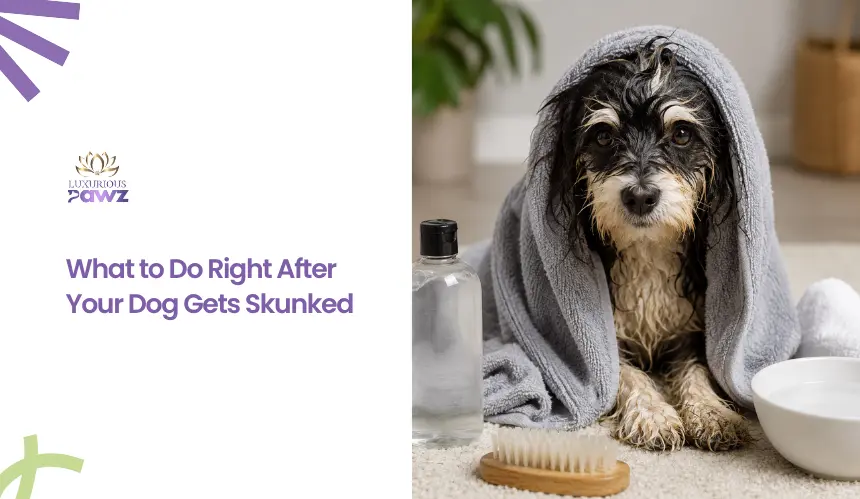
What to Do Right After Your Dog Gets Skunked
Key Takeaways
|
Keep your dog outdoors immediately after a skunk encounter so the oily spray does not spread to carpets, furniture, vehicles, or other pets. Before addressing the odor, check the eyes, mouth, breathing, and body for irritation or injuries.
Once urgent health concerns have been ruled out, apply a pet-safe odor-neutralizing treatment and clean every contaminated item separately. Severe eye exposure, breathing difficulty, physical wounds, or unusual weakness requires prompt veterinary attention.
Keep Your Dog Outside and Limit Odor Transfer
Skunk spray contains oily sulfur compounds that cling to fur and transfer through direct contact. Restricting the dog’s movement prevents the odor from spreading while cleaning supplies are prepared.
The immediate goal is containment, not bathing. Moving too quickly without assessing the situation can spread residue or overlook a medical concern.
Move the Dog to a Secure Outdoor Area
Guide the dog into a fenced yard, patio, or another secure and well-ventilated space. Use a leash when the dog is frightened, restless, or likely to chase the skunk again.
Close nearby doors and windows before gathering supplies. Unless the dog requires immediate veterinary transport, keep it away from indoor flooring, furniture, and vehicle upholstery because skunk oil is difficult to remove from fabric.
Keep Other Pets and People Away
Separate the affected dog from other animals until the first treatment and rinse are complete. Rubbing, playing, or sharing bedding can move oily residue onto another pet’s coat.
Children should remain outside the treatment area. This limits contact with contaminated fur and prevents accidental exposure to peroxide, dishwashing liquid, or other cleaning products.
Prepare Supplies Before Handling the Coat
Wear disposable gloves and old clothing that can be washed separately. Long sleeves can reduce direct skin contact while the dog is being examined and cleaned.
Gather towels, a leash, a bucket, clean water or sterile saline, mild dog shampoo, and a pet-safe skunk odor treatment. Preparing everything first keeps the process controlled and reduces unnecessary handling.
Locate the Main Area of Exposure
Identify where the odor is strongest and check whether the spray reached the face, neck, chest, side, or entire body. Dogs often approach skunks headfirst, making facial exposure common.
The location of the spray determines how treatment should be applied. Strong de-skunking mixtures may be suitable for body fur but should never enter the eyes, ears, nostrils, mouth, or open wounds.
Do You Know?
A striped skunk can project two narrow streams of oily spray about 10 feet, or 3 meters, with considerable accuracy. This range explains how a dog may receive spray across the face, chest, or side without making direct physical contact with the skunk.
Check for Eye Exposure, Breathing Problems, and Injuries
A brief physical assessment should happen before bathing. Skunk spray can irritate the eyes and respiratory system, while a close encounter may also result in a bite or scratch.
This section focuses on identifying the type of exposure. Detailed emergency symptoms and monitoring guidance appear later so the same warnings are not repeated throughout the article.
Rinse the Eyes When Irritation Is Present
Redness, swelling, excessive tearing, squinting, or pawing at the face may indicate that spray entered the eyes. Direct exposure can damage the cornea and temporarily affect vision.
Flush the eyes gently with clean, cool water or sterile saline. Do not use peroxide, dishwashing liquid, shampoo, or an odor remover near the eyes, and contact a veterinarian when the dog was sprayed directly in the face.
Check the Mouth and Breathing
Coughing, gagging, drooling, nausea, or vomiting may indicate that the dog inhaled or swallowed some of the spray. Move the dog into fresh air and observe whether breathing remains comfortable.
Do not force water, food, or medication into the dog’s mouth. Persistent coughing, repeated vomiting, or labored breathing requires veterinary guidance rather than continued home cleaning.
Look for Bites or Scratches
Separate the fur around the muzzle, ears, neck, chest, and front legs. Look for blood, swelling, tenderness, scratches, or small puncture wounds that may be hidden beneath a thick coat.
Spray exposure alone does not transmit rabies, but bites and saliva-contaminated scratches can. Any suspected wound from a skunk should be discussed with a veterinarian promptly.
Verify Rabies Vaccination Records
Check whether the dog’s rabies vaccination is current and locate the vaccination record. This information helps the veterinarian and local authorities determine the appropriate response after possible physical contact.
A current vaccination does not mean a suspected bite should be ignored. Management depends on the exposure circumstances, the dog’s health history, local rabies activity, and applicable public-health requirements.
Neutralize the Skunk Spray on the Coat
A normal bath may remove surface dirt without fully eliminating skunk odor. Effective treatment must alter the sulfur-containing compounds responsible for the smell rather than cover them with another fragrance.
Commercial products made specifically for pets are suitable when available. A carefully prepared homemade solution can be used when an appropriate commercial treatment is not accessible.
Sunland experiences hot, dry summers, mild winters, and frequent sunny conditions throughout much of the year. Its foothill setting near open outdoor areas can expose dogs to dust, pollen, dry soil, loose vegetation, and other debris during walks and play. These local conditions may leave the coat dirty, increase shedding, and contribute to dryness or irritation when buildup remains close to the skin.
Regular dog grooming helps remove loose fur, dust, allergens, and outdoor residue while keeping the coat cleaner and easier to manage. Brushing, bathing, trimming, and coat care can also reduce matting, control lingering odors, and improve comfort during warmer weather. Consistent grooming is especially helpful for long-haired, thick-coated, or highly active dogs that spend more time outdoors.
Choose an Appropriate De-Skunking Treatment
Select a commercial skunk odor remover labeled for use on dogs and follow its instructions. Confirm whether the product can be used on puppies, sensitive skin, or specific parts of the body.
A commonly recommended homemade solution contains:
- One quart of 3 percent hydrogen peroxide
- One-quarter cup of baking soda
- One to two teaspoons of liquid dishwashing soap
The peroxide and baking soda oxidize the odor-producing thiols, while the small amount of soap helps lift oily residue from the coat.
Apply the Treatment to the Affected Fur
Mix the homemade solution in an open bowl and apply it immediately while it is still reacting. Wear gloves and work it into the contaminated areas rather than covering unaffected fur unnecessarily.
Keep the mixture away from the dog’s eyes, mouth, nose, ears, genital area, and broken skin. Hydrogen peroxide may irritate sensitive tissue, lighten dark fur, and bleach clothing or towels.
Allow Brief Contact Before Rinsing
Leave the mixture on the treated fur for approximately five minutes unless a veterinarian or commercial product label provides different instructions. A longer contact period can increase skin dryness without guaranteeing better odor removal.
Rinse the coat thoroughly with lukewarm water. Direct the runoff away from the face so the dissolved residue and cleaning solution do not enter the dog’s eyes or mouth.
Finish With a Mild Dog Shampoo
After the neutralizing mixture has been removed, wash the coat with a mild shampoo made for dogs. This clears away remaining oil, soap, and loosened residue.
A second de-skunking treatment may be needed when a noticeable odor remains. Avoid repeated harsh washing because excessive degreasing can leave the skin dry, itchy, or irritated.
Sunland’s warm, dry climate and foothill surroundings can expose pets to dust, pollen, loose hair, and outdoor debris throughout the year. Regular pet bathing in Sunland, CA helps remove this buildup, reduce lingering odors, support healthier skin, and keep the coat clean and comfortable after walks, outdoor play, or seasonal shedding
Clean the Face and Contaminated Items Separately
The face requires gentler handling than the body, while collars, bedding, and towels must be cleaned independently. Otherwise, untreated residue can transfer back onto the dog after bathing.
Address each contaminated item according to its material and care instructions. A cleaner designed for household surfaces should never be applied to an animal.
Use a Gentle Method on the Face
Do not apply the peroxide mixture close to the eyes, mouth, or nostrils. Use a damp cloth with water, a pet-safe facial cleanser, or a commercial de-skunking product specifically approved for facial use.
Wipe outward and away from the eyes. Use a clean section of the cloth for each pass so residue is lifted rather than spread across the face.
Remove and Clean the Collar and Leash
Take off the collar, harness, tags, and fabric leash before cleaning the coat. These items can absorb concentrated skunk oil and return the odor to freshly washed fur.
Wash compatible equipment separately according to the manufacturer’s directions. Replace porous, padded, cracked, or heavily contaminated items when the smell remains after cleaning.
Wash Bedding, Towels, and Clothing Separately
Keep affected bedding, towels, and clothing away from regular laundry. Place them in a separate bag or container until they can be washed according to their care labels.
Check each item after washing and repeat the process when odor remains. Air-dry heavily affected fabrics at first so they can be reassessed before being returned to normal use.
Clean the Indoor Areas the Dog Touched
If the dog entered the home, trace its path and identify the specific floors, doors, rugs, furniture, or upholstery it contacted. Open windows and improve ventilation while those surfaces are cleaned.
Choose a cleaner that is safe for the affected material and test it on a hidden area first. Keep bleach, disinfectants, and concentrated surface cleaners away from the dog.
Avoid Unsafe or Ineffective De-Skunking Methods
Some commonly suggested remedies mask the odor without removing the underlying residue. Others can irritate the skin, damage the coat, or create a chemical hazard.
Using the correct method from the beginning reduces repeated bathing and prevents a manageable odor problem from becoming a health or household safety issue.
Do Not Depend on Tomato Juice or Perfume
Tomato juice, perfume, air freshener, and strongly scented shampoo may temporarily compete with skunk odor. They do not reliably neutralize the oily sulfur compounds attached to the fur.
Added fragrance can also make it difficult to determine whether the contaminated areas were treated successfully. The smell may return after the masking scent fades or the coat becomes wet.
Do Not Apply Harsh Household Products
Never place bleach, disinfectant, concentrated vinegar, essential oils, strong degreasers, or unapproved deodorizers on the dog. Products made for surfaces can cause skin damage, breathing irritation, or poisoning when licked from the coat.
Use a mild canine shampoo instead of a human shampoo whenever possible. Products that strip too much oil from the skin can worsen dryness after the original exposure.
Never Store the Homemade Mixture
Prepare the peroxide, baking soda, and dishwashing soap solution only when it is ready to be applied. The ingredients begin reacting as soon as they are combined.
Do not place leftover mixture in a bottle, jar, or sealed container. Gas pressure can build and cause the container to burst, so unused solution must be discarded rather than saved.
Do Not Assume Bathing Resolves Every Risk
Removing the odor does not treat an eye injury, inhaled spray, swallowed residue, puncture wound, or possible rabies exposure. The dog’s physical condition remains more important than how the coat smells.
Do not continue applying cleaning products when the dog appears unwell. Stop the process and contact a veterinary professional when symptoms or injuries require assessment.
Monitor Your Dog and Seek Veterinary Care When Needed
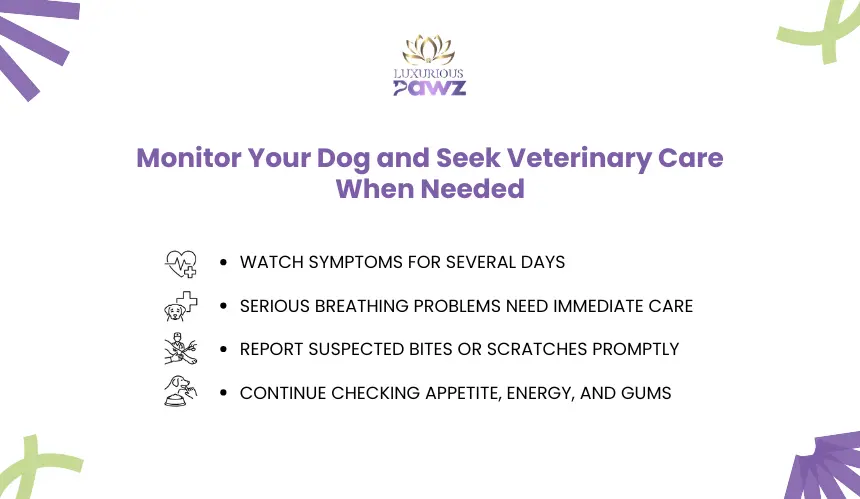
Most dogs recover after safe decontamination, but medical effects can appear after the odor has been treated. Monitoring should continue for one to three days, particularly after a heavy facial spray, repeated exposure, or possible ingestion.
Veterinary care should not be delayed while attempting additional baths. Symptoms involving breathing, vision, circulation, or neurological function take priority over complete odor removal.
Do You Know?
In rare cases, heavy exposure, repeated spraying, or swallowing skunk spray can cause oxidative damage to a dog’s red blood cells. Cornell University reports that Heinz body anemia or methemoglobinemia may develop within a few hours to 24 hours after exposure.
Seek Immediate Help for Serious Symptoms
Contact a veterinarian or emergency veterinary clinic when the dog develops:
- Labored or difficult breathing
- Repeated vomiting or uncontrolled drooling
- Severe eye pain, swelling, or apparent vision loss
- Marked weakness, lethargy, or collapse
- Refusal to eat after a heavy exposure
- Pale, yellow, brown, or chocolate-colored gums
Heavy exposure or ingestion can rarely cause oxidative damage to red blood cells, leading to Heinz body anemia or methemoglobinemia. These complications may develop within several hours or during the first day after exposure.
Contact a Veterinarian After a Bite or Scratch
Report every suspected bite, puncture, or saliva-contaminated scratch promptly. Provide the time and location of the encounter, the position of any wounds, and the dog’s rabies vaccination history.
Do not catch, touch, or transport the skunk. Contact animal control or the appropriate local authority because decisions about capture, testing, and exposure management depend on local regulations.
Continue Observing the Dog After Cleaning
Monitor breathing, appetite, energy, gum color, eye comfort, urination, and general behavior. A faint skunk smell may remain, particularly when the coat becomes wet, because some odor-producing compounds can reactivate with water.
New or worsening physical symptoms should not be dismissed as part of the cleaning process. Contact the veterinarian whenever the dog’s condition changes, even when the animal appears comfortable immediately after the encounter.
When skunk odor remains trapped in a dog’s coat, professional care can make the cleanup safer and more effective. Luxurious Pawz provides gentle bathing and grooming support designed to remove lingering residue, reduce unpleasant odors, and restore coat comfort. Schedule a professional grooming appointment to help your pet feel clean, fresh, and comfortable again.
Frequently Asked Questions
What Should You Do If No De-Skunking Product Is Available?
Keep the dog outdoors, rinse the eyes with clean water if irritation is present, and use a mild dog shampoo as a temporary measure. Regular shampoo may reduce surface residue but may not completely neutralize the odor. Obtain a pet-safe skunk treatment as soon as possible.
Why Does the Skunk Smell Return When the Dog Gets Wet?
Skunk spray contains compounds that may remain trapped in the coat after bathing. Water can reactivate the odor, causing it to become noticeable again during rain or future baths. A faint smell may continue returning until the remaining residue gradually breaks down.
Can the Dog Come Indoors After One Bath?
The dog can usually come indoors once the coat has been properly treated, rinsed, dried, and checked for oily residue. The collar should be cleaned or replaced first, and washable bedding should be used until the remaining odor is under control.
When Should a Professional Groomer Handle the Remaining Odor?
Professional grooming may be helpful when the smell remains in a thick, long, or double coat after careful home treatment. A groomer can reach dense areas and use products formulated for animal coats. Dogs with injuries or physical symptoms should be taken to a veterinarian instead.
Does Skunk Spray Alone Expose a Dog to Rabies?
Skunk spray itself does not transmit rabies. The risk develops when the dog is bitten, scratched, or exposed to infected saliva through a wound or sensitive tissue. Suspected physical contact should be reported to a veterinarian, even when the dog is vaccinated.
Can Skunk Spray Affect the Person Cleaning the Dog?
Concentrated spray may irritate human eyes, skin, and airways, especially in a poorly ventilated area. The person cleaning the dog should wear gloves, avoid touching the face, work outdoors when possible, and wash exposed skin and clothing afterward.