
- admin
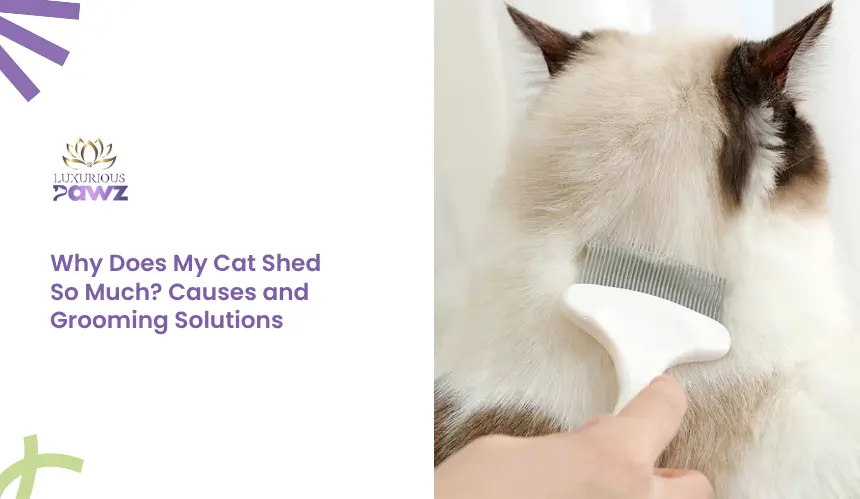
Why Does My Cat Shed So Much? Causes and Grooming Solutions
Key Takeaways
|
Cat shedding becomes noticeable when fur collects on furniture, clothing, bedding, carpets, and corners faster than regular cleaning can control it. Some shedding is part of a healthy coat cycle, but sudden or excessive hair loss can also point to nutrition issues, stress, parasites, allergies, dry skin, or poor coat maintenance.
The main concern is not shedding itself. The concern is whether the pattern looks normal for the cat or whether it appears with bald spots, irritation, itching, behavior changes, or coat thinning. Understanding the cause helps owners choose the right solution instead of relying only on extra brushing.
Is Cat Shedding Normal Or A Sign Of A Problem?
Shedding is a normal coat renewal process. Cats lose old or damaged hair so new hair can grow, and the amount depends on season, daylight exposure, indoor climate, breed, coat density, age, and grooming habits.
Normal shedding usually appears even across the body and does not leave irritated skin behind. Concerning shedding looks sudden, patchy, excessive, or connected to scratching, licking, flakes, redness, or changes in appetite and behavior.
- Light daily shedding: Usually means normal coat turnover. Owners may notice small amounts of fur on clothes, bedding, or furniture.
- Heavy seasonal shedding: Usually means the coat is adjusting during spring or fall. Owners may notice more hair during brushing or on the cat’s sleeping areas.
- Year-round indoor shedding: Usually means indoor light, heating, and cooling are affecting the coat cycle. Owners may notice steady fur loss without a clear seasonal pattern.
- Patchy or sudden hair loss: Usually points to a possible skin, health, or stress-related issue. Owners may notice bald areas, itching, redness, flakes, or overgrooming.
Do You Know?
Cats typically spend 30% to 50% of their day grooming themselves, according to Cornell Feline Health Center. This means grooming is not just a cleanliness habit; it is a major daily behavior linked to coat care, comfort, and skin condition. When grooming suddenly causes hair loss, bald patches, or skin lesions, it may signal a problem rather than normal shedding.
Why Do Cats Shed More During Seasonal Changes?
Cats often shed more during spring and fall because their coats respond to changes in daylight and temperature. As warmer weather approaches, many cats release heavier undercoat that helped provide insulation during cooler months. When colder weather returns, the coat may shift again to support temperature regulation.
This pattern is more visible in long-haired cats, double-coated cats, and breeds with dense undercoats. Owners may notice soft clumps during brushing, extra hair on blankets, and more self-grooming while the coat transitions.
Seasonal shedding is usually normal when the coat remains even and the skin looks calm. It becomes more concerning when shedding causes bare patches, open sores, painful skin, greasy buildup, or repeated scratching.
Why Do Indoor Cats Shed All Year?
Indoor cats may shed throughout the year because artificial lighting, heating, and air conditioning reduce the natural seasonal signals that influence coat cycles. Instead of one or two clear shedding periods, the coat may release hair gradually across many months.
Dry indoor air can also make dander, flakes, and dead hair more noticeable. This can make normal shedding seem heavier, especially when fur sticks to fabric, carpets, and bedding every day.
For indoor cats, consistent grooming works better than waiting for seasonal shedding peaks. A routine helps remove dead hair before it spreads through the home or contributes to hairballs.
When Is Cat Shedding Excessive?
Cat shedding becomes excessive when the amount, timing, or pattern changes suddenly. A cat that normally sheds lightly but starts losing large amounts of hair may be reacting to stress, poor skin health, parasites, pain, or an internal health concern.
Owners should watch for warning signs such as:
- Bald patches or uneven thinning
- Red, swollen, flaky, or greasy skin
- Scabs, sores, crusting, or hot spots
- Constant scratching, chewing, or licking
- Broken hairs or rough coat texture
- Visible fleas, flea dirt, or skin sensitivity
- Weight loss, appetite changes, vomiting, or low energy
Overgrooming can also create hair loss. Some cats repeatedly lick one area until the coat becomes thin or disappears. This may happen because of itchiness, anxiety, pain, or skin discomfort, so the location and pattern of hair loss matter.
Common Causes Of Excessive Cat Shedding
Heavy shedding usually has a trigger. Some causes affect the coat from inside the body, such as diet, hydration, age, and health. Others affect the skin directly, such as fleas, allergies, mites, fungal irritation, or bacterial infection.
The right solution depends on the cause. Brushing can manage loose hair, but it cannot correct untreated parasites, allergic inflammation, poor nutrition, or stress-related overgrooming.
- Poor nutrition: Weakens hair growth and skin barrier function. Owners may notice a dull coat, brittle fur, or dry flakes.
- Stress or anxiety: Triggers extra fur release or repetitive licking. Owners may notice hiding, spraying, reduced play, or appetite changes.
- Fleas or parasites: Cause itching, chewing, and hair breakage. Owners may notice flea dirt, scabs, or scratching near the tail base.
- Allergies: Inflame the skin and disrupt normal hair growth. Owners may notice redness, licking, or recurring skin flare-ups.
- Aging or poor mobility: Reduces the cat’s ability to self-groom. Owners may notice fur buildup near the hips, belly, back, or tail.
- Dense coat type: Increases visible hair release. Owners may notice a thick undercoat, long hair, or seasonal clumps.
Can Diet Affect How Much A Cat Sheds?
Diet affects shedding because hair growth depends on steady nutrition. Cat hair is largely made from protein, so cats need high-quality animal-based protein to maintain strong hair shafts, repair skin tissue, and support normal coat renewal.
Fatty acids also influence coat quality. Omega-3 and omega-6 fatty acids support the skin barrier, which helps the skin retain moisture and resist irritation. When the skin barrier is weak, cats may develop dryness, flaking, dull fur, and increased breakage.
Hydration plays a role as well. Cats that eat mostly dry food and drink little water may show drier skin, especially in climate-controlled homes. Proper nutrition does not stop natural shedding, but it supports a healthier coat cycle.
Useful diet-related coat checks include:
- Whether the coat looks shiny or dull
- Whether the fur feels brittle, greasy, or rough
- Whether flakes appear along the back or tail area
- Whether the cat drinks enough clean water
- Whether the food is complete and balanced for cats
Can Stress Make A Cat Shed More?
Stress can increase shedding because the cat’s nervous system responds to environmental pressure. Some cats release more hair during stressful events, while others groom too often as a coping behavior.
Common triggers include moving, new pets, visitors, construction noise, schedule changes, litter box conflict, lack of hiding spaces, or tension with another animal. Cats often show stress through behavior before coat changes become obvious.
Stress-related shedding may appear with hiding, spraying, reduced play, clinginess, aggression, appetite changes, or repeated licking. Grooming can manage the visible fur, but the deeper solution is a calmer environment, predictable routine, safe resting areas, and reduced conflict.
Do Fleas, Allergies, Or Skin Conditions Cause Shedding?
Fleas, allergies, mites, fungal infections, and bacterial skin problems can all increase shedding by irritating the skin. When the skin becomes inflamed, the cat may scratch, chew, or lick the area until hair loosens or breaks.
Flea allergy dermatitis is a common cause because some cats react strongly to flea saliva. Even a small number of fleas can trigger intense itching, especially near the tail base, lower back, belly, and thighs.
Allergies may involve food ingredients, pollen, dust, litter fragrance, cleaning products, or environmental irritants. Since many skin problems look similar, persistent itching or patchy hair loss should be checked by a veterinarian rather than treated with repeated bathing.
Do Age, Breed, And Coat Type Affect Shedding?
Coat structure strongly affects how much fur an owner sees. Long-haired cats, double-coated cats, and dense-coated breeds often release more visible hair because they carry both surface hair and soft undercoat.
Senior cats may shed more noticeably because grooming flexibility can decline with age. Arthritis, dental pain, obesity, muscle stiffness, or lower energy can make it difficult for older cats to reach the hips, back, belly, and tail area.
Some cats naturally shed more than others without having a medical problem. A cat that has always shed heavily but has healthy skin, normal behavior, and a full coat may simply need more consistent maintenance.
Grooming Solutions That Help Reduce Cat Shedding
Grooming reduces fur buildup by removing dead hair before it spreads through the home, tangles into the coat, or gets swallowed during self-grooming. It also gives owners a chance to inspect the skin, check for fleas, and notice coat changes early.
The best routine depends on coat length, coat density, skin condition, grooming tolerance, and age. A short-haired cat may need light weekly care, while a long-haired or double-coated cat may need more frequent combing.
Cat Coat Type | Recommended Grooming Frequency | Best Tool Options | Main Goal |
Short-haired coat | 1 to 2 times per week | Rubber brush, soft bristle brush, grooming glove | Remove surface hair |
Medium-haired coat | 2 to 3 times per week | Metal comb, gentle slicker brush | Prevent early tangles |
Long-haired coat | 3 to 7 times per week | Wide-tooth comb, metal comb, slicker brush | Keep the coat separated |
Dense undercoat | Several times weekly during heavy shedding | Undercoat rake or de-shedding tool | Reduce compacted undercoat |
Senior or overweight cat | As needed | Soft brush, comb, pet-safe wipes | Support hard-to-reach areas |
How Often Should A Cat Be Brushed?
Short-haired cats often need brushing once or twice a week. This keeps surface hair under control, distributes natural oils, and reduces the amount of fur left on furniture, rugs, and clothing.
Long-haired cats need more frequent care because their coats can tangle near the belly, armpits, chest, rear legs, and tail. During heavier shedding periods, daily combing may be useful for cats with thick or easily tangled coats.
Brushing should be calm, brief, and predictable. Cats that dislike grooming often respond better to several short sessions instead of one long session. Treats, soft handling, and breaks can make the routine easier to maintain.
A practical brushing routine may include:
- Starting with areas the cat already accepts
- Using slow strokes instead of pulling through knots
- Checking high-friction areas such as armpits and belly
- Stopping before the cat becomes irritated
- Cleaning the brush after each session to track shedding volume
In Sunland, CA, cat grooming is important because the area sits near the foothill side of Los Angeles, close to outdoor recreation areas such as Big Tujunga Canyon and Angeles National Forest. The Los Angeles City Council District 7 page describes Sunland-Tujunga as a community near Angeles National Forest with access to hikes, nature views, Mount Lukens, and Tujunga Wash. This local setting can expose cats to more dust, dry air, outdoor particles, and seasonal coat changes, especially for cats that spend time near patios, windows, yards, or screened areas.
Regular cat grooming in Sunland, CA helps manage loose fur, dander, tangles, and coat buildup before they turn into mats or skin irritation. Since Sunland’s warm months can bring dry conditions and more visible shedding, grooming also gives owners a chance to check for fleas, flaky skin, redness, or overgrooming early. This makes grooming useful not only for appearance, but also for comfort, hygiene, and healthier coat maintenance.
Which Grooming Tools Help With Cat Shedding?
The right grooming tool depends on the coat. A rubber brush or grooming glove works well for short-haired cats because it lifts surface hair without being too harsh. A metal comb is better for medium and long coats because it reaches deeper and finds small knots before they tighten.
Slicker brushes can help with dead hair and light tangles, but they must be used gently. Pressing too hard can irritate thin-skinned areas such as the belly, chest, or inside the legs.
De-shedding tools can help with thick undercoat, but they should not be used aggressively or every day. Overuse can remove too much healthy hair, irritate the skin, or leave the coat uneven.
Tool | Best Use | Caution |
Rubber brush | Short coats and surface shedding | Does not reach deep undercoat |
Grooming glove | Sensitive cats that dislike brushes | Best for light maintenance |
Metal comb | Medium and long coats | Do not force through knots |
Slicker brush | Dead hair and light tangles | Use gentle pressure |
De-shedding tool | Dense undercoat | Avoid overuse |
Mat splitter | Small mats in skilled hands | Risky near the skin |
Do Baths Or Cat Wipes Reduce Shedding?
Bathing can remove dead hair, dander, grease, and surface debris, but most cats do not need frequent baths. Too much bathing can strip natural oils and make dryness worse, especially if the shampoo is not made for cats.
Pet-safe wipes can help with light cleanup, especially for senior cats, overweight cats, or cats that struggle to clean the rear area. Wipes are useful for surface hygiene, but they do not replace brushing or combing.
Bathing is most useful when a cat is dirty, greasy, exposed to an irritant, or following veterinary advice. For regular shedding control, brushing usually provides better results with less stress.
Basic coat maintenance points include:
- Use only cat-safe grooming products
- Avoid human shampoo, dog products, and essential oils
- Keep bath frequency low unless advised by a veterinarian
- Brush before bathing to reduce tangling
- Dry the cat properly after bathing
Sunland’s foothill setting near Angeles National Forest and local outdoor spaces such as Tujunga Ponds Wildlife Sanctuary can expose pets to dust, pollen, dry air, outdoor debris, and seasonal coat buildup. Angeles National Forest is described by the U.S. Forest Service as a major outdoor area serving the Greater Los Angeles region, while Tujunga Ponds Wildlife Sanctuary is listed as a wildlife habitat in Sunland.
Regular Pet Bathing in Sunland, CA helps remove surface dirt, dander, loose hair, odors, and allergens before they settle deeper into the coat or irritate the skin. This makes bathing useful for pets that spend time near yards, patios, trails, windows, or dusty outdoor areas, especially during warmer and drier periods.
How Can Professional Grooming Help Heavy Shedding?
Professional grooming is useful when a cat has a dense coat, repeated tangles, hygiene buildup, or strong resistance to handling at home. Groomers use coat-specific tools and controlled handling to remove dead hair without pulling aggressively on the skin.
A groomer can also identify coat concerns that may be easy to miss, such as hidden tangles, compacted undercoat, flea dirt, dandruff, rear-area buildup, or sensitive patches. These observations can help owners decide whether the cat needs routine grooming or veterinary care.
For long-haired cats, a grooming visit may include a full comb-out, sanitary trim, nail trim, careful tangle removal, and maintenance guidance. The goal is not to stop shedding completely, but to keep the coat clean, separated, comfortable, and easier to manage between appointments.
When To Call A Vet Or Grooming Professional
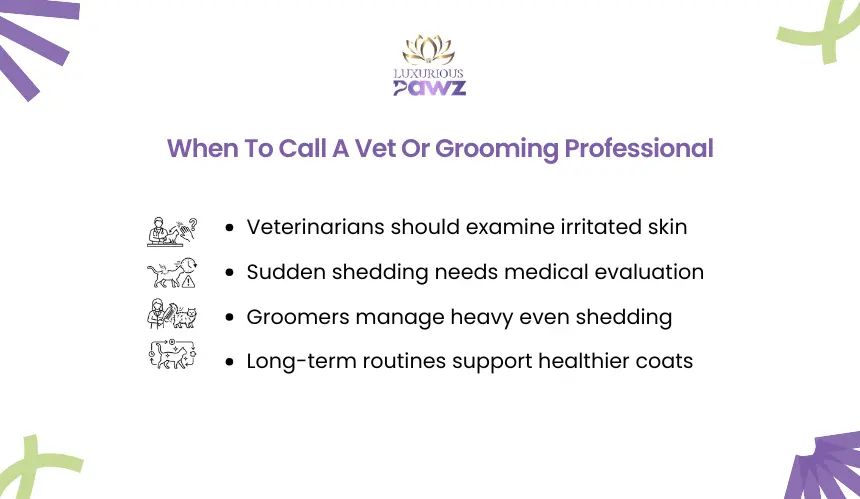
Some shedding concerns require medical attention, while others can be handled through coat care. The decision depends on whether the cat has skin irritation, behavior changes, parasites, pain, or only heavy but even shedding.
A veterinarian should evaluate health-related symptoms. A groomer can help when the coat is difficult to maintain but the skin appears healthy.
Situation | Best Professional | Why It Matters |
Bald patches, sores, or scabs | Veterinarian | May involve infection, allergy, parasites, or skin disease |
Constant scratching or licking | Veterinarian | Indicates discomfort or irritation |
Sudden shedding with appetite or weight changes | Veterinarian | May reflect internal health issues |
Dense coat with heavy shedding | Groomer | Helps remove excess coat safely |
Long coat maintenance problems | Groomer | Reduces tangles and hygiene issues |
Senior cat struggling to self-groom | Groomer and possibly veterinarian | May involve mobility limits or pain |
What Shedding Signs Need A Veterinarian?
A veterinarian should check shedding that appears with bald spots, sores, swelling, bleeding, strong odor, visible parasites, constant scratching, or sudden coat thinning. These signs may point to infection, allergy, flea irritation, mites, pain, or another medical issue.
Medical care is also important when hair loss appears with weight loss, appetite changes, vomiting, low energy, increased thirst, or major behavior changes. The coat can reflect internal health, so sudden changes should not be treated as a grooming problem only.
Owners should avoid dog flea treatments, human shampoos, essential oils, alcohol-based products, or home remedies unless a veterinarian approves them. Cats are sensitive to many ingredients, and the wrong product can worsen irritation or cause toxicity.
When Should A Groomer Handle Shedding?
A groomer is the better choice when the cat has heavy but even shedding, coat buildup, long hair maintenance needs, rear-area hygiene issues, or resistance to brushing at home. Professional handling can make coat care safer and less stressful.
Grooming is especially useful for senior cats, overweight cats, long-haired breeds, and cats with thick undercoats. These cats may not maintain every area well on their own, even when the coat looks clean from a distance.
If a groomer finds wounds, parasites, inflamed skin, or painful areas, veterinary care may still be needed. Grooming supports coat condition, while veterinary care addresses disease, irritation, or discomfort.
How Can Owners Build A Long-Term Shedding Control Routine?
A long-term shedding routine works best when grooming is paired with good nutrition, hydration, parasite prevention, and a low-stress environment. Each part supports the coat in a different way, so the routine should focus on prevention rather than reacting only when fur becomes overwhelming.
Owners should learn the cat’s normal shedding pattern. When brushing is consistent, sudden increases, new bald patches, coat texture changes, or unusual grooming behavior become easier to notice.
A reliable shedding control plan may include:
- Brush short-haired cats once or twice weekly
- Comb long-haired cats several times per week
- Check the skin during grooming sessions
- Keep parasite prevention current through veterinary guidance
- Support hydration with clean water and appropriate food choices
- Reduce stress through routine, hiding spaces, and enrichment
- Schedule grooming when coat buildup becomes difficult to manage
Cat shedding cannot be stopped completely because coat renewal is natural. The goal is to control fur buildup, protect the skin, prevent painful tangles, and identify health concerns before they become more serious.
If cat shedding is becoming difficult to manage at home, Luxurious Pawz can help with gentle, coat-focused grooming support. From careful brushing and de-shedding to pet bathing and hygiene care, the team helps keep cats more comfortable while reducing loose fur, dander, and coat buildup. Contact Luxurious Pawz today to schedule a grooming visit that supports a cleaner coat and a happier pet.
Frequently Asked Questions
Can Cat Shedding Cause More Hairballs?
Yes. More shedding can increase the amount of hair a cat swallows during self-grooming. Hairballs become more common when loose hair is not removed through brushing, especially in long-haired cats or cats that groom frequently.
Should A Cat Be Shaved To Stop Shedding?
Shaving usually does not stop shedding because the hair cycle continues under the skin. It may also affect coat protection, temperature regulation, and skin safety. Shaving is usually reserved for severe matting or medical reasons.
Do Air Purifiers Help With Cat Hair And Dander?
Air purifiers can help reduce airborne dander and fine particles, but they do not remove heavy fur from furniture, carpets, or bedding. Grooming, vacuuming, washable covers, and regular fabric cleaning are still needed for visible shedding control.
Can Supplements Reduce Cat Shedding?
Supplements may support coat health when a cat has a confirmed nutritional need, but they should not replace balanced food or veterinary advice. Omega fatty acids may help some cats, especially when dry skin contributes to dullness or breakage.
Why Does My Cat Shed More After Being Brushed?
A cat may appear to shed more after brushing because loose hair has been lifted from the coat. This does not mean brushing caused extra shedding. It often means dead hair that was already ready to fall has been removed.
Can Regular Cleaning Reduce The Impact Of Cat Shedding?
Yes. Washable pet bedding, lint rollers, vacuuming with a pet-hair attachment, and cleaning favorite resting spots can reduce visible fur indoors. Cleaning does not reduce shedding at the source, but it keeps loose hair from spreading.