
- admin
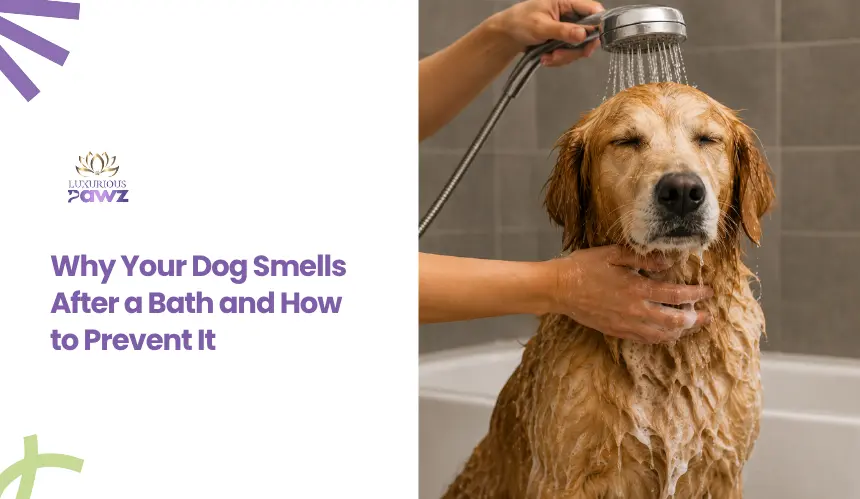
Why Your Dog Smells After a Bath and How to Prevent It
Key Takeaways
|
A dog that smells bad after a bath is not always dirty. In many cases, the odor comes from trapped moisture, coat density, skin condition, leftover product residue, or improper drying rather than poor hygiene alone. This guide covers the main reasons dogs smell after bathing and the practical ways to prevent that odor from returning.
Did you know? Bathing frequency is not one-size-fits-all for dogs. The American Kennel Club notes that some coat types may need weekly baths, while medium-to-large coated dogs may only need bathing every four to six weeks if the coat is properly maintained in between. |
Trapped Moisture in Your Dog’s Coat Causes Post-Bath Smell
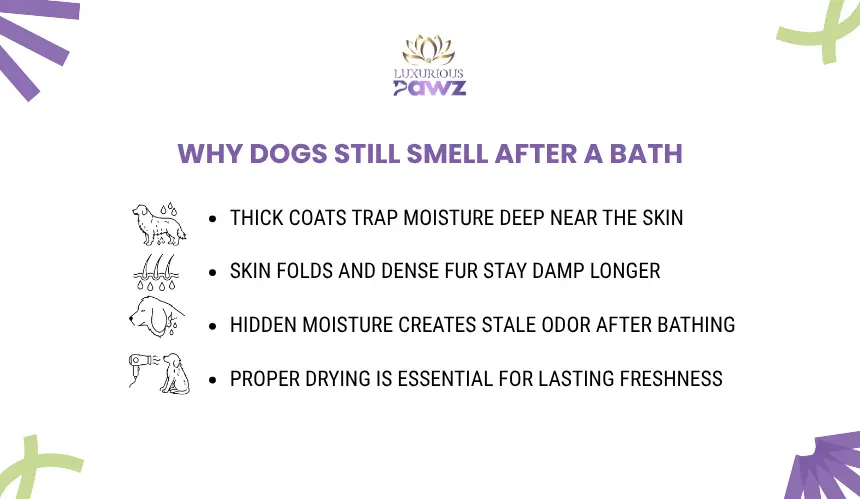
Moisture that stays hidden beneath the surface of the coat can create the ideal conditions for unwanted odor to develop after bathing. This section explains how retained dampness in hard-to-dry areas contributes to smell even when the dog has been washed properly.
Thick Double Coats Hold Dampness Longer
Dogs with thick double coats often retain water deep beneath the outer layer, making the inner fur much slower to dry. Even when the surface feels dry to the touch, hidden moisture can remain close to the skin and contribute to an unpleasant smell.
Skin Folds and Dense Areas Stay Wet Easily
Areas such as neck folds, armpits, groin regions, and behind the ears tend to trap water because air does not move through them as easily. When these enclosed spots stay moist, they can quickly develop a stale or sour odor after bathing.
Incomplete Drying Encourages Odor Development
A bath does not fully solve odor issues unless the coat is dried properly from root to surface. When dampness is left behind, it creates a favorable environment for smell to build instead of leaving the dog fresh and clean.
Product Residue on Your Dog’s Skin Leads to Lingering Odor
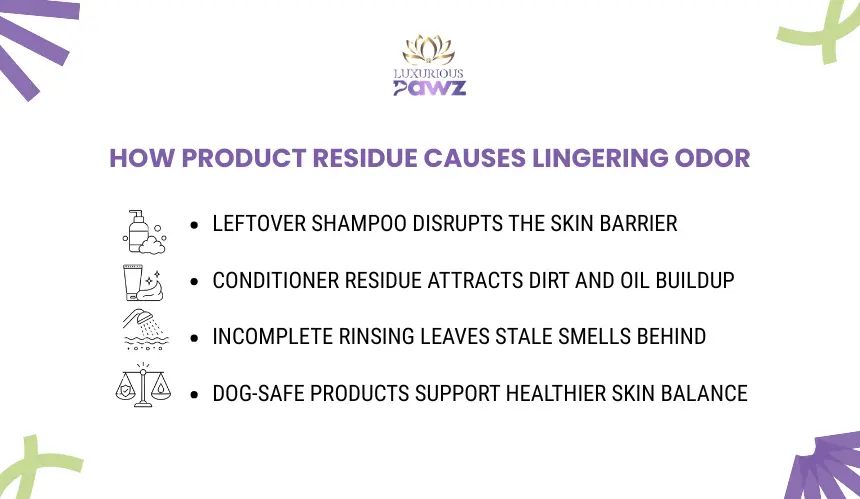
Leftover bathing products can remain on the coat and skin when they are not fully washed away, affecting freshness after grooming. This section explains how remaining cleanser or treatment layers can contribute to an unpleasant scent instead of a clean finish.
Shampoo Buildup Can Affect Natural Skin Balance
When shampoo is not fully removed, it can stay on the skin and interfere with its normal protective barrier. This may lead to dryness, irritation, or an unusual odor that appears once the coat begins to settle after the bath.
Did you know? Human skin is more acidic than canine skin. VCA reports that human skin typically has a pH of 5.2 to 6.2, while dogs have a more neutral skin pH of about 6.2 to 7.5, which is why human shampoos can disrupt the skin barrier and worsen irritation. |
Conditioner Residue May Trap Dirt and Oil
Excess conditioner left behind can coat the fur and create a heavy layer that attracts oil, dust, and debris more easily. Instead of leaving the coat fresh, this buildup can make the dog smell unpleasant soon after grooming.
Poor Rinsing Leaves an Unpleasant Lingering Smell
Rinsing is what clears away loosened dirt, skin secretions, and leftover product from the coat. When that step is incomplete, the remaining residue can produce a stale smell that stays noticeable even after the bath is over.
Skin Infections or Health Issues Cause Persistent Dog Odor After Bathing
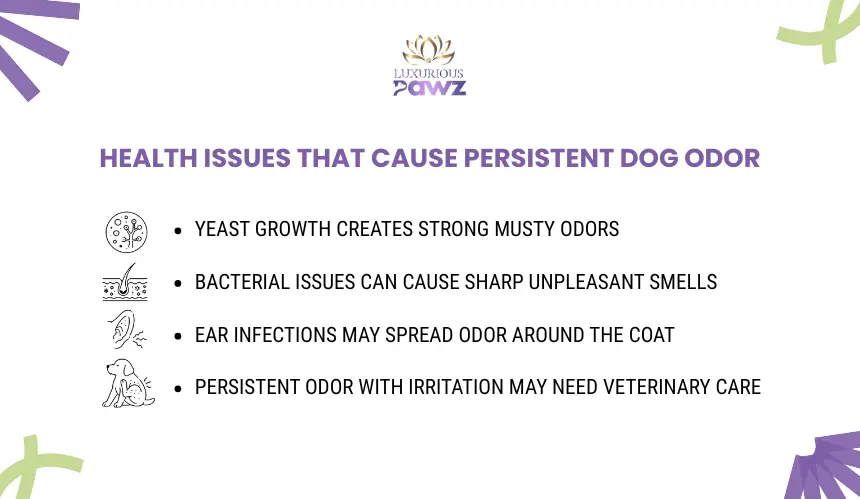
Sometimes a bad smell after bathing comes from internal skin-related problems rather than the bath itself. This section looks at health conditions that can continue to produce odor even when the coat has been cleaned properly.
Yeast Overgrowth Can Create a Musty Smell
Yeast thrives in warm, moist conditions and often produces a strong musty or slightly sweet odor that does not disappear with ordinary bathing. If the skin environment remains favorable for overgrowth, the smell can return quickly even after the coat has been cleaned.
Did you know? Merck notes that when skin cytology is performed on allergic dogs with secondary infection, the most common findings include Malassezia yeast and cocci bacteria, both of which are well-known contributors to persistent odor. |
Bacterial Skin Issues May Cause Persistent Odor
Bacterial skin problems can release a sharp, unpleasant smell that often becomes more noticeable once the fur is wet or freshly washed. In these cases, bathing may remove surface debris but will not resolve the source of the odor without proper treatment.
Ear Problems Can Be Mistaken for Body Odor
Sometimes the smell seems to come from the coat when it is actually coming from the ears. Wax buildup, infection, or inflammation inside the ear canal can create a strong odor that spreads around the head and neck area, making it seem like the whole dog still smells after a bath.
Bathing Mistakes That Make Your Dog Smell Worse After a Bath
Sometimes the problem is not the bath itself, but the way the bathing process is carried out from start to finish. This section explains how certain grooming missteps can leave behind conditions that allow unpleasant odor to remain or return quickly.
Using the Wrong Water Temperature
Using water at the wrong temperature can affect how well the coat and skin are cleaned during bathing. It can also make the dog uncomfortable, which may interfere with proper washing and rinsing.
- Water that is too hot can irritate the skin and increase dryness
- Water that is too cold may make it harder to loosen oil and debris
- Lukewarm water helps clean more effectively without stressing the dog
- Proper temperature supports a more thorough and comfortable bath
Bathing Too Infrequently or Too Often
Bathing too rarely or too often can both contribute to odor problems, even though the causes are different. The right bathing frequency depends on the dog’s coat type, skin condition, activity level, and grooming needs.
- Infrequent bathing allows dirt, oil, and buildup to remain for too long
- Overbathing can strip natural oils and disrupt skin balance
- An unbalanced routine may lead to irritation or a stronger odor over time
- A suitable schedule helps maintain coat freshness without harming the skin
Failing to Clean High-Odor Areas Properly
Some parts of a dog’s body are more likely to hold odor because they collect moisture, oil, and debris more easily than other areas. If these spots are missed during bathing, the dog may still smell unpleasant afterward.
- Ears can hold wax and trapped moisture that produce a strong smell
- Paws often collect dirt, sweat, and outdoor residue
- Skin folds may trap dampness and buildup in enclosed spaces
- The area around the mouth can retain saliva and food particles
- The rear area may develop odor if not washed gently and thoroughly
How to Prevent Bad Smell in Dogs After Bathing Effectively
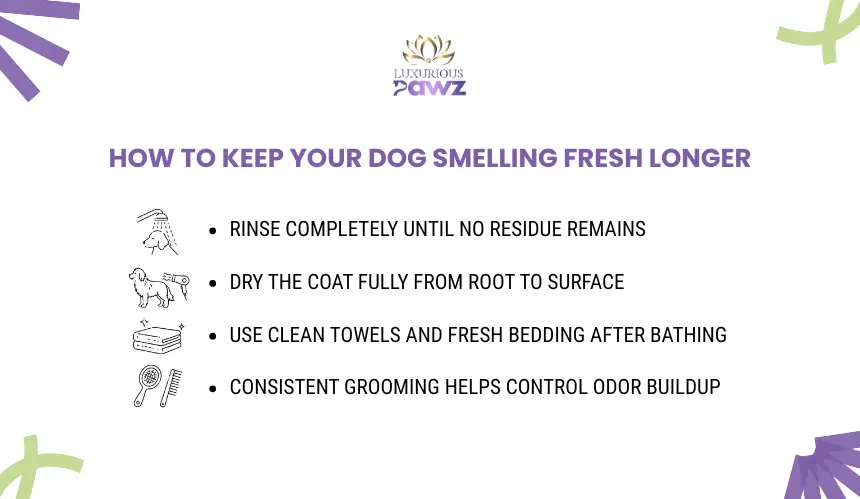
Preventing odor after a bath depends on what happens before, during, and after the washing process. This section focuses on practical care steps that help maintain freshness by reducing the conditions that allow unpleasant smells to develop.
How Environment Can Affect Post-Bath Freshness
A dog’s coat does not stay fresh based on bathing alone, especially when environmental conditions influence how the fur dries and how quickly it picks up odor again. In California, factors such as heat, dry air, dust, coastal moisture, and outdoor exposure can all affect how long post-bath freshness lasts. This section explains how local environmental conditions may reduce that clean smell even after proper bathing and drying.
Did you know? NOAA explains that the West Coast marine layer can persist for days or even weeks, especially along the coasts of Central and Southern California, which helps explain why dogs in some California areas may take longer to dry fully after a bath. |
Heat and Dry Outdoor Conditions
California’s warmer and drier conditions can reduce post-bath freshness by increasing oil buildup and allowing dust to settle into the coat more quickly. When a dog goes outside soon after bathing, dry air, loose particles, and outdoor debris can cling to the fur, especially if any part of the coat is still slightly damp.
Coastal Moisture and Slower Drying
In some parts of California, cooler air and coastal moisture can slow how quickly the coat dries after a bath. When dampness remains trapped near the skin or in dense fur, the coat may start to develop a stale or musty smell sooner than expected, even after proper washing.
Outdoor Exposure After Grooming
Freshly bathed dogs can pick up environmental odor again through contact with grass, soil, pavement, or dusty surfaces. This is especially important in California settings where frequent outdoor activity and changing local conditions can affect how long the clean scent lasts.
Step 01: Choose Products Suitable for Your Dog’s Skin and Coat
Using products that match your dog’s coat texture and skin needs helps support a cleaner, more balanced result after bathing. The right formula cleans effectively without leaving behind ingredients that may irritate the skin or contribute to odor.
- Select shampoos made specifically for dogs rather than human products
- Match the product to coat type, such as curly, double, short, or sensitive coats
- Avoid heavily fragranced formulas if the dog has reactive skin
- Use medicated products only when they are appropriate for the condition being treated
Step 02: Rinse Thoroughly Until No Residue Remains
A complete rinse is one of the most important parts of preventing odor after a bath. It removes loosened dirt, excess oil, and leftover product that can otherwise stay trapped in the coat and create an unpleasant smell.
- Rinse slowly and evenly through the full body
- Lift dense fur layers to reach the coat near the skin
- Pay extra attention to the neck, chest, belly, and tail base
- Continue rinsing until the water runs fully clear and the coat no longer feels slippery
Step 03: Dry the Coat Completely From Root to Surface
Proper drying helps prevent dampness from remaining in the deeper layers of the coat where odor can begin to develop. Surface dryness alone is not enough, especially in dogs with thick fur or dense undercoats.
- Use an absorbent towel first to remove excess water
- Pat instead of rubbing roughly to avoid tangling the coat
- Use a pet-safe dryer when needed for heavy or slow-drying coats
- Check deeper areas of fur to make sure moisture is not trapped near the skin
Step 04: Keep Ears, Paws, and Skin Folds Clean and Dry
Some areas of the body are more likely to hold moisture and develop odor even after the rest of the coat has dried. Giving extra attention to these zones helps maintain freshness and reduces the chance of smell returning quickly.
- Dry the ears carefully around the outer area after bathing
- Clean between the paw pads if dirt or moisture collects there
- Wipe and dry skin folds gently to prevent damp buildup
- Monitor high-friction areas where warmth and moisture stay longer
Step 05: Use Clean Towels and Fresh Bedding After the Bath
A clean bath can be undone quickly if the dog is dried with musty towels or lies down on damp bedding right afterward. Fresh materials help preserve the clean smell and prevent old odors from transferring back to the coat.
- Use fully dry, freshly washed towels for each bath
- Replace bedding if it smells stale or holds moisture
- Avoid letting the dog rest on damp fabrics after grooming
- Keep the resting area clean so the coat stays fresher longer
Step 06: Maintain a Consistent Grooming Routine
Freshness after bathing is easier to maintain when grooming is done regularly rather than only when odor becomes noticeable. A steady routine helps control buildup before it becomes strong enough to affect the dog’s smell.
- Brush regularly to remove loose hair, dirt, and trapped debris
- Clean problem areas between baths when needed
- Follow a bathing schedule suited to the dog’s coat and lifestyle
When a Dog’s Smell After Bath Signals a Deeper Problem
In some cases, post-bath odor is not simply a grooming issue but a sign that something deeper may be affecting the dog’s skin, coat, or overall comfort. This section explains when recurring smell becomes more than a surface concern and may need closer attention.
Odor That Returns Soon After Every Bath
A smell that comes back quickly after grooming may point to an unresolved source beneath the coat rather than surface dirt alone. When bathing provides only brief improvement, the issue may be linked to ongoing skin imbalance, hidden moisture retention, or a condition that routine washing cannot correct.
Smell Accompanied by Itching, Redness, or Greasiness
Odor becomes more concerning when it appears alongside visible or behavioral changes in the skin and coat. Scratching, irritation, oily texture, or inflamed areas can suggest that the problem involves more than hygiene and may be connected to irritation, infection, or abnormal oil production.
When to Seek Veterinary Advice
Professional evaluation becomes important when the smell is persistent, unusually strong, or combined with other signs of discomfort. A veterinarian can determine whether the cause is related to skin disease, ear trouble, allergies, or another medical issue that requires targeted treatment rather than repeated bathing.
Give your dog the care it deserves with grooming that supports cleanliness, comfort, and coat health in every season. From routine maintenance to more attentive care needs, Luxurious Pawz provides a professional grooming approach that helps keep your pet looking fresh, feeling comfortable, and staying at its best.
Frequently Asked Questions
Why does my dog smell like fish after a bath?
A fishy smell usually points to a source that regular bathing does not fully fix. If the odor keeps coming back, it may be coming from a specific body area rather than the coat itself.
Can dirty towels make my dog smell bad again?
Yes, a damp or musty towel can transfer odor back onto the coat right after bathing. Even a clean dog may lose that fresh smell quickly if dried with fabric that already holds moisture or stale scent.
Why does my dog smell bad after grooming but not before?
Sometimes grooming makes an existing issue more noticeable rather than causing it. Water, drying, or close handling can bring out odor that was already trapped in the coat, ears, or skin.
Can my dog’s bed make him smell dirty again after a bath?
Yes, bedding can hold old odor, body oils, moisture, and debris. If the dog lies down there right after grooming, that smell can transfer back to the coat.
Does dog food affect how my dog smells after a bath?
Diet can influence skin condition and oil balance, which can affect overall body odor. If the skin is not in good condition, the coat may not stay fresh for long even after bathing.
Should I brush my dog before or after a bath?
Brushing before a bath is often helpful because it removes loose hair, tangles, and trapped debris first. This can help the coat get cleaner and dry more evenly afterward.