
- admin
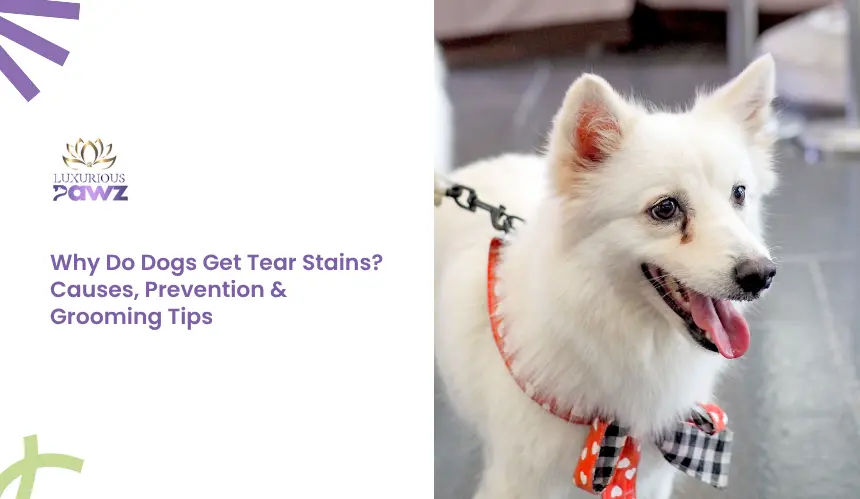
Why Do Dogs Get Tear Stains? Causes, Prevention & Grooming Tips
Key Takeaways
|
Tear stains can make a dog’s face look damp, rusty, or irritated, even when the dog seems comfortable. These marks usually appear when tears collect under the eyes and leave visible residue on the coat. In some dogs, the cause is cosmetic and breed-related, while in others it may involve irritation, poor drainage, allergies, or an eye-health concern. This article explains the main causes, safe prevention steps, grooming support, and signs that need veterinary attention.
What Are Tear Stains in Dogs?
Tear stains are marks that develop below a dog’s eyes when tear residue remains on the fur. They can look simple on the surface, but the pattern, smell, texture, and speed of change can reveal whether the issue is mainly cosmetic or potentially medical.
What Do Tear Stains Look Like?
Dog tear stains usually appear as reddish-brown, rust-colored, or dark streaks beneath the eyes. They may run from the inner eye corners toward the muzzle, especially in dogs with longer facial hair or folds near the nose.
Some dogs also develop damp fur, dried crust, or sticky buildup around the stained area. When moisture remains on the coat for too long, the skin underneath may become sensitive, itchy, or irritated.
Do You Know?
AKC notes that porphyrins are naturally released through a dog’s tears, saliva, urine, and feces. These compounds contain iron, which is why tear stains often appear reddish-brown, especially on white or light-colored fur. This means the stain color is not always dirt or poor hygiene. It can be a normal pigment reaction made more visible by moisture and coat color.
Why Are Tear Stains More Visible on Some Dogs?
Tear stains are easier to see on white, cream, apricot, or other light-colored coats because discoloration is not hidden by darker fur. A small amount of residue can look much stronger on pale hair than it would on a black, brown, or mixed-color coat.
Facial structure also affects visibility. Dogs with prominent eyes, short muzzles, shallow eye areas, or folds near the nose may show staining more often because tears do not always move away from the face cleanly.
Are Tear Stains Always a Health Problem?
Mild tear staining is not always a medical concern. Some dogs naturally show staining because of coat color, tear pigment, breed structure, or normal moisture around the eyes.
The concern increases when staining changes suddenly, becomes heavy, smells unpleasant, or appears with discomfort. Redness, swelling, squinting, pawing, thick discharge, or eye sensitivity should be treated as more than a grooming issue.
Why Do Dogs Get Tear Stains?
Dogs get tear stains for several reasons, including excess tear production, weak drainage, coat irritation, environmental triggers, or breed anatomy. Identifying the likely cause helps owners choose safer care instead of relying on random stain removers.
What Causes Excessive Tear Production?
Excessive tearing happens when the eyes produce more fluid than usual in response to irritation. Dust, pollen, smoke, wind, shampoo residue, strong fragrance, and airborne allergens can all make the eyes water.
This reaction is the eye’s way of clearing irritation from the surface. When the extra tears cannot drain fast enough, they move onto the surrounding fur and create visible staining over time.
How Does Poor Tear Drainage Cause Staining?
Tears normally pass through small drainage openings near the eyes and move through the nasolacrimal duct. If this pathway is narrow, blocked, inflamed, or poorly positioned, tears may spill outward instead of draining normally.
Poor drainage can be linked to facial anatomy, tear duct blockage, inflammation, or debris. Dogs with short noses or shallow eye areas may experience this more often because their tear pathways can be less efficient.
Can Hair Rubbing Against the Eyes Cause Tear Stains?
Hair near the eyes can trigger watering when it touches the eye surface or inner eyelid area. This is common in dogs with long face hair, heavy brows, or coat growth around the inner eye corners.
The issue is mechanical rather than cosmetic. When hair keeps rubbing the eye, the dog may blink more, rub the face, or develop constant wetness below the eyes. In these cases, coat placement can be a major part of the problem.
Do Diet, Water, and Environment Affect Tear Stains?
Diet, drinking water, and indoor conditions may influence tear staining in some dogs, but they should not be treated as the only explanation. Food sensitivities, mineral-heavy water, dusty bedding, poor bowl hygiene, and indoor irritants may worsen eye watering or skin irritation.
Owners should look for patterns before making changes. If staining increases after a food switch, during allergy season, after dusty walks, or around strong household scents, the trigger may be linked to the dog’s routine or environment.
Which Dog Breeds Are More Prone to Tear Stains?
Some breeds are more likely to develop tear stains because of eye shape, muzzle length, coat type, or facial folds. Breed tendency does not always mean disease, but it does mean the dog may need more consistent eye-area care.
Do You Know?
There are more than 340 dog breeds known worldwide, and the American Kennel Club recognizes 200 breeds. This wide variation explains why tear stains are not the same in every dog. Eye shape, muzzle length, facial folds, coat texture, and hair growth patterns can all change how tears move across the face.
Small and Toy Breeds
Small and toy breeds often show tear stains because many have compact facial features and fine facial hair. Maltese, Shih Tzu, Bichon Frise, Poodle, Yorkshire Terrier, and Lhasa Apso are common examples.
These breeds may also have coats that hold residue close to the skin. Regular face cleaning can prevent dried buildup from becoming harder to remove.
Flat-Faced Breeds
Flat-faced dogs can be more prone to staining because their eye and nose structure may affect normal tear movement. Pugs, Bulldogs, French Bulldogs, Boston Terriers, and similar brachycephalic breeds may have shallow eye areas or folds where moisture collects.
Moisture trapped inside folds can create additional hygiene concerns. If folds stay damp, they may collect debris and become irritated faster than smooth facial skin.
Long-Haired Breeds
Long-haired dogs may show heavier staining when facial hair absorbs tears or sits too close to the eyes. The coat can hold residue in place, which makes discoloration appear darker over time.
This does not always mean the dog is producing too many tears. In many cases, the hair simply needs better shaping, combing, or maintenance so moisture does not stay trapped under the eyes.
How Can Dog Owners Prevent Tear Stains at Home?
At-home prevention focuses on keeping the eye area clean, dry, and free from avoidable irritation. These steps do not replace medical care, but they can reduce buildup and make abnormal changes easier to notice.
How Should Owners Clean the Eye Area?
The safest approach is gentle cleaning with a soft damp cloth, pet-safe wipe, or vet-approved eye-area product. Cleaning should remove residue before it dries into crust or darkens on the fur.
Harsh cleaners should not be used near the eyes. Peroxide, alcohol, essential oils, whitening products, and strong chemical solutions can irritate sensitive skin or harm the eye surface if they spread too close.
Why Should Facial Hair Stay Trimmed?
Facial hair should stay controlled so it does not rub against the eyes or hold moisture below them. A neat trim around the inner corners and muzzle can reduce irritation and make daily wiping easier.
Owners should be careful with scissors near the eyes. If the dog moves suddenly, professional grooming is safer than attempting close trimming at home.
Sunland’s warm, dry weather can make coat control more important for dogs that spend time outdoors, especially when dust, pollen, loose fur, and dry debris collect around the face, legs, and body. Long or uneven hair can also trap moisture under the eyes, hold tear residue, and make regular cleaning harder for owners.
For many pet owners, pet haircut services are helpful in Sunland, CA because trimming keeps the coat neater, reduces matting, and prevents facial hair from rubbing near the eyes. This can support better hygiene for dogs prone to tear stains, heavy shedding, tangles, or buildup around sensitive areas.
How Can Allergens and Irritants Be Managed?
Environmental control can reduce irritation-related tearing. Bedding should be washed regularly, dusty rooms should be cleaned, and food and water bowls should stay sanitary.
Smoke, strong perfumes, aerosol sprays, and harsh grooming products can also aggravate sensitive eyes. If staining increases during pollen season or after outdoor exposure, the dog may benefit from a cleaner face routine after walks.
Sunland’s warm, dry conditions can make dogs more exposed to dust, pollen, loose hair, and outdoor debris during walks, yard play, and regular activity. When buildup stays on the coat, it can lead to odor, dull fur, itching, and skin discomfort, especially for dogs with sensitive skin or thicker coats.
For many local pet owners, pet bathing becomes a regular part of care in Sunland, CA because it helps remove surface dirt, allergens, loose fur, and odor before they affect the skin or coat. Routine bathing also supports cleaner facial areas, which can be helpful for dogs prone to tear stains, crusting, or moisture buildup around the eyes.
What Changes Should Owners Watch Closely?
Owners should monitor the tear-stained area for changes in smell, texture, color, and skin condition. A steady stain pattern is less concerning than sudden wetness, crusting, swelling, or discomfort.
Clear tears with mild rust-colored marks are different from thick yellow, green, bloody, or foul-smelling discharge. Any painful or unusual change should be checked by a veterinarian.
How Professional Grooming Helps Manage Tear Stains
Professional grooming helps control tear stains by improving facial hygiene, coat shape, and comfort around sensitive eye areas. It is especially useful for dogs that resist face cleaning or develop buildup quickly between baths.
Sunland’s warm, dry climate can expose dogs to dust, pollen, loose fur, and outdoor debris during daily walks, yard time, or regular activity. When these particles stay trapped in the coat, they can cause odor, tangles, shedding buildup, dry skin, and discomfort, especially for dogs with thick coats, long hair, or sensitive skin.
For many pet owners, dog grooming becomes part of routine care in Sunland, CA because it helps keep the coat clean, nails controlled, ears checked, and facial areas maintained. This is especially helpful for dogs prone to tear stains, matting, seasonal shedding, or skin irritation, as regular grooming makes at-home care easier between appointments.
Safe Cleaning Around Sensitive Eyes
The skin below the eyes is delicate, and many dogs pull away when that area is touched. A groomer can soften dried residue, remove buildup, and clean the coat with controlled handling.
Gentle technique matters because aggressive rubbing can inflame the skin and make future face care harder. A calmer grooming process keeps the area cleaner without creating extra irritation.
Face Trimming and Coat Maintenance
Professional face trimming keeps hair from sitting directly against the eyes or collecting residue underneath them. This is helpful for dogs with rounded face styles, heavy brows, long muzzle hair, or coat growth near the inner eye corners.
A groomer can shape the face without cutting too close to the eye margin. Proper coat maintenance also improves airflow around the stained area and reduces damp pockets in the fur.
Grooming Frequency for Tear-Stain-Prone Dogs
Dogs that develop stains quickly often need a regular grooming schedule instead of occasional deep cleaning. The right timing depends on coat growth, tear volume, facial folds, and skin sensitivity.
Some dogs need light face maintenance between full grooming appointments. Others may only need routine cleaning when the coat begins to grow into the eye area.
When Should Tear Stains Be Checked by a Vet?
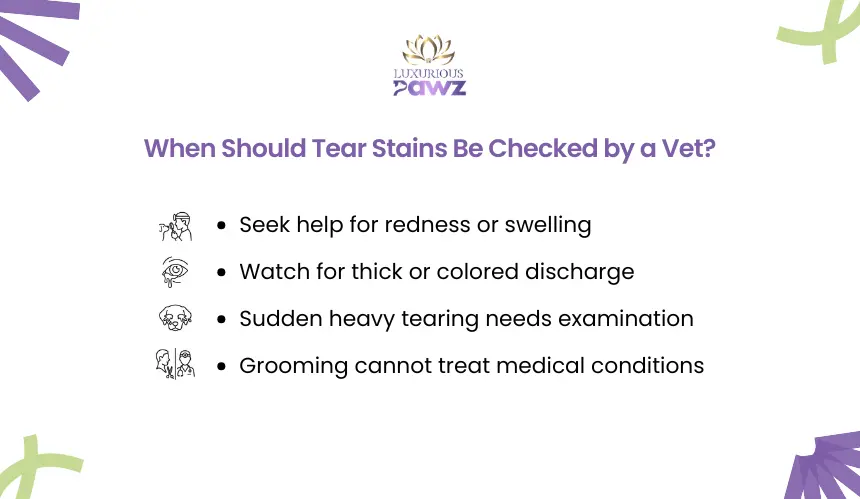
Tear stains should be checked by a veterinarian when they appear with pain, sudden worsening, abnormal discharge, or visible eye changes. Grooming can improve cleanliness, but medical causes require diagnosis and proper treatment.
What Signs Need Medical Attention?
Veterinary care is needed when a dog has redness, swelling, squinting, cloudy eyes, eye rubbing, bleeding, thick discharge, or sudden heavy tearing. These signs may point to infection, injury, blocked drainage, or inflammation.
A quick exam is safer than waiting because eye problems can progress quickly. Dogs may not show obvious pain until the condition becomes more serious.
What Conditions Can Cause Tear Staining?
Underlying causes may include blocked tear ducts, allergies, conjunctivitis, corneal irritation, eyelid abnormalities, inward-growing hairs, dental disease, or inflammation near the tear drainage system.
Some conditions increase tear production, while others stop tears from draining properly. This is why persistent staining should not be treated only with surface cleaning.
Why Should Grooming Not Replace Veterinary Care?
Grooming can remove buildup, reduce coat-related irritation, and keep the face cleaner. It cannot confirm whether a dog has an infection, duct blockage, corneal injury, dental-related issue, or eyelid disorder.
The safest approach is to use grooming for hygiene and prevention, then involve a veterinarian when symptoms suggest pain, infection, or structural eye trouble.
Keep your dog’s face, coat, and skin feeling cleaner with trusted grooming support from Luxurious Pawz. From gentle bathing and neat haircuts to careful eye-area maintenance, our grooming care helps manage tear stain buildup, matting, shedding, and everyday coat concerns. Contact Luxurious Pawz today to give your pet a cleaner, calmer, and more comfortable grooming experience.
Frequently Asked Questions
Are Tear Stains Normal in Dogs?
Mild tear stains can be normal in some dogs, especially breeds with pale coats, compact faces, long facial hair, or folds near the eyes. Staining becomes more concerning when it changes suddenly or appears with discomfort.
Can Grooming Remove Tear Stains Completely?
Grooming can reduce visible staining, remove dried buildup, and keep the eye area cleaner. However, stains may return if the cause is related to tear drainage, allergies, facial anatomy, or an untreated medical issue.
What Dog Breeds Get Tear Stains Most Often?
Tear stains are common in Maltese, Shih Tzu, Bichon Frise, Poodles, Yorkshire Terriers, Pugs, Bulldogs, French Bulldogs, and other dogs with prominent eyes, short muzzles, light coats, or long facial hair.
Should Owners Use Home Remedies for Tear Stains?
Owners should avoid harsh home remedies near the eyes, including peroxide, alcohol, essential oils, and strong whitening products. Gentle pet-safe cleaning is safer, and persistent staining should be discussed with a groomer or veterinarian.
When Are Tear Stains a Vet Concern?
Tear stains need veterinary attention when they appear with pain signs, swelling, redness, thick discharge, strong odor, cloudy eyes, or sudden heavy tearing. These symptoms may indicate an eye condition rather than routine staining.