
- admin
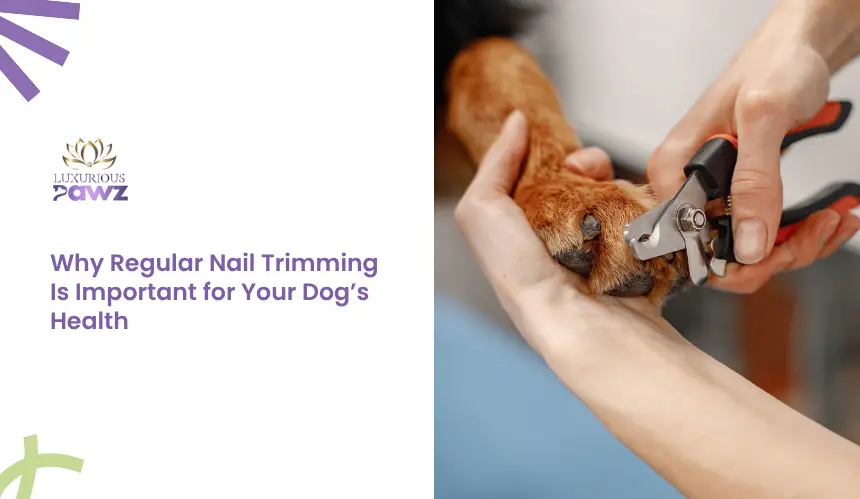
Why Regular Nail Trimming Is Important for Your Dog’s Health
Key Takeaways
|
Overgrown nails can affect how a dog stands, walks, plays, and reacts to touch. A small grooming delay can turn into toe strain, reduced balance, torn nails, or posture changes. Regular nail trimming keeps nail length manageable before soreness or injury develops. It also makes paw checks easier and helps owners handle nail care before problems become harder to correct.
How Do Overgrown Nails Affect a Dog’s Comfort and Movement?
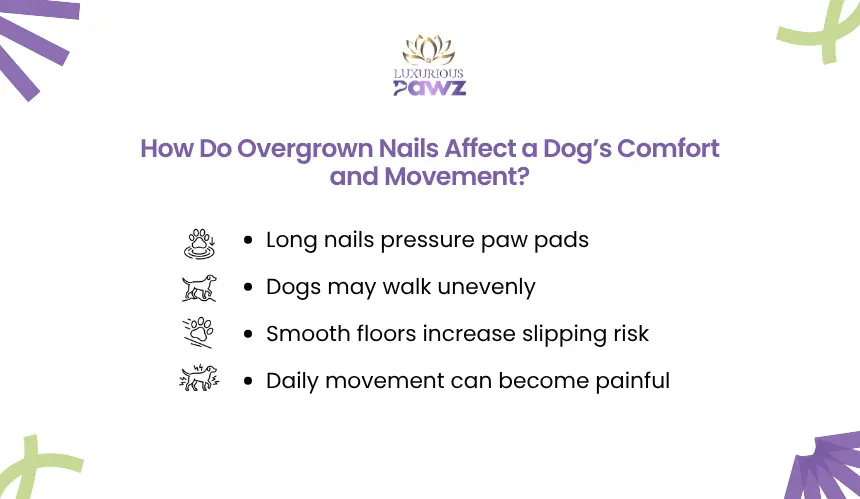
Excessive nail length changes the way a dog uses its feet. When the nails hit the floor too early, the dog may adjust each step to avoid sensitivity or stay steady.
Do You Know?
A dog’s claws should generally not touch the ground when the dog is standing on a flat surface. The Royal Kennel Club also notes that many dogs may need claw trimming once or twice a month, depending on activity level and walking surfaces. This makes nail checks a routine health habit, not just a grooming task.
Pressure on the Paws and Toes
A dog’s paw pads are built to absorb body weight during movement. When nails extend too far, they can press backward into the nail bed every time the dog steps on a hard surface.
That force can change how the toes spread and how the foot lands. Instead of using the full paw evenly, the dog may shift away from the sore area. Firm surfaces such as tile, wood, or concrete can become harder to tolerate.
Over time, the toes may stay in a tense position. This can make standing, walking, or paw handling more uncomfortable.
Slipping, Limping, and Uneven Walking
Overgrown nails can weaken floor grip because the paw pads cannot make stable contact as easily. On smooth indoor surfaces, a dog may slide, pause before moving, or avoid quick turns.
Some dogs begin taking shorter steps or placing weight unevenly from one side to the other. Limping may appear when a single nail is cracked, longer than the rest, or pressing into a sensitive area.
An uneven gait often shows that the dog is protecting a painful toe, damaged nail, or irritated paw
Pain During Daily Activities
Common activities can become difficult when nail length is not controlled. Climbing stairs, jumping onto furniture, running outside, or playing on hard ground can place extra force on the nails.
A dog may slow down, stop joining play, hesitate before jumping, or pull away when the feet are touched. Lower activity can affect exercise habits, weight control, and daily comfort.
Timely dog nail trimming helps keep normal movement from becoming painful or stressful.
What Health Problems Can Develop From Long Dog Nails?
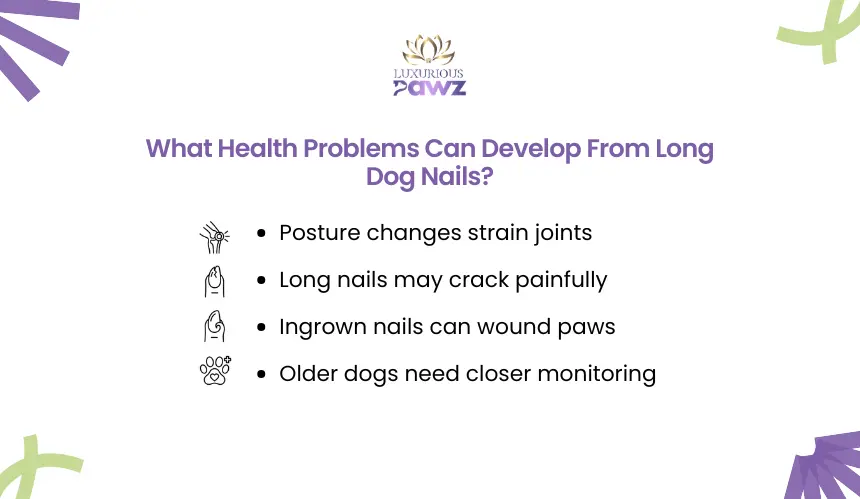
Delayed nail care can create health concerns beyond temporary soreness. Poor nail maintenance may contribute to body strain, nail injuries, skin wounds, and infection risk.
Do You Know?
Cornell University’s Riney Canine Health Center reports that about 60% of dogs are overweight or obese. This matters because painful nails can reduce movement, and lower activity may affect exercise habits, weight control, and long-term health.
Joint Strain and Posture Changes
When nails remain too long, a dog may stand with weight shifted backward or unevenly across the feet. This altered stance can place added stress on the wrists, elbows, shoulders, hips, and spine.
The body may compensate by loading the legs differently. These changes can be more serious for dogs with arthritis, weak joints, old injuries, or age-related mobility problems.
Keeping nails shorter reduces unnecessary strain on the lower limbs and supports better mechanical control during standing, turning, and walking.
Cracked, Split, or Ingrown Nails
Neglected nails are more likely to catch on rugs, bedding, outdoor surfaces, or flooring gaps. When a nail snags, it can split, tear, or break close to the quick.
A damaged nail may expose sensitive tissue and cause bleeding. If bacteria enter the injured area, infection can develop. The dog may lick the foot often, limp, or resist touch.
In some cases, a nail can curl toward the paw pad. Ingrown nails may pierce the skin, create wounds, and make each step painful.
Higher Risk for Older or Less Active Dogs
Senior dogs and low-activity pets often do not wear their nails down naturally. Dogs that spend more time on rugs, grass, bedding, or soft flooring may also need closer nail monitoring.
Older pets may already have weaker muscles, reduced balance, or stiff joints. Excess nail length can make these issues more obvious by reducing stability and forcing the toes into a strained position.
For these dogs, scheduled trimming is more reliable than waiting for natural wear.
How Does Regular Nail Trimming Support Better Dog Care?
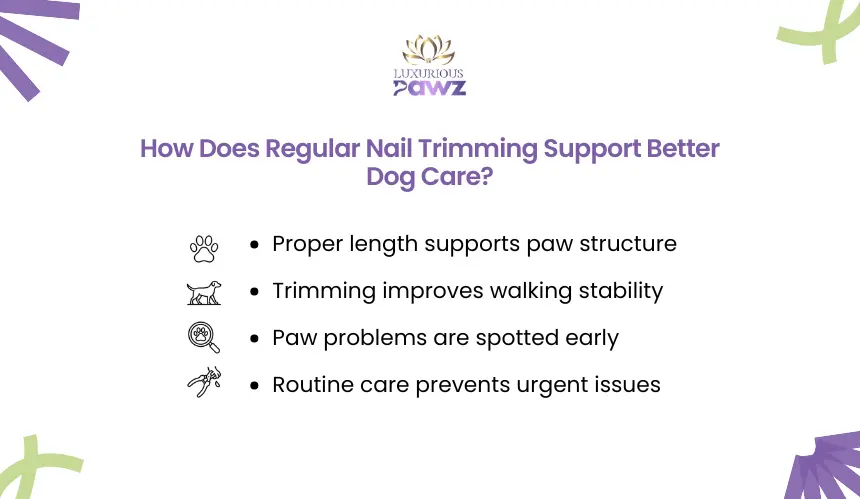
Consistent trimming creates a more manageable paw care routine. It supports early problem detection, improves handling, and prevents nail care from becoming urgent.
Altadena’s mix of foothill neighborhoods, outdoor walking routes, home yards, and nearby trail access can keep dogs active on different surfaces throughout the week. Pavement, dirt paths, grass, and indoor flooring do not always wear nails evenly, especially for senior dogs, smaller breeds, or pets that spend more time inside.
That is why in Altadena, CA, pet nail trimming is important for helping dogs maintain better paw comfort, steadier movement, and safer daily activity. When nails become too long, dogs may slip on smooth floors, feel pressure during walks, or develop cracked and painful nails. Regular trimming supports healthier paws before small nail problems begin affecting how a dog walks, plays, or reacts to touch.
Maintains Healthy Paw Structure
A proper nail length allows the foot to carry weight more evenly. This supports a steadier stride and gives the dog better control on different surfaces.
When nails are maintained regularly, the toes are less likely to spread awkwardly or stay tense during activity. Shorter nails also help the dog move more confidently between indoor floors, outdoor paths, and uneven ground.
Routine trimming is also useful because it can help prevent the quick from extending too far into the nail. When trimming is delayed for too long, the sensitive inner tissue may grow farther forward and make future cuts more difficult.
Helps Spot Paw Problems Early
Nail trimming creates a chance to inspect the feet closely. During a trim, owners or professional groomers may notice cracked pads, swelling, redness, tenderness, broken nails, or unusual nail growth.
Early detection matters because dogs often hide discomfort until the issue becomes more advanced. A small split, irritated pad, or sore toe can be handled sooner when paw checks are part of regular care.
Frequent handling also makes it easier to notice changes between appointments. This can help identify repeated breakage, uneven growth, or sensitivity in one foot.
Altadena’s foothill setting, warm weather, and outdoor lifestyle can make regular grooming more important for local dogs.
Many pets in the area spend time walking through neighborhoods, yards, parks, and nearby trail environments, where dust, loose hair, allergens, and outdoor debris can collect in the coat. Altadena is also known for hot, dry summers, which can make shedding, skin dryness, and coat buildup more noticeable.
That is why dog grooming in Altadena, CA is important for keeping pets cleaner, more comfortable, and easier to inspect for skin, coat, ear, paw, or nail issues. Regular grooming can help remove trapped dirt, manage shedding, reduce matting, and support healthier skin before small problems become harder to handle.
For active local dogs, routine grooming is not only about appearance; it supports daily comfort, hygiene, and better care after outdoor activity.
Creates a Less Stressful Grooming Routine
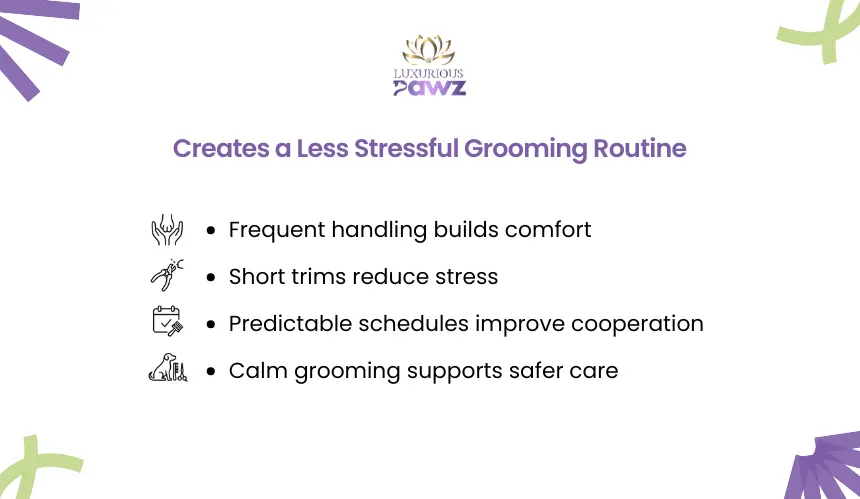
Dogs may resist nail care when trimming only happens after the nails are already painful. Gentle, frequent handling helps the dog become more familiar with foot care.
Short sessions are usually easier than long corrective trims. When nails are maintained properly, less length needs to be removed at one time. This lowers the chance of discomfort and helps the dog stay calmer during the process.
A predictable schedule also helps owners manage nail care before it becomes urgent. The process becomes safer, the dog becomes more cooperative, and paw maintenance stays easier over time.
Frequently Asked Questions
How can a dog owner tell when a dog’s nails are too long?
A dog’s nails may be too long if they touch the floor while the dog is standing, make clicking sounds on hard surfaces, or cause the dog to walk unevenly. Nails that curve toward the paw pad or catch on rugs also need attention.
How often should dogs get their nails trimmed?
Most dogs need nail trimming every few weeks, but the timing depends on activity level, walking surfaces, age, and nail growth speed. Dogs that walk mostly on soft indoor floors or grass may need trims more often than dogs that regularly walk on rough pavement.
Can long nails affect a dog’s behavior?
Yes. Long nails can make dogs more hesitant, restless, or resistant to paw handling because walking or being touched may feel uncomfortable. Some dogs may avoid stairs, jumping, play, or grooming when their nails are causing soreness.
Why is pet nail trimming helpful for dogs in Altadena, CA?
Dogs in Altadena often move across different surfaces, including sidewalks, yards, soft indoor flooring, and nearby outdoor paths. These surfaces may not wear nails evenly, so routine trimming helps reduce paw strain, slipping, and cracked nails.
Is nail trimming part of regular dog grooming?
Yes. Nail trimming is often included in regular dog grooming because groomers can check the paws, pads, coat, ears, and skin during the same visit. This helps owners notice small issues before they become painful or harder to manage.
What happens if a dog’s nail grows into the paw pad?
If a nail grows into the paw pad, it can cause pain, wounds, bleeding, swelling, and infection risk. The dog may limp, lick the paw, or avoid putting weight on that foot. A groomer or veterinarian should check the nail if it looks embedded or painful.