
- admin
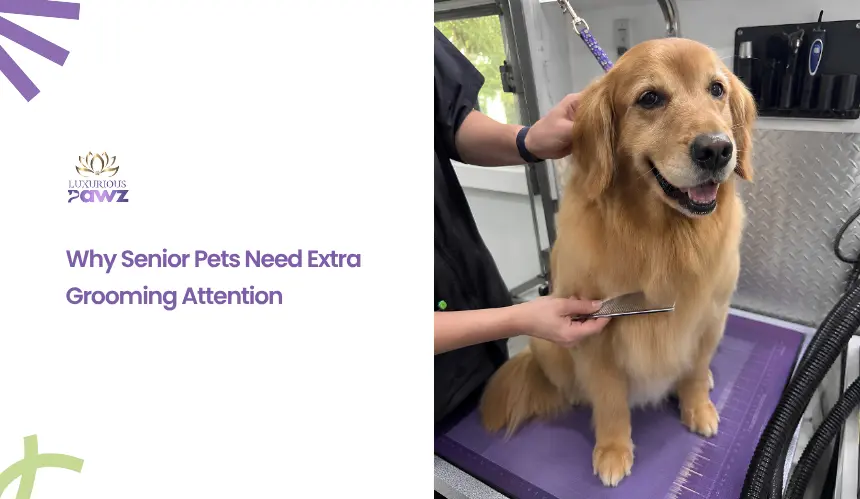
Why Senior Pets Need Extra Grooming Attention
Key Takeaways
|
Senior pets need extra grooming attention because age makes routine coat, nail, and hygiene care harder to manage without discomfort. Older dogs and cats may develop hidden grooming issues before owners notice visible signs.
Older dogs and cats may not show discomfort right away, but small grooming issues can quickly affect movement, cleanliness, and skin comfort.For pet owners in Sunland, CA, gentle grooming is especially useful for older pets that deal with dry weather, outdoor dust, and reduced flexibility.
Why Age Changes A Pet’s Grooming Requirements
Aging affects the body’s ability to maintain clean skin, a healthy coat, and comfortable movement. Grooming should become more careful as a pet’s tolerance, balance, and skin condition change.
Sunland’s warm, dry foothill climate can affect how older dogs’ coats and paws respond to everyday outdoor exposure. Dogs that walk near Foothill Boulevard, Sunland Boulevard, La Tuna Canyon, or the hillside neighborhoods may collect dust, dry debris, and fine particles around the paws, lower legs, and coat edges.
For senior dogs with thinner skin, reduced flexibility, or slower movement, dog grooming in Sunland, CA becomes more than routine coat care. Regular grooming helps manage dryness, remove outdoor buildup, and keep older dogs more comfortable in the local climate.
Do You Know? Cornell Feline Health Center explains that many cats begin showing age-related physical changes between 7 and 10 years old, and most experience these changes by age 12. This means grooming support should start before severe matting, stiffness, or hygiene decline becomes obvious. |
Why Does Senior Pet Skin Need Gentler Handling?
Older pets may have skin that is thinner, drier, or easier to irritate. A brush, shampoo, towel, or clipper that once worked well may feel too rough as the skin loses elasticity.
Low-pressure handling helps prevent skin stress during brushing, clipping, drying, and bathing. Senior grooming should focus on control, not force, especially when the pet has thinning skin or a lower tolerance for touch.
How Does Coat Quality Change With Age?
Aging can make the coat dull, uneven, brittle, or slower to shed. Some pets may develop patchy areas, while others grow thicker undercoat that becomes harder to manage.
These coat changes can make grooming more technical. The goal is not only to remove loose hair but also to prevent heavy buildup that can pull on the skin or trap debris.
Why Do Older Pets Struggle With Self-Cleaning?
Joint stiffness, arthritis, muscle loss, and lower energy can make it difficult for older pets to twist, stretch, or reach certain parts of the body. Cats may stop grooming their back or hips, while dogs may leave paws, belly areas, or the rear end less clean.
When self-cleaning drops, neglected areas can become harder to manage between grooming sessions. Owners may need to check hard-to-reach spots more often, especially around the back end, paws, and lower body.
Cats in Sunland homes near Apperson Street, Mount Gleason Avenue, Oro Vista Avenue, and Verdugo Crestline Drive may be exposed to dry indoor air, open-window dust, and outdoor particles carried in from patios or entryways. For older cats, this can make the coat feel rougher, increase dander, and cause loose fur to collect faster.
Because senior cats may groom less due to stiffness, weight changes, or lower energy, cat grooming in Sunland, CA can help manage shedding, reduce coat buildup, and lower the chance of hairballs. Regular brushing and hygiene checks are especially useful for cats that spend more time resting indoors but still collect dust and loose fur around the coat.
Do You Know? VCA Animal Hospitals reports that osteoarthritis affects more than 90% of cats aged 10 years and older. Pain in the spine, hips, and lower back can make twisting difficult, which is why older cats may stop grooming certain areas and develop matted fur. |
Grooming Issues Senior Pets Commonly Develop
Age-related grooming problems usually appear slowly. A small tangle, long nail, or dirty paw area may seem minor at first, but it can create discomfort when an older pet already has sensitive skin or weaker movement.
Why Do Mats Develop Around Friction Areas?
Mats often form where the coat rubs during movement, such as behind the ears, under the legs, around the chest, near the hips, and close to the tail. Older coats may not release loose fur cleanly, so strands can lock together faster.
Dense mats can tighten against the skin and make brushing painful. Once the fur becomes packed, it may need professional removal instead of home brushing.
How Do Long Nails Affect Walking?
Long nails can interfere with normal paw placement. When nails hit the floor too early, they may push the toes back and change how the pet carries weight.
This is more serious for pets with weak legs, arthritis, or poor balance. Proper nail length helps the paw pads grip better and supports safer walking on tile, wood, or smooth indoor floors.
Where Does Hygiene Buildup Usually Appear?
Buildup often appears around the eyes, ears, paws, skin folds, mouth area, and sanitary region. These areas may collect discharge, dirt, moisture, or odor when a pet cannot clean itself properly.
In Sunland, CA, dry yards, patios, and dusty outdoor spaces can leave fine debris around the paws, lower legs, and coat edges. These areas should be checked before buildup turns into odor, staining, or licking.
Why Can Grooming Become Stressful For Older Pets?
Senior pets may resist grooming when pressure, positioning, water temperature, or session length causes discomfort. Signs may include pulling away, panting, trembling, licking, growling, or trying to sit down repeatedly.
These reactions should guide the grooming method. A calmer pace, more breaks, and better body support can reduce stress and prevent the pet from associating grooming with pain.
How Extra Grooming Supports Senior Pet Health
Consistent grooming gives owners a practical way to protect comfort and notice body changes. It keeps the coat manageable while making skin, nails, ears, paws, and sensitive areas easier to monitor.
How Can Grooming Reveal Health Changes?
Brushing and bathing create regular contact with the pet’s body. During grooming, owners or groomers may notice lumps, scabs, swelling, hot spots, parasites, hair loss, redness, or unusual tenderness.
These findings do not replace veterinary care, but they can help owners act sooner when something looks different. Early observation is especially valuable for pets with thick coats or reduced mobility.
Do You Know? The American Veterinary Medical Association says senior pets may need veterinary visits twice a year or more so signs of illness can be found earlier. Grooming can help owners notice visible warning signs such as lumps, bumps, discolored skin, or non-healing sores between vet visits. |
How Does Brushing Improve Daily Comfort?
Brushing removes loose hair, dander, and surface debris before they settle deep into the coat. It also helps spread natural oils, which can support a softer coat without unnecessary bathing.
For older pets, brushing should be slow and sectioned. Short, careful strokes reduce pulling and make the coat easier to maintain over time.
Why Is Paw And Nail Care Important For Mobility?
Paw and nail care supports daily movement by keeping the feet clean, stable, and properly positioned. Trimmed nails improve floor contact, while clean paw pads reduce discomfort caused by trapped dirt or compacted fur.
This matters for senior pets that move slowly, avoid stairs, or need extra effort when standing after rest.
How Does Targeted Cleaning Reduce Irritation?
Targeted cleaning lowers the chance of irritation by removing trapped discharge, saliva residue, urine traces, and debris from sensitive areas. This is especially useful around folds, paw spaces, ear openings, and sanitary zones where airflow is limited.
Cleaning should be measured and careful. Too much wiping can dry the skin, while too little care allows residue to collect and become harder to manage.
Safe Grooming Practices For Older Dogs And Cats
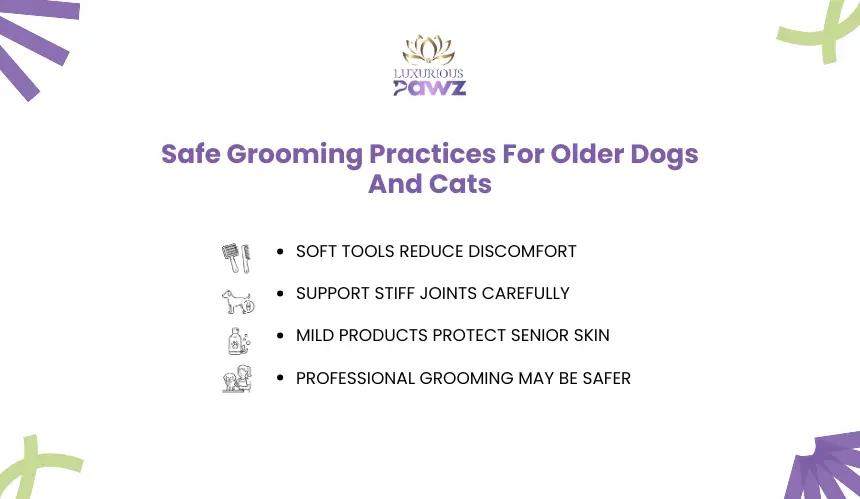
Senior grooming should focus on safety, patience, and physical support. The right method keeps the pet clean without creating joint strain, skin irritation, overheating, or unnecessary anxiety.
What Tools Are Better For Senior Pets?
Soft brushes, wide-tooth combs, quiet clippers, absorbent towels, and non-slip mats are better suited for older dogs and cats. These tools reduce pulling, noise sensitivity, and unstable footing.
Tools should match the coat type and the pet’s tolerance. A thick-coated dog may need careful undercoat work, while a short-haired senior cat may need only light brushing and skin checks.
How Should Grooming Be Adjusted For Arthritis Or Stiffness?
Pets with arthritis or stiffness need body-supported grooming. Legs should not be stretched, lifted too high, or held for long periods, especially during nail trimming, belly cleaning, and brushing near the hips.
Short grooming intervals reduce joint strain. A pet that sits, shifts weight, or pulls away may need a pause before the next grooming step.
Why Use Mild Products On Senior Pets?
Mild grooming products are better for senior pets because they clean without leaving the skin tight, dry, or irritated. Fragrance-heavy shampoos, harsh cleansers, and repeated bathing can create discomfort after the coat dries.
Pets with allergies, flakes, hot spots, or medical skin concerns may need veterinarian-approved shampoos. Product choice should match the pet’s skin condition, not just the coat’s appearance.
When Is Professional Grooming The Safer Choice?
Professional grooming may be safer when home care becomes uncomfortable, incomplete, or difficult to control. Heavy matting, curled nails, poor standing tolerance, strong resistance, or hygiene buildup may require trained handling.
For families in Sunland, CA, mobile grooming can reduce car travel, waiting-room stress, and long salon exposure for older pets. If a pet has open wounds, sudden pain, infection signs, or severe distress, veterinary care should come before grooming.
Give older pets the gentle care they need with professional pet grooming designed around comfort, safety, and cleanliness. From careful brushing and bathing to nail trimming, paw care, and hygiene support, the right grooming routine can help senior dogs and cats feel cleaner, calmer, and more comfortable. Contact Luxurious Pawz today to schedule patient, pet-focused grooming that supports your companion’s changing needs.
Frequently Asked Questions
How Often Should Senior Pets Be Groomed?
Senior pets usually need grooming on a schedule based on coat type, mobility, skin condition, and lifestyle. Long-haired or thick-coated pets may need brushing several times a week, while short-haired pets may need lighter maintenance. Nail checks, ear checks, and coat inspections should happen regularly to prevent small issues from building up.
Can Senior Pets Be Groomed If They Have Cognitive Decline?
Senior pets with cognitive decline can still be groomed, but the session should be calm, predictable, and short. Confused pets may become anxious with noise, restraint, or unfamiliar handling. A familiar routine, gentle voice, slow movement, and breaks can make grooming safer and less overwhelming.
What Should Owners Tell A Groomer Before A Senior Pet Appointment?
Owners should share details about arthritis, past injuries, skin conditions, medication, anxiety triggers, lumps, hearing loss, vision problems, and areas the pet dislikes being touched. This helps the groomer adjust handling, tool choice, session length, and body support before grooming begins.
Is It Better To Groom A Senior Pet At Home Or Use A Professional?
Home grooming works well for light brushing, simple wiping, and routine coat checks. Professional grooming is better when the pet has dense coat buildup, difficult nails, handling sensitivity, or hygiene needs that require safer tools and trained support. The best choice depends on the pet’s comfort and grooming difficulty.
What Should Owners Do After A Senior Pet Is Groomed?
After grooming, owners should watch for unusual tiredness, limping, redness, scratching, licking, or sensitivity. Senior pets may need extra rest after handling, especially if they have joint stiffness or anxiety. A calm space, water access, and gentle monitoring help confirm the grooming session did not cause discomfort.
Can Grooming Help Senior Pets During Seasonal Shedding?
Seasonal shedding can be harder on senior pets because loose fur may stay trapped in the coat longer. Regular grooming can remove dead hair before it forms clumps, reduce dander, and keep the coat lighter. This is especially useful for older pets that rest more and groom themselves less.