
- admin
Key Takeaways
|
5 Signs Your Pet Is Anxious About Grooming (and How to Fix It)
1. Avoidance or Hiding When Grooming Tools Appear
Grooming should feel routine, not stressful. Yet many pets show subtle signs of anxiety long before owners realize something is wrong.
A dog that suddenly hides at the sound of clippers or a cat that stiffens during brushing is not being stubborn. These are early stress signals linked to grooming anxiety.
This guide breaks down five credible signs your pet may be anxious about grooming and explains practical, behavior-focused solutions for each one.
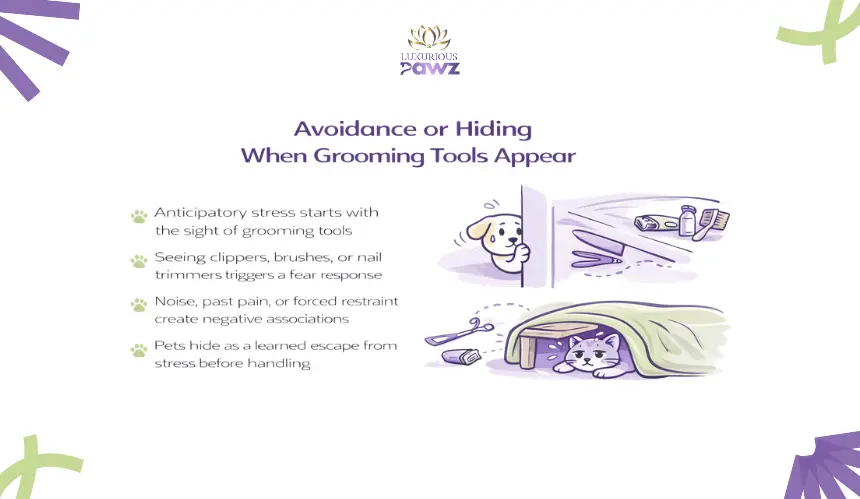
Avoidance is often the earliest and most overlooked sign of grooming anxiety. Before a pet growls or trembles, they may simply try to disappear. This behavior reflects anticipatory stress, where the sight of a brush or nail trimmer triggers a learned fear response.
Why Does My Pet Run Away When I Bring Out Grooming Tools?
When a dog bolts to another room or a cat slips under the bed at the sound of clippers, the reaction is rarely random. It is usually a conditioned fear response. Pets associate visual cues, specific sounds, or even the location of grooming with a previous unpleasant experience.
Common triggers include:
- Loud clipper vibrations that overwhelm noise-sensitive pets
- Pain from brushing over matted fur, especially when heavy undercoat shedding is not properly managed
- Forced restraint during past grooming sessions
- Lack of early socialization with handling during puppy or kitten stages
From a behavioral standpoint, this is a classic flight response activated by perceived threat. The grooming tools themselves become anxiety triggers, even before physical contact begins.
How to Fix Avoidance Behavior Through Gradual Desensitization
Correcting avoidance requires changing the emotional association, not forcing compliance. Desensitization and counter-conditioning are proven behavior modification techniques often used when preparing a dog for a grooming appointment.
A structured approach includes:
- Neutral Exposure Without Contact: Place the grooming tool in the room without using it. Reward calm behavior. The goal is to remove the automatic fear response to sight alone.
- Pair Tools With Positive Reinforcement: Offer high-value treats or praise whenever the pet looks at or approaches the brush voluntarily. This builds a positive association.
- Introduce Brief, Non-Invasive Handling: Start with one gentle stroke or light touch. End the session before the pet shows stress signals such as lip licking, freezing, or turning away.
- Increase Duration Gradually: Extend handling time in small increments over days or weeks. Consistency matters more than intensity.
This gradual exposure training reshapes the grooming experience from threat-based to reward-based. When pets feel control and predictability, avoidance behavior begins to fade.
Pro tip: Use the treat-and-retreat method to give the pet emotional control. toss a treat away from the tool so the pet can approach, grab the treat, and move away again. this builds confidence without forcing closeness. |
2. Excessive Panting, Trembling, or Shaking
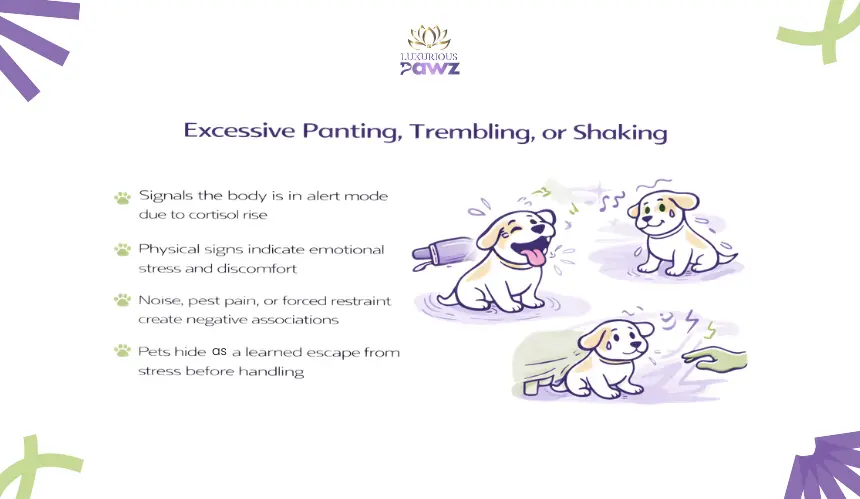
Not all grooming anxiety looks dramatic. Sometimes it shows up quietly through physical stress signals. A dog that pants heavily during brushing or a cat that trembles while being held may be experiencing heightened physiological stress, even if they are not trying to escape.
These reactions are linked to the body’s fight-or-flight response. When cortisol levels rise, the nervous system shifts into alert mode. Understanding these subtle cues helps prevent escalation into more severe behavioral reactions.
What Do Physical Stress Signals During Grooming Actually Mean?
Panting without heat or exercise is often an anxiety response rather than a cooling mechanism. Trembling, shaking, rigid posture, or wide, dilated pupils indicate that the pet feels unsafe or overwhelmed.
Common stress indicators include:
- Rapid panting in a cool environment
- Visible shaking during nail trimming
- Tense muscles and stiff tail posture
- Refusal to make eye contact
These signs reflect autonomic stress activation. The body prepares to either flee or defend itself, even if no real danger exists.
It is also important to rule out medical contributors. Arthritis pain, skin irritation, ear infections, or matted fur can make handling uncomfortable. If physical discomfort is present, grooming becomes associated with pain rather than anxiety alone.
How to Create a Calm Grooming Environment That Reduces Stress
Reducing physiological stress requires controlling environmental variables. A low-stimulation setting can significantly lower anxiety levels before grooming even begins.
Practical adjustments include:
- Choose a quiet room away from household traffic
- Turn off loud televisions or music
- Use soft lighting instead of harsh overhead lights
- Schedule grooming after light exercise, when the pet is naturally more relaxed
For highly sensitive pets, calming aids such as dog appeasement pheromones or vet-approved anxiety wraps may provide additional support. These tools do not replace training, but they can help lower baseline stress.
Creating predictability is equally important. Use the same location and routine each time. When grooming feels structured and controlled, the nervous system remains steadier, reducing excessive panting or trembling over time.
Pro tip: Teach a “start-button” behavior using the bucket game. the pet learns that looking at the bucket starts handling, and looking away pauses it, which lowers stress because the pet controls the pace. |
3. Growling, Snapping, or Sudden Aggression

When grooming anxiety progresses, it can shift from avoidance to defensive behavior. Growling, snapping, or sudden attempts to bite are often fear-based reactions, not dominance issues. These responses usually appear after earlier stress signals were missed or ignored.
Understanding this escalation helps prevent injuries and protects the trust between pet and owner.
Why Does My Pet Become Aggressive During Grooming?
Aggression during grooming typically follows a predictable behavioral escalation ladder. Subtle signals often appear first, including lip licking, yawning, freezing, or turning the head away. If those warning cues do not stop the interaction, the pet may move to growling or snapping.
Common underlying causes include:
- Pain during nail trimming due to cutting too close to the quick
- Sensitivity around ears, paws, or tail
- Previous traumatic grooming experiences
- Forced restraint without gradual conditioning
This behavior reflects fear aggression, a defensive response triggered when a pet feels trapped or uncomfortable. The goal is self-protection, not control.
Recognizing early body language cues such as stiff posture, tucked tail, pinned ears, or whale eye can prevent escalation before aggression occurs.
How to Build Handling Confidence and Prevent Defensive Reactions
Correcting grooming-related aggression requires rebuilding trust through cooperative care training. The focus should be on increasing tolerance for touch in small, controlled steps.
A structured approach includes:
- Touch Desensitization Exercises: Gently handle paws, ears, and tail for a few seconds outside of grooming sessions. Reward calm behavior immediately.
- Short Micro-Sessions: Limit grooming exposure to 30 to 60 seconds initially. Ending the session before stress escalates prevents reinforcement of aggressive behavior.
- Respect Threshold Levels: If the pet shows early stress cues, pause rather than push forward. Staying below the stress threshold builds confidence gradually.
- Use Stable Positioning Instead of Restraint: Allow the pet to sit or stand naturally instead of being forcibly held down. Stability increases perceived control.
With consistent positive reinforcement and predictable handling routines, defensive reactions can decrease. The key is replacing fear-based associations with structured, calm interactions that reinforce safety and trust.
Pro tip: Teach a chin rest as a consent signal. when the pet keeps the chin resting, grooming can continue. when the chin lifts, the handler pauses. this builds cooperation and reduces defensive reactions. |
4. Excessive Vocalization During Grooming

Some pets do not hide or snap. Instead, they communicate stress through sound. Whining, high-pitched barking, meowing, or persistent growling during grooming are emotional signals that the experience feels overwhelming.
Vocalization is not misbehavior. It is communication. When pets vocalize repeatedly during brushing, bathing, or blow-drying, they are expressing discomfort, fear, or sensory overload.
Why Does My Pet Whine or Bark During Grooming?
Stress vocalization patterns often occur in response to specific triggers rather than the entire grooming session. Identifying the exact moment the sound begins helps isolate the cause.
Common triggers include:
- Loud blow dryers or high-vibration clippers
- Sudden water exposure during a professional pet bathing session
- Being physically repositioned or restrained
- Cold air or temperature discomfort after bathing
Noise sensitivity plays a major role in many grooming anxiety cases. Certain dogs are particularly reactive to high-frequency sounds. Cats may become distressed when airflow or water contacts their face or ears.
Vocal cues often escalate when pets feel they have lost control. The sound becomes their attempt to communicate distress or request distance from the stimulus.
How to Modify the Grooming Process to Reduce Vocal Stress
Reducing vocal anxiety requires adjusting the grooming sequence rather than pushing through it. Effective modifications include:
- Introduce Sound Gradually: Turn on clippers or dryers at a distance first. Allow the pet to hear the sound without direct contact. Reward calm behavior.
- Lower Noise Intensity: Use low-noise grooming clippers or towel-dry before introducing airflow. Gradual exposure reduces startle response.
- Adjust Bathing Technique: Use lukewarm water and avoid spraying directly at the face. A cup pour method may feel less invasive than a hose sprayer.
- Provide Predictable Breaks: Pause briefly between steps. Short resets prevent emotional overload.
By adjusting the sensory intensity of grooming tools and improving predictability, vocal stress often decreases. When pets feel safe and understood, the need to communicate distress through excessive sound becomes less frequent.
Pro tip: For dryer-related noise stress, use an ear wrap like a happy hoodie to reduce sound intensity and provide a gentle swaddling effect, then pair the quieter experience with rewards. |
5. Excessive Licking, Scratching, or Self-Soothing After Grooming
Not all grooming anxiety appears during the session itself. Some pets hold their stress internally and release it afterward. If a dog obsessively licks its paws after nail trimming or a cat repeatedly scratches following a bath, this may indicate unresolved grooming stress.
Post-session behaviors often reveal how emotionally taxing the experience felt. These signs are subtle but important for long-term behavioral health.
Why Does My Pet Lick or Scratch Excessively After Grooming?
Excessive licking, repetitive shaking, or sudden withdrawal can be displacement behaviors. In behavioral science, displacement refers to self-soothing actions that occur when an animal feels internal conflict or anxiety.
Common post-grooming stress indicators include:
- Persistent paw licking or chewing
- Repeated full-body shaking
- Hiding in a quiet corner after the session
- Reduced social interaction for several hours
However, it is important to distinguish psychological stress from physical irritation. Shampoo residue, product sensitivity, clipper burn, or overly close trimming can cause skin discomfort. If redness, flaking, or hot spots appear, dermatological irritation may be the root cause.
Sensory-sensitive pets are particularly prone to feeling overstimulated after prolonged handling. Grooming involves touch, sound, water, airflow, and restraint, all of which can overload the nervous system.
How to Improve Post-Grooming Recovery and Reduce Stress Behaviors
Supporting recovery after grooming helps reset emotional balance and prevents negative associations from forming.
Practical strategies include:
- Provide Quiet Decompression Time: Allow the pet to rest in a low-traffic, calm area. Avoid immediate stimulation or play.
- Use Hypoallergenic Grooming Products: Select mild, fragrance-free shampoos designed for sensitive skin to reduce irritation risks.
- Reinforce Calm Behavior Immediately Afterward: Offer gentle praise, soft treats, or light petting if the animal remains relaxed. Positive reinforcement strengthens emotional resilience.
- Shorten Future Sessions: If post-grooming stress persists, reduce session length and divide grooming tasks across separate days.
When post-session self-soothing behaviors decrease, it signals that the grooming experience feels safer and more manageable. Recovery is just as important as the grooming process itself.
Pro tip: If post-grooming itching or licking shows up, assume product residue is a possible trigger and do a careful re-rinse, especially under legs and between paw pads. incomplete rinsing is a known cause of irritation. |
When to Seek Professional Help
If grooming anxiety escalates into panic, repeated snapping, or intense trembling that does not improve with gradual training, professional support becomes essential. Severe stress responses often indicate deeply conditioned fear or underlying discomfort that requires expert evaluation.
Certified professionals in low-stress dog grooming services trained in Fear Free handling techniques understand canine and feline body language at a detailed level. They adjust pacing, tool selection, and restraint methods to maintain a low-stress environment during professional cat grooming sessions that protects emotional safety.
If pain is suspected, a licensed veterinarian or veterinary behaviorist should assess possible medical causes such as joint sensitivity, skin irritation, or ear infections. Addressing physical discomfort often reduces behavioral intensity during grooming.
If your pet deserves a calmer, gentler grooming experience, trust the caring team at Luxurious Pawz. Every session is designed to build confidence, reduce anxiety, and turn grooming into a positive, trust-filled routine your pet can feel safe in.
Frequently Asked Questions
How long does it take for a pet to become comfortable with regular grooming?
Adjustment time depends on age, temperament, and prior exposure. Puppies and kittens introduced to structured grooming early often adapt within a few weeks.
Pets with negative past experiences may require several months of consistent, reward-based training and predictable scheduling to build long-term comfort and confidence.
Can changes in routine increase grooming sensitivity?
Sudden environmental or routine changes can heighten stress responses. Switching locations, altering the grooming schedule, introducing new tools, or changing handlers without gradual transition may temporarily increase anxiety. Maintaining consistency and introducing changes slowly helps preserve emotional stability.
Are certain coat types more challenging for anxious pets during grooming?
Yes. Long, dense, or double-coated breeds often require longer grooming sessions, which can increase mental fatigue. Pets with thick undercoats may also experience discomfort during detangling or de-shedding, making patience and gradual handling especially important for coat maintenance.
Does age affect grooming tolerance in pets?
Age plays a significant role in grooming tolerance. Senior pets may develop joint stiffness, reduced hearing, or skin sensitivity, which can change how they respond to handling. Adjusting session length and using gentler tools can help maintain comfort in aging animals.
Can regular grooming improve a pet’s overall emotional resilience?
Consistent, positive grooming routines can strengthen trust and improve handling tolerance over time. When pets learn that grooming sessions are predictable and calm, they often show improved confidence in other care activities such as veterinary visits and nail maintenance.