
- admin
How to Prepare Your Dog for a Grooming Appointment
Key Takeaways
|
Grooming appointments can feel routine for owners, but for many dogs, they trigger uncertainty and stress. The unfamiliar environment, handling procedures, and grooming tools can overwhelm even well-behaved pets. Without proper preparation, what should be a simple nail trim or professional pet bathing session can turn into anxiety-driven resistance.
This guide walks through the exact steps that build grooming readiness, from early conditioning at home to day-of appointment strategies, so the visit feels manageable for both the dog and the owner.
Understanding Why Grooming Can Be Stressful for Dogs
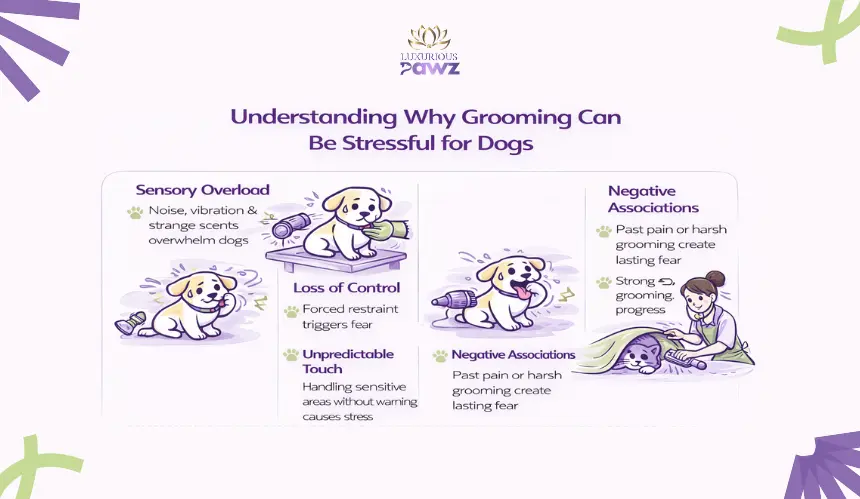
Before jumping into preparation techniques, it is important to understand why grooming triggers discomfort in the first place. Dogs process new environments and physical handling differently than humans.
What seems harmless, such as a buzzing clipper or a firm hold on the paw, can activate a stress response rooted in instinct and sensory sensitivity. Recognizing these triggers allows owners to respond proactively instead of reactively.
What Sensory Triggers Commonly Cause Grooming Anxiety
Grooming environments introduce multiple sensory inputs at once. High-velocity dryers produce unfamiliar air pressure and noise. Electric clippers create vibration against the skin. Stainless steel tables feel unstable compared to home flooring. Combined, these stimuli can overwhelm a dog’s nervous system.
Many dogs are particularly sensitive to sound frequency and vibration. Research in canine behavior science shows that sudden auditory stimuli elevate cortisol levels, which can increase restlessness or defensive behavior. Strong grooming shampoos, unfamiliar scents, and proximity to other dogs may also contribute to overstimulation.
For dogs with noise sensitivity or prior negative experiences, these triggers can quickly escalate into avoidance or panic. Understanding these sensory elements helps frame grooming anxiety as a physiological reaction rather than stubbornness.
How Can You Recognize Early Stress Signals in Dogs Before They Escalate
Dogs rarely move straight to aggression without warning. Most display subtle stress signals long before reaching that stage. Lip licking, yawning outside of tiredness, turning the head away, or freezing during brushing are early indicators of discomfort. Some dogs become hyperactive, while others shut down and appear unusually quiet.
Recognizing these canine stress signals early allows for intervention before fear-based behavior intensifies, especially if you understand the anxious pet grooming signs and how to address them. For example, trembling during nail handling or pulling the paw back repeatedly suggests handling sensitivity that requires gradual conditioning. Growling during brushing does not automatically indicate aggression; it often reflects discomfort or uncertainty.
Start Grooming Preparation at Home Weeks Before the Appointment
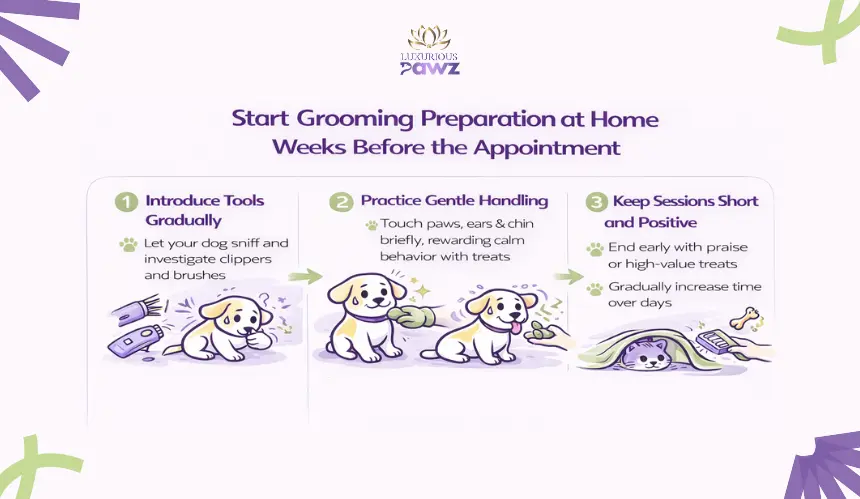
Preparation does not begin on the morning of the appointment. It starts days or even weeks earlier inside a calm, familiar environment. Dogs learn through repetition and association.
When grooming tools and handling are introduced gradually at home, the experience becomes predictable instead of intimidating. This stage focuses on building comfort, not achieving perfection.
How Should Grooming Tools Be Introduced Without Triggering Fear
The first goal is neutral exposure. Place brushes, combs, and nail clippers on the floor and allow the dog to investigate them at their own pace. Avoid forcing interaction. Curiosity should feel voluntary.
For electric clippers or dryers, begin with the device turned off. Let the dog sniff it while pairing the interaction with high-value treats. Once the tool becomes familiar, turn it on briefly at a distance so the dog can hear the sound without feeling vibration.
Gradually decrease the distance over multiple sessions. This desensitization training method reduces the startle response and builds positive associations through counterconditioning.
Low-noise clippers and soft-bristle brushes can make early sessions more manageable, especially for noise-sensitive breeds.
What Handling Exercises Improve Grooming Tolerance
Many dogs react not to the tools themselves but to physical restraint. Grooming requires touching paws, lifting ears, holding the chin, and gently repositioning the body. These actions feel invasive if the dog is not accustomed to them.
Daily cooperative care exercises help build tolerance. Gently hold a paw for a few seconds, reward calm behavior, and release before resistance appears. Briefly touch the ears and tail, then reinforce with praise.
Practice short mock nail trimming positions without cutting. The key principle is gradual exposure combined with positive reinforcement.
These handling tolerance drills teach the dog that touch predicts reward rather than discomfort. Over time, physical manipulation becomes routine instead of threatening.
How Long Should At-Home Brushing Sessions Last
Short sessions produce better results than extended grooming attempts. Begin with one to two minutes of brushing in a relaxed setting. Focus on areas the dog already tolerates well, such as the back or shoulders. Sensitive zones like paws, belly, and face should be introduced later as confidence increases.
Consistency matters more than duration. Five calm sessions per week are more effective than one long session that ends in frustration. Ending on a positive note reinforces emotional safety and strengthens grooming readiness for the actual appointment.
Physical Preparation Before the Grooming Appointment
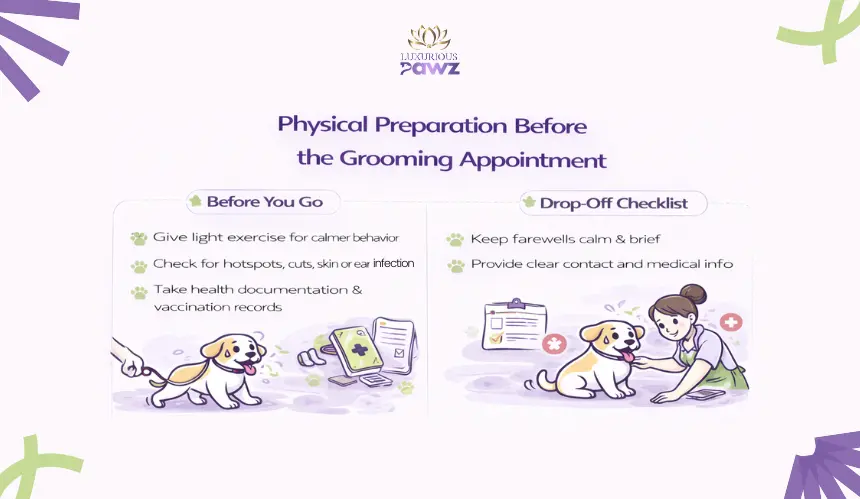
Emotional readiness matters, but physical comfort plays an equally important role. A dog that feels restless, uncomfortable, or unwell is far more likely to struggle during grooming.
Preparing the body before the appointment supports safety, reduces tension, and helps the entire experience feel smoother for everyone involved.
Should You Exercise Your Dog Before a Grooming Visit
A short walk or light play session before the appointment can make a noticeable difference. Gentle exercise helps regulate excess energy and promotes calmer behavior. A dog who has released pent-up excitement is less likely to fidget or resist handling on the grooming table.
The key is balance. Overexertion can lead to dehydration or overstimulation, which may increase irritability. A relaxed neighborhood walk, a few minutes of structured fetch, or basic obedience drills are ideal pre-grooming routines.
These activities support emotional regulation without creating fatigue. This simple step often shifts a dog’s mindset from restless anticipation to steady calmness.
What Health Checks Should Be Done Before the Appointment
Take a few quiet moments to check your dog’s skin, coat, ears, and paws. Look for hotspots, redness, small cuts, or signs of skin irritation. Noticing these issues in advance allows you to inform the groomer and prevent discomfort during handling.
Vaccination records may also be required, particularly rabies documentation or proof of protection against kennel cough. Professional grooming salons prioritize hygiene standards and safety protocols to protect all pets in their care. Sharing information about allergies, past reactions, or sensitive areas builds trust and improves the grooming outcome.
When a dog feels physically comfortable, and the groomer is properly informed, the risk of stress-related behavior decreases significantly.
Is It Okay to Feed Your Dog Right Before Grooming
Feeding a full meal immediately before grooming can cause mild nausea or digestive discomfort, especially during bathing or drying. It is usually best to allow enough time for digestion before the appointment.
Access to fresh water should remain available, but avoid heavy feeding close to drop-off time. A small treat during calm moments is helpful for reinforcement, yet a large meal may increase the likelihood of accidents or unease.
By attending to these physical details, owners quietly communicate care and protection. Dogs sense when their needs are considered, and that sense of security carries into the grooming session itself.
Preparing Puppies for Their First Grooming Experience
A puppy’s first grooming appointment often shapes how they respond to grooming for the rest of their life. Early exposure can build confidence, while a rushed or overwhelming experience may create long-term grooming anxiety.
This stage is less about appearance and more about creating safe, positive associations that support future coat maintenance and hygiene routines.
When Should a Puppy Have Their First Grooming Session
Most puppies are ready for an introductory grooming visit between 12 and 16 weeks of age, once core vaccinations are complete. The goal at this stage is not a full haircut. Instead, it is a gentle introduction to the grooming environment, sounds, and light handling.
Breed also plays a role. Long-coated breeds such as Poodles, Shih Tzus, and Doodles benefit from earlier grooming socialization because their coat type requires regular maintenance. Starting early helps prevent matting, coat neglect, and fear-based resistance later.
Early exposure aligns with critical socialization periods in canine development. Puppies are naturally more adaptable during this phase, making it the ideal window for positive grooming introduction.
How Can You Socialize a Puppy for the Grooming Environment
Before the appointment, expose the puppy to everyday sensory experiences. Introduce different floor surfaces such as tile, metal grates, or textured mats to mimic grooming tables. Play recordings of dryer sounds at a low volume. Offer calm praise during these exposures to build resilience.
Short car rides without a destination also help reduce travel anxiety. If possible, arrange a brief visit to the grooming salon where the puppy can meet the groomer, receive treats, and leave without undergoing a full service. These “happy visits” strengthen positive association training and reduce uncertainty.
This gradual grooming socialization approach teaches the puppy that new environments are safe and predictable.
What Should You Expect From a First Grooming Appointment
A first visit should focus on comfort rather than cosmetic perfection. Many groomers offer a puppy introduction package that includes a light bath, gentle brushing, sanitary trim, nail clipping, and face tidying. The session is intentionally shorter to prevent overstimulation.
Owners may notice mild nervousness, which is normal during initial exposure. What matters is whether the experience ends calmly. Puppies who leave feeling safe are more likely to tolerate future appointments with confidence.
By approaching the first grooming session with patience and realistic expectations, owners set the foundation for a lifetime of cooperative care and stress-free grooming routines.
Communication With the Groomer Improves Outcomes
Even the most well-prepared dog benefits from clear communication between owner and groomer. A Dog grooming service is not just about cosmetics. It involves handling, equipment, timing, and individualized care decisions. When expectations and behavioral details are shared openly, the session becomes safer and more predictable for the dog.
Transparent communication also supports professional grooming standards and ensures the dog’s physical and emotional needs are respected throughout the appointment.
What Behavioral Information Should You Share With the Groomer
Every dog has a history. Some dislike nail trimming but tolerate brushing. Others become anxious around dryers or resist ear handling. Sharing these details allows the groomer to adjust technique and pacing.
Be specific. Mention previous grooming reactions, sensitivity around certain body areas, or any signs of grooming anxiety observed at home. If the dog has shown stress signals such as trembling, paw pulling, or defensive growling during handling, that information helps the groomer implement appropriate restraint methods and calming techniques.
Providing context is not about labeling the dog as “difficult.” It allows professionals trained in canine handling to plan safer, structured sessions that reduce fear-based behavior.
How Do You Clarify Grooming Expectations Without Confusion
Clear expectations prevent misunderstandings and unnecessary stress. Discuss coat length preferences, matting concerns, and breed-specific grooming styles in advance. Bringing a reference photo can be helpful when discussing haircut goals, especially for breeds with standardized trims.
If matting is present, understand that severe tangles may require shorter clipping to prevent pain. Groomers prioritize skin health and coat integrity over aesthetic preferences when necessary. Having this conversation beforehand avoids disappointment and builds trust.
Also clarify timing. Ask how long the appointment will take and whether the dog will be crated before or after grooming. Knowing the process reduces uncertainty for both owner and pet.
When communication is honest and detailed, the groomer becomes a collaborative partner in your dog’s care. That partnership significantly improves comfort, safety, and long-term grooming success.
Dog Grooming Appointment Day Checklist for a Stress-Free Drop-Off
The day of a dog grooming appointment can feel emotional. Even well-prepared dogs may sense subtle changes in routine. Because dogs are highly responsive to human body language and tone, the way the morning unfolds directly affects how they enter the salon environment.
A calm, structured approach helps your dog transition into the grooming process with greater confidence. This checklist focuses specifically on preparing your dog for the drop-off phase of a professional dog grooming visit.
1. What Should You Bring to a Dog Grooming Appointment
Being organized reduces unnecessary stress. Bring updated vaccination records if the grooming salon requires proof of rabies or kennel cough protection. Provide clear emergency contact details and inform the groomer about any medical conditions, allergies, or previous grooming sensitivities.
If your dog has known coat matting, skin irritation, or handling sensitivities, communicate that at intake. Professional dog grooming environments follow hygiene protocols and safety standards, so transparency supports proper handling techniques. Avoid bringing unnecessary toys unless requested, as shared salon spaces can increase overstimulation.
Preparedness creates a smoother intake process and reassures your dog that everything is under control.
2. How Should You Handle Your Dog During Drop-Off
Keep the farewell calm and brief. Dogs read emotional cues quickly. If the owner appears anxious or overly apologetic, the dog may interpret the situation as unsafe. Use a steady tone, simple reassurance, and confident body posture.
Avoid lingering or repeatedly picking your dog back up after handing over the leash. Clear transitions help prevent separation anxiety from escalating. Trust that trained grooming professionals use structured handling and acclimation methods to settle dogs safely into the grooming workflow.
Your composure becomes your dog’s emotional anchor during this moment.
3. How Long Does a Typical Dog Grooming Session Take
Dog grooming duration depends on breed, coat type, and requested services. A bath and brush may take one to two hours, while a full haircut with nail trimming and ear cleaning may require several hours. Dogs with dense undercoats or matting often need additional time, especially when deshedding treatments help reduce excess fur and protect the skin.
Clarifying timing in advance prevents early arrivals that may interrupt the grooming schedule. Respecting the process helps the dog remain in a structured environment without rushed transitions.
A steady, well-managed drop-off routine reinforces positive associations with professional dog grooming and supports smoother visits in the future.
Post-Dog Grooming Reinforcement to Build Positive Associations
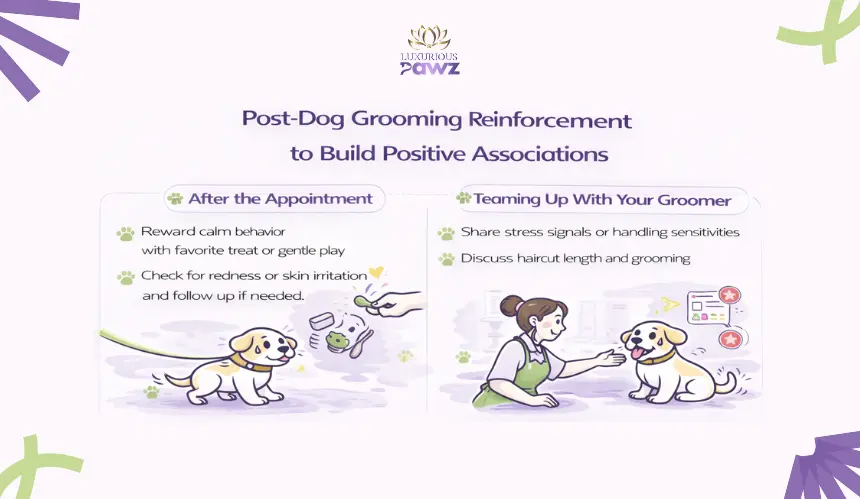
A dog grooming appointment does not end when you pick your dog up. The moments immediately after the session shape how your dog remembers the experience. Dogs form associations quickly. If pickup feels rushed, overstimulating, or confusing, it can weaken the calm progress built during grooming.
Thoughtful post-grooming reinforcement strengthens emotional resilience and builds trust for future visits. This stage focuses on maintaining positive behavioral conditioning after professional dog grooming.
Reward Calm Behavior After Pickup
When you reunite with your dog, observe their energy level. Some dogs feel playful and relieved, while others may appear slightly tired from handling and stimulation. Keep your greeting warm but controlled. A calm tone and gentle praise reinforce emotional balance rather than triggering overexcitement.
Offer a favorite treat or engage in a short, positive interaction such as a relaxed walk or light play session. This reinforces cooperative behavior and links dog grooming with a predictable reward outcome.
Positive reinforcement training works best when the reward follows the desired behavior without delay. Over time, this consistent pattern builds emotional stability around grooming appointments.
Monitor for Physical Sensitivity or Behavioral Changes
After dog grooming, take a few minutes to check your dog’s skin and coat. Look for redness, minor irritation, or areas that may feel sensitive, particularly around paws, ears, and sanitary trim zones. Mild sensitivity can occur after a professional pet nail trimming session or close clipping, especially in dogs with delicate skin.
Behaviorally, monitor for unusual withdrawal, excessive licking, or discomfort. While professional groomers follow safety protocols and breed-specific grooming standards, every dog reacts differently. Prompt communication with the grooming salon if something seems off ensures concerns are addressed quickly.
Observing your dog calmly reinforces your role as a protective caregiver and strengthens the bond of trust.
Maintain Coat Care Between Dog Grooming Visits
Regular at-home coat maintenance prevents matting and reduces stress during the next appointment. Brushing according to coat type, wiping paws after walks, and maintaining ear hygiene support skin health and grooming efficiency. Dogs with double coats, curly coats, or long hair benefit from consistent grooming routines that prevent tangles and undercoat buildup.
Maintaining a structured coat care routine, especially when you follow guidance on maintaining your pet’s coat between grooming visits, keeps dog grooming sessions shorter and more comfortable.It also signals to your dog that grooming is a normal part of life rather than an unpredictable event.
Positive reinforcement after pickup, attentive monitoring, and consistent coat care together create a lasting foundation of comfort and cooperation around professional dog grooming experiences.
Dog Grooming Insights for Dogs in Pasadena and Surrounding Foothill Communities
Families in Altadena and Pasadena know how quickly coats collect dust after walks near Eaton Canyon or around the Rose Bowl. Dogs in these areas often need consistent brushing and professional dog grooming to manage shedding, debris, and seasonal coat changes. Regular at-home preparation makes each appointment smoother and more comfortable.
In Glendale, Burbank, and Highland Park, active city routines mean frequent park visits and neighborhood strolls. Exposure to outdoor elements can lead to tangled fur, dirty paws, and ear buildup. Structured coat care and calm grooming preparation help dogs transition confidently into their grooming sessions.
La Cañada Flintridge, Montrose, La Crescenta, Tujunga, Shadow Hills, and Eagle Rock blend suburban greenery with hiking and equestrian surroundings. Dogs here often encounter dry brush, dust, and plant debris. Consistent preparation before each dog grooming appointment keeps them clean, comfortable, and stress-free.
Your dog deserves grooming that feels safe, gentle, and genuinely caring. When preparation meets professional expertise, the experience becomes calm instead of stressful. At Luxurious Pawz, every dog grooming appointment is handled with patience, structured care, and attention to your dog’s comfort. Book your next visit today and give your dog the confident, positive grooming experience they deserve.
Frequently Asked Questions
How far in advance should a dog grooming appointment be scheduled?
Dog grooming appointments should ideally be scheduled one to two weeks in advance. During peak shedding seasons or holiday periods, booking even earlier may be necessary.
Advance scheduling ensures availability, prevents last-minute stress, and allows flexibility if adjustments are needed.
Do certain dog breeds require more frequent grooming appointments?
Coat type determines grooming frequency. Breeds with continuously growing hair, such as Poodles and Bichon Frises, typically require professional dog grooming every four to six weeks to maintain coat shape and prevent overgrowth. Double-coated breeds benefit from seasonal de-shedding sessions during heavy shedding cycles.
Should senior dogs have special considerations before grooming?
Senior dogs may experience joint stiffness, reduced stamina, or heightened sensitivity. Informing the groomer about arthritis, mobility limitations, or medical conditions allows adjustments in handling techniques and session length. Shorter appointments and supportive positioning improve comfort and reduce physical strain.
Is mobile dog grooming a better option for anxious dogs?
Mobile dog grooming can benefit dogs that struggle with busy salon environments. The one-on-one setting reduces noise exposure and interaction with unfamiliar animals. For some dogs, remaining close to home minimizes travel-related stress and supports calmer behavior during the grooming session.
How can you tell if your dog needs professional grooming sooner than scheduled?
Signs such as persistent odor, visible matting, excessive shedding, overgrown nails, clicking on hard floors, or ear discharge indicate the need for earlier professional dog grooming. Addressing these signs promptly supports coat health, hygiene, and overall comfort.