
- admin
Key Takeaways
|
Effective Strategies to Reduce Pet Grooming Anxiety
Grooming is meant to support a pet’s comfort and health, yet for many animals it becomes a moment of tension rather than care. The unfamiliar sensations of brushing, bathing, trimming, or drying can quickly overwhelm pets who rely heavily on routine, predictability, and trust. When grooming feels confusing or uncontrollable, anxiety often surfaces before the process even begins.
Pet anxiety during grooming is not a reflection of temperament or training. It is usually a response to how the experience is perceived by the animal. This blog will explore how grooming anxiety develops, how it affects pets, and what practical grooming techniques can help ease fear in a way that supports long-term emotional comfort.
Understanding What Pet Anxiety Looks Like During Grooming
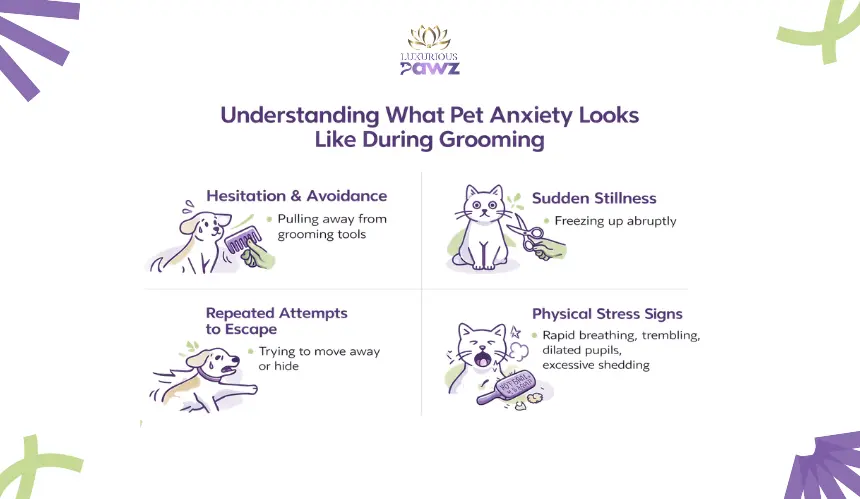
Grooming-related anxiety does not always appear as obvious fear or resistance. Many pets express stress through small behavioral changes that are easy to miss if attention is focused only on cooperation.
Hesitation, avoidance of grooming tools, sudden stillness, or repeated attempts to move away often signal emotional discomfort rather than unwillingness. These responses usually emerge early, before anxiety escalates into stronger reactions.
Alongside behavior, physical stress responses provide important clues. Rapid breathing, muscle stiffness, trembling, dilated pupils, or excessive shedding during deshedding sessions indicate heightened emotional strain. Some pets may yawn repeatedly or lick their lips as a way to self-soothe.
Recognizing these subtle signals makes it possible to slow the process, adjust handling, and prevent grooming stress from becoming a learned fear over time.
Why Grooming Triggers Fear and Stress in Pets
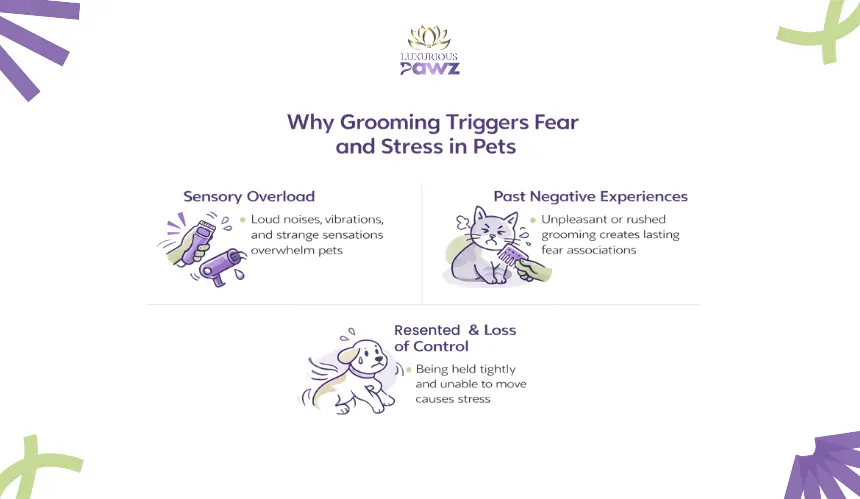
Grooming anxiety rarely appears without a cause. It develops when certain elements of the grooming experience conflict with a pet’s natural need for safety, control, and predictability.
Even when grooming is gentle and well-intended, specific triggers can cause pets to interpret the situation as threatening rather than routine.
How Sensory Overload Contributes to Grooming Anxiety
Grooming exposes pets to intense sensory input within a short time frame. The vibration of clippers,the sound of professional blow dryers the pressure of water, and unfamiliar grooming products can overwhelm a pet’s sensory system. Unlike humans, pets cannot rationalize these sensations, so their nervous system may interpret them as danger signals.
When multiple stimuli occur at once, stress responses activate quickly, making it difficult for pets to remain relaxed during the process.
How Past Experiences Shape Fear Responses During Grooming
Pets learn through association, and grooming experiences are no exception. A single uncomfortable or rushed session can create lasting emotional memory, especially if the pet felt restrained or unable to escape.
Over time, the grooming environment itself becomes linked with that discomfort. Even neutral actions, such as lifting paws or brushing sensitive areas, can trigger anxiety if they resemble earlier negative experiences.
This learned response explains why grooming fear may persist even when physical discomfort is no longer present.
Why Loss of Control and Restraint Increase Stress Levels
Grooming often requires pets to remain still, tolerate close handling, and surrender control over their movement. For many animals, this lack of agency creates unease, particularly if they are unfamiliar with the routine or handler.
When pets feel restrained without understanding what is happening next, their stress response intensifies. Predictability and gradual pacing play a key role in reducing this fear, which is why abrupt or unfamiliar grooming approaches are more likely to trigger anxiety.
How Grooming Anxiety Affects Long-Term Pet Wellbeing
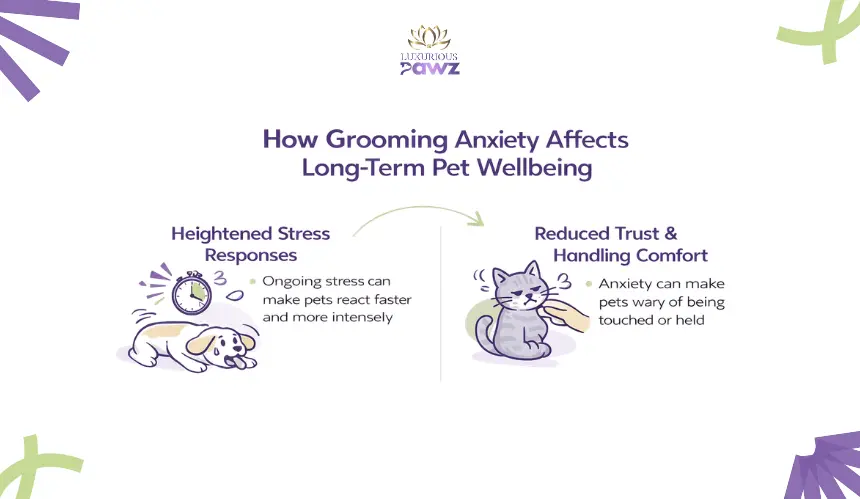
When grooming anxiety is left unaddressed, its impact extends beyond individual sessions. Repeated exposure to stressful grooming experiences can shape how pets respond to handling in general, influencing their emotional stability and tolerance over time.
What begins as situational stress may gradually affect daily interactions, making regular grooming care more difficult for both pets and caregivers.
How Repeated Stress Alters Emotional Responses Over Time
Ongoing grooming anxiety can condition a pet’s nervous system to remain on high alert during similar situations. As stress responses become more familiar, pets may react faster and more intensely with each new grooming attempt.
This pattern can limit a pet’s ability to self-regulate, making calm behavior harder to achieve even in controlled environments.
Why Grooming Anxiety Can Affect Trust and Handling Comfort
Trust plays a central role in how pets accept care. When grooming consistently feels distressing, pets may begin to associate close handling with emotional discomfort. This shift can reduce tolerance for touch, restraint, or examination outside grooming contexts.
Over time, weakened trust can make routine care more challenging, reinforcing avoidance behaviors that further distance pets from positive grooming experiences.
Important: For cats in particular, a loose towel wrap (often called a “towel burrito”) can reduce panic by creating gentle containment without force. The AAFP/ISFM cat-friendly interaction guidance specifically mentions using a loose towel wrap, positive reinforcement, and minimal handling for conscious cats. |
Preparing Pets Before Grooming to Reduce Anxiety
Calm grooming does not start when the brush touches the coat. It begins much earlier, in the quiet moments when pets learn what to expect and feel emotionally safe in their surroundings. Preparation gives pets time to process the experience on their terms, replacing uncertainty with familiarity.
For many families across Pasadena, CA, and Glendale, CA, small changes before grooming often make the biggest emotional difference.
How Gradual Familiarity Builds Emotional Safety Before Grooming
Pets feel safer when grooming tools and handling become part of their everyday environment rather than sudden intrusions. Allowing a pet to see, sniff, and hear grooming tools outside of active grooming reduces tension before the session even begins.
Gentle touch in at-home grooming moments helps pets associate handling with comfort instead of anticipation. This gradual exposure builds emotional resilience and lowers the chance of fear responses once grooming starts.
Why Calm Pre-Grooming Routines Matter More Than Timing
Predictable routines help pets feel grounded. Simple actions such as grooming at the same time of day, using familiar spaces, or offering a calm transition before handling can steady a pet’s emotional state.
In quieter neighborhoods like La Crescenta, CA, or Montrose, CA, pet owners often notice that reducing background noise and maintaining a peaceful environment makes grooming feel less overwhelming. These routines signal safety, allowing pets to approach grooming with less emotional resistance and more trust.
During-Grooming Techniques That Help Pets Stay Calm
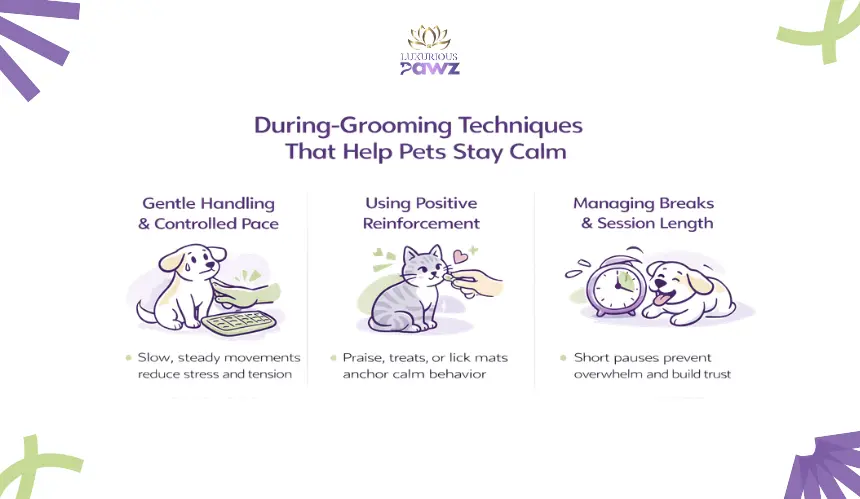
Even with thoughtful preparation, grooming can still feel intense in the moment. What happens during the session often determines whether a pet feels supported or overwhelmed. Small adjustments in pace, touch, and awareness can shift grooming from something a pet endures into something they can emotionally tolerate.
In busy, sound-heavy areas like Burbank, CA, where sirens and traffic noise are part of daily life, minimizing additional stimulation during grooming becomes especially important.
1. Gentle Handling and Controlled Grooming Pace
A calm grooming pace helps pets stay emotionally regulated. Slow, deliberate movements reduce startle responses and allow pets to process each sensation without becoming overwhelmed.
Firm but gentle handling provides a sense of stability, while abrupt changes in pressure or speed often trigger tension. Pets that feel guided rather than restrained are more likely to remain relaxed throughout the session, even when sensitive areas or matted fur are involved.
Pro Tip: Lick mats are widely used in low-stress grooming environments because repetitive licking helps regulate the nervous system and keeps pets emotionally grounded during bathing and washing. |
2. Using Positive Reinforcement During Grooming
Positive reinforcement helps pets associate grooming with reassurance rather than stress. Quiet praise, calm verbal cues, or gentle touch offered at the right moments can soften emotional resistance.
In neighborhoods like Eagle Rock, CA, where many pets are accustomed to frequent social interaction and stimulation, reinforcing calm behavior during grooming helps them stay emotionally anchored instead of overstimulated.
3. Managing Breaks and Session Length
Short, intentional breaks allow pets to release emotional pressure before anxiety escalates. Pausing between grooming steps gives pets a moment to reset, especially during longer sessions.
In more spacious areas such as Shadow Hills, CA, where pets are used to open environments and freedom of movement, extended restraint can feel especially stressful. Breaking grooming into manageable segments respects a pet’s emotional limits and helps preserve trust over time.
Pro Tip: If a pet feels unstable in a tub or on a slick surface, anxiety often spikes because the body goes into “brace mode.” Add a rubber non-slip mat, yoga mat, or towel for traction so the pet can stand securely and focus less on balance. AAHA includes nonskid mats as a practical tool for reducing stress in handling environments. |
When Professional Support May Be the Better Option
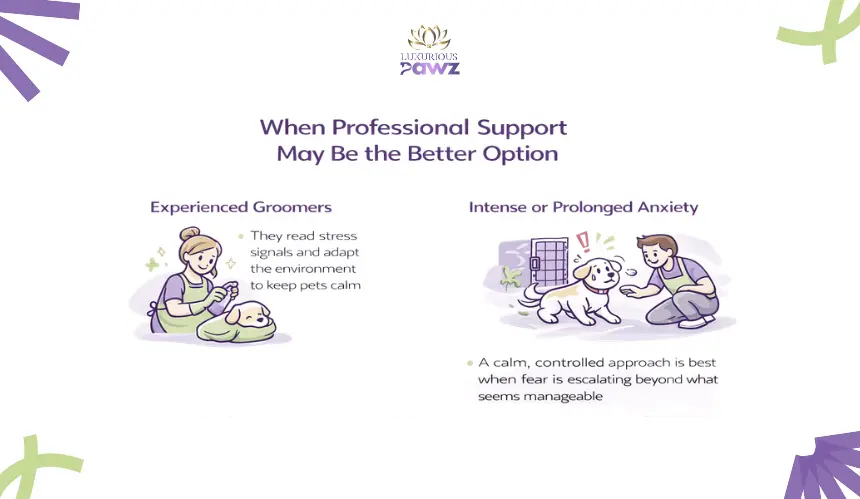
There are moments when even the most patient, well-prepared grooming routine at home is not enough to ease a pet’s anxiety. This does not mean progress has failed. It often means a pet needs a calmer, more controlled environment guided by experience.
Recognizing when to seek professional support can protect a pet’s emotional wellbeing and prevent grooming stress from becoming deeply ingrained.
How Experienced Groomers Adapt to Anxious Pets
Professional dog groomers who regularly work with anxious pets are trained to read subtle stress signals and adjust their approach in real time. They modify handling techniques, change positioning, and adapt pacing based on a pet’s emotional state rather than forcing completion.
In areas like Altadena, CA, where many homes sit near foothills and pets are accustomed to quieter, nature-filled surroundings, experienced groomers often recreate low-stimulation environments that feel familiar rather than clinical.
When Anxiety Signals Go Beyond Normal Grooming Stress
Some pets show signs that grooming anxiety is no longer situational. Escalating fear responses, prolonged recovery after grooming, or heightened sensitivity to touch outside grooming sessions may signal that stress has become emotionally taxing.
In dense neighborhoods such as Sunland, CA, or Tujunga, CA, where pets may already navigate environmental stress from temperature shifts and active outdoor spaces, grooming anxiety can compound more quickly.
In these cases, professional intervention helps reset the experience before fear becomes deeply conditioned, supporting emotional stability rather than reinforcing avoidance.
If grooming has become a moment of fear instead of comfort for your pet, you are not alone, and your pet is not difficult. At Luxurious Pawz, every anxious pause, trembling step, and hesitant glance is met with patience, understanding, and genuine care.
Grooming should feel safe, gentle, and reassuring, not rushed or overwhelming. When you are ready to give your pet an experience built on trust and emotional comfort, we are here to make that difference feel real.
Frequently Asked Questions
Can grooming anxiety develop later in life even if a pet was calm before?
Yes. Changes in age, health sensitivity, environment, or routine can alter how pets perceive grooming. A pet that once tolerated grooming may become anxious if physical comfort, mobility, or sensory tolerance shifts over time, even without a single negative event.
Does grooming anxiety differ between dogs and cats?
It does. Dogs often express grooming anxiety through visible movement, vocalization, or resistance, while cats may internalize stress through freezing, withdrawal, or sudden defensive reactions. These differences affect how grooming sessions should be structured and paced.
Can grooming anxiety be linked to seasonal changes?
Seasonal factors can influence anxiety indirectly. Coat changes, skin sensitivity, temperature shifts, and static buildup during certain seasons may increase discomfort, making grooming feel more intense even if the routine itself has not changed.
Is it better to groom anxious pets more frequently or less often?
Shorter, more frequent grooming sessions are often better tolerated than long, infrequent ones. Regular exposure helps reduce emotional buildup, while long gaps between sessions can cause anxiety to resurface more strongly when grooming resumes.
Are certain coat types more likely to trigger grooming anxiety?
Pets with dense, curly, or high-maintenance coats may experience grooming anxiety more often due to longer sessions and increased pulling or tension. Coat texture influences how grooming feels, which can shape emotional responses over time.