
- admin
Expert Grooming Techniques for Severe Matted Fur
Severe matted fur is one of the most distressing grooming issues pet owners encounter, often appearing suddenly even when basic care feels consistent. What starts as a few tight knots can quickly turn into dense mats that pull at the skin, restrict movement, and cause hidden discomfort.
Many owners search for answers when brushing no longer works and fear that grooming may hurt their pet more than help. This article explains how professional groomers approach severe matting with care, skill, and safety in mind.
Understanding What Severe Matted Fur Really Is
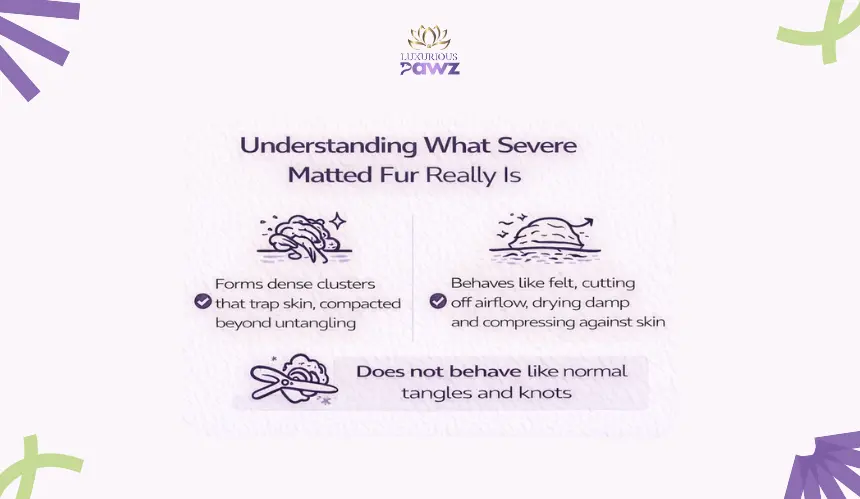
Severe matting is often misunderstood because it does not always look extreme on the surface. From a distance, the coat may appear thick or simply unbrushed, but structurally, the fur has already changed in a way that makes normal grooming ineffective.
Understanding what separates severe matting from everyday tangles helps explain why professional intervention becomes necessary.
How Severe Matting Differs From Normal Tangles or Knots
Severe matted fur forms when loose hair, shed undercoat, moisture, and friction combine over time, especially when heavy undercoat shedding is not properly managed, creating dense clusters that compress tightly against the skin.
Unlike surface tangles that sit on top of the coat, severe mats bind multiple hair layers together, which is why safe mat removal requires professional technique and often trap skin within them. At this stage, the fur no longer separates naturally, even with brushing or conditioning.
What Happens to Coat Structure When Matting Becomes Severe
As matting progresses, the hair twists and interlocks into a compact mass that behaves more like felt than individual strands. Airflow through the coat becomes restricted, moisture remains trapped, and the mat gradually hardens.
This compression increases constant tension on the skin beneath, which is why severe mats cannot be treated as a simple grooming inconvenience and require a different level of care and decision-making.
Why Severe Matting Is a Health Issue, Not Just a Cosmetic One
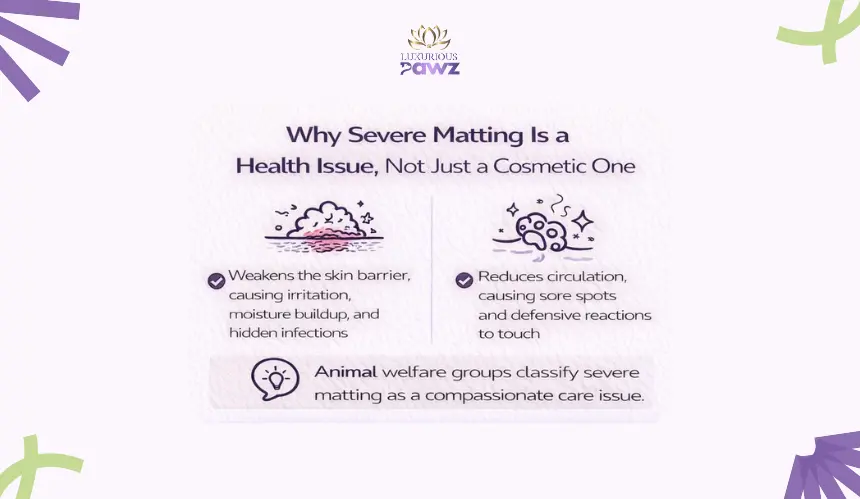
Once matting reaches a severe stage, its impact extends far beyond appearance. The coat begins to interfere with normal skin function and body comfort, turning what looks like a grooming problem into a genuine welfare concern. This is why a professional dog groomer evaluates matting through a health-focused lens rather than an aesthetic one.
How Does Severe Matting Affect Skin Health and Comfort?
Tight mats press continuously against the skin, limiting airflow and trapping moisture, dirt, and bacteria beneath the coat. This environment weakens the skin barrier and increases the risk of irritation, inflammation, and painful hot spots. Because the skin cannot dry properly, even small abrasions can worsen without being visible to the owner.
Over time, the constant pull from heavy mats can also reduce circulation in affected areas. This pressure makes movement uncomfortable and may cause pets to react defensively when touched, even in areas that previously caused no sensitivity.
What Hidden Medical Risks Can Develop Under Matted Fur?
Severe matting often conceals developing issues that would otherwise be noticed early. Parasites, minor wounds, rashes, and infections can remain hidden for long periods, allowing them to progress without treatment. In extreme cases, mats can tighten as the pet moves, creating skin folds that are prone to tearing once grooming begins.
Animal welfare organizations such as ASPCA and Humane Society of the United States recognize severe matting as a condition that compromises well-being, not merely coat appearance. This perspective reflects why groomers prioritize relief and safety when handling heavily matted coats rather than attempting to preserve fur at all costs.
Pro tip: Severe mats often tighten after bathing if the coat is not thoroughly brushed and dried. Water causes already tangled hair to contract, which is why bathing a matted coat at home frequently makes the problem worse instead of better. |
How Professional Groomers Assess Severe Matting Before Taking Action
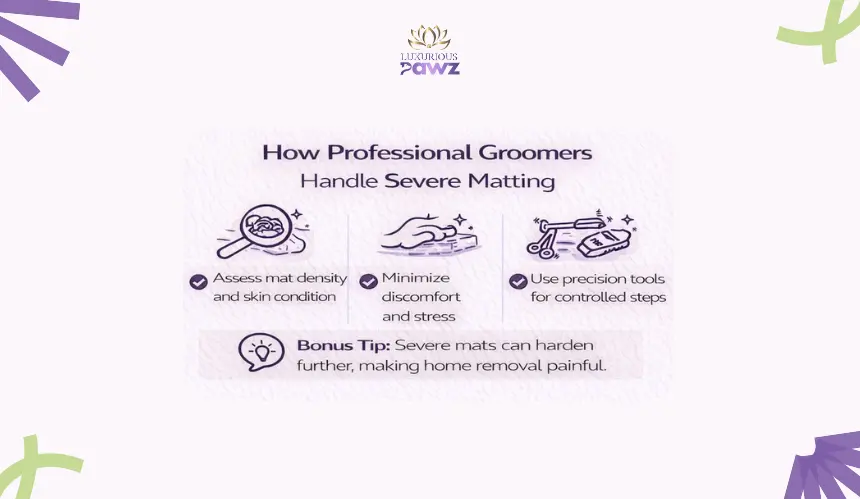
Before any grooming work begins, professional groomers focus on understanding the full condition of the coat and the pet’s comfort level. Severe matting requires deliberate evaluation because the wrong decision at this stage can lead to pain, injury, or unnecessary stress.
This assessment phase allows groomers to choose an approach that protects both skin health and overall well-being.
1. Mat Density and Coat Condition
Groomers start by examining how dense the mats are and how tightly they are compacted. Loose surface matting behaves very differently from hardened mats that have fused multiple layers of hair together.
The overall coat condition, including dryness, brittleness, or excessive shedding, helps indicate how the hair will respond to handling and whether separation is realistic without causing discomfort.
2. Skin Condition Underneath the Mats
Where access allows, groomers assess the skin beneath or around the mats. Redness, warmth, moisture buildup, or sensitivity often signal irritation or inflammation hidden by the coat. These signs influence how much manipulation the area can safely tolerate.
When skin health appears compromised, groomers prioritize minimizing friction and pressure rather than attempting aggressive coat preservation.
3. Pet Temperament and Stress Tolerance
A pet’s emotional response is just as important as the physical condition of the coat. Groomers observe body language, tension, and reactions during handling to gauge stress tolerance.
Pets experiencing chronic discomfort from matting may react more quickly to touch, which limits how long grooming can continue safely. This evaluation helps prevent prolonged sessions that could increase anxiety or pain.
4. Breed-Specific Coat Behavior
Different coat types mat in different ways, and groomers factor this into their assessment. Curly, double, and fine coats each respond uniquely to moisture, friction, and compression. Understanding how a specific coat behaves allows groomers to predict whether mats may loosen, resist separation, or pose a higher risk of skin injury during grooming.
Tools Professional Groomers Use for Severe Matted Fur
Once assessment is complete, professional groomers rely on specialized tools designed specifically for handling severe matting safely. These tools are not interchangeable with household grooming items.
Each serves a controlled purpose that reduces risk to the skin while allowing groomers to work methodically through difficult coat conditions.
Professional Dematting Tools Designed for Controlled Separation
Dematting tools used by groomers are engineered to release compacted hair gradually rather than pulling it apart forcefully. Tools such as mat splitters and dematting rakes are designed to break dense mats into smaller sections, allowing tension to be released in stages. This controlled separation minimizes stress on the skin and helps prevent sudden tearing.
Unlike brushes meant for maintenance, these tools work within the structure of the mat itself. Groomers use them selectively and with precision, avoiding repetitive strokes that could aggravate sensitive areas.
High-Grade Clippers and Blade Selection for Matted Coats
Professional clippers play a critical role when matting sits close to the skin. Groomers use high-torque clippers paired with specific blade lengths that glide safely beneath mats without catching or overheating. Blade selection is not random. It is based on coat density, skin condition, and mat thickness.
Proper clipper control allows groomers to remove mats cleanly while maintaining a consistent distance from the skin. This level of control is not achievable with consumer-grade equipment, which often lacks the power and stability required for severe matting.
Skin-Safe Shears and Precision Cutting Tools
In areas where clippers cannot be safely used, groomers rely on skin-safe grooming shears. These tools are designed with rounded tips and balanced weight to reduce the risk of accidental cuts. Groomers use shears strategically to release tension points within mats rather than cutting blindly through compacted hair.
This precision is especially important in high-risk areas such as behind the ears, under the legs, and around joints, where skin folds are common and visibility is limited.
Support Tools That Reduce Stress and Improve Safety
Beyond cutting tools, groomers also use equipment that supports pet comfort and safety. Non-slip grooming surfaces, gentle restraint systems, and calming handling techniques help keep pets steady without causing fear or panic. Reducing sudden movement is essential when working close to the skin, especially during mat removal.
Together, these tools allow groomers to work deliberately rather than forcefully. The combination of specialized equipment and skilled handling ensures that severe matting is addressed with control, accuracy, and respect for the pet’s physical and emotional limits.
The Professional Dematting Process (When Mats Can Be Safely Removed)
When severe matting is not fully fused to the skin, professional groomers may determine that controlled dematting is possible. This process is never rushed or improvised. It follows a deliberate sequence designed to reduce discomfort, protect the skin, and avoid escalating stress for the pet.
How Do Groomers Safely Begin Releasing Severe Mats?
Professional dematting starts by isolating individual mat sections rather than attacking the coat as a whole. Groomers work on small, manageable areas to prevent pulling on surrounding skin.
The process typically begins at the outer edges of a mat, where hair has slightly more movement, instead of the tight base near the skin.
By working from the edges inward, groomers gradually reduce tension. This approach allows the coat to loosen incrementally, minimizing sharp pulling sensations that could cause pain or defensive reactions. Each movement is intentional, slow, and continuously adjusted based on the pet’s response.
Why Controlled Tension Matters During Dematting
Applying uncontrolled force is one of the biggest risks when dealing with severe matting. Groomers maintain constant awareness of how much resistance the coat provides and how the skin reacts underneath. Controlled tension allows mats to separate in stages rather than tearing apart suddenly.
If resistance increases or the pet shows signs of discomfort, groomers pause or change technique. This ongoing adjustment prevents skin strain and helps avoid micro-injuries that may not be immediately visible but can cause irritation later.
How Groomers Monitor Skin and Stress Throughout the Process
Skin monitoring is continuous during professional dematting. Groomers check for redness, heat, or sensitivity as sections of the coat are released. Any indication that the skin is becoming irritated signals the need to reassess whether dematting should continue or stop.
At the same time, groomers observe breathing patterns, muscle tension, and behavioral cues to gauge stress levels. If a pet’s tolerance decreases, groomers limit session length or shift to a safer alternative. This balance between coat preservation and animal comfort defines professional dematting decisions.
When Groomers Decide to Stop Dematting Mid-Process
Not all dematting plans continue through completion. If mats prove more compacted than initially assessed or if the skin shows early signs of distress, groomers stop rather than push forward. Ending dematting early is not a failure, but a protective choice that prevents harm.
This decision-making flexibility is what separates professional grooming from trial-and-error attempts. Groomers understand that preserving coat length is never more important than protecting skin integrity and emotional well-being.
When Shaving Is the Safest and Most Humane Option for Pets
In some cases, professional groomers determine that shaving is not just an option, but the safest course of action. This decision is made only after careful assessment and is guided by animal welfare rather than appearance. When mats are too severe, attempting to preserve the coat can place the pet at unnecessary risk.
When Does Severe Matting Make Shaving Necessary?
Shaving becomes necessary when mats are tightly bonded to the skin and cannot be lifted without causing pain or injury. In these situations, the hair and skin move as one unit, making separation unsafe. Any attempt to cut or pull through these mats increases the chance of skin tears, nicks, or sudden trauma.
Mats that restrict movement or create constant pressure on specific areas also signal the need for shaving. Removing the coat relieves that pressure immediately, allowing the skin to recover and the pet to move more comfortably.
Why Shaving Can Be Less Stressful Than Prolonged Dematting
While shaving may feel drastic to owners, it is often far less stressful for the pet than extended dematting sessions. Dematting requires repeated manipulation of sensitive areas, which can escalate discomfort and anxiety over time. Shaving, when done correctly, is faster and involves fewer prolonged pressure points.
Professional groomers use controlled clipper techniques that minimize vibration and avoid dragging across the skin. This approach allows mats to be removed cleanly in a shorter timeframe, reducing both physical strain and emotional fatigue for the pet.
How Groomers Prioritize Safety During a Shave-Down
Safety remains the primary focus during shaving. Groomers work slowly, adjusting blade angles and pressure to accommodate uneven skin surfaces that may have been hidden under mats. Areas with folds or compromised skin are handled with extra caution to prevent accidental injury.
By removing the coat in a controlled manner, groomers create immediate access to the skin. This visibility allows for proper inspection and sets the stage for healing, making shaving a corrective step rather than a cosmetic one.
Understanding Coat Regrowth After Shaving Severe Mats
Shaving does not damage the coat permanently in most cases. Once mats are removed and the skin is healthy, hair typically regrows according to the pet’s natural coat cycle.
The regrowth period also provides an opportunity for owners to reset grooming habits and prevent future matting.
Framing shaving as relief rather than loss helps owners understand why professionals choose this route. In situations of severe matting, shaving restores comfort first and appearance later, which aligns with responsible grooming standards.
What Happens Immediately After Severe Mat Removal or Shaving
Once severe mats are removed, either through dematting or shaving, the grooming process shifts into a recovery-focused phase. This stage is essential because the skin and coat are often experiencing direct exposure for the first time in a long period. Professional groomers treat this moment as a transition from correction to care.
How Groomers Address Skin Sensitivity After Mat Removal
After mats are cleared, groomers closely examine the skin for irritation, redness, or pressure marks that were previously hidden. Skin that has been compressed under dense matting is often more sensitive to touch, air, and temperature changes.
Gentle cleansing may be used to remove trapped debris and reduce surface irritation without stripping natural oils.
Groomers avoid aggressive products during this stage. The focus remains on calming the skin and allowing it to rebalance rather than attempting deep treatments immediately. This cautious approach helps prevent overstimulation of already stressed areas.
What Changes Pets Commonly Experience Right After Grooming
Many pets show noticeable behavioral changes once severe matting is removed. Increased movement, easier walking, and relaxed posture are common because the constant pull and weight of mats are gone. Some pets may also appear more alert or responsive due to improved comfort and circulation.
At the same time, temporary sensitivity is normal. Groomers anticipate this adjustment period and handle pets gently, recognizing that exposed skin may feel unfamiliar or mildly uncomfortable at first.
How Groomers Guide Owners on Immediate Aftercare
Before the pet leaves the grooming table, groomers provide practical aftercare guidance tailored to the pet’s condition. This may include recommendations on avoiding friction, monitoring the skin over the next few days, and delaying bathing until sensitivity subsides. Owners are also advised on what signs to watch for, such as persistent redness or unusual behavior.
This guidance helps extend the benefits of professional grooming beyond the appointment itself. Proper aftercare supports healing, reinforces comfort, and sets clear expectations as the coat begins its recovery and regrowth phase.
Why Severe Matting Should Never Be Handled at Home
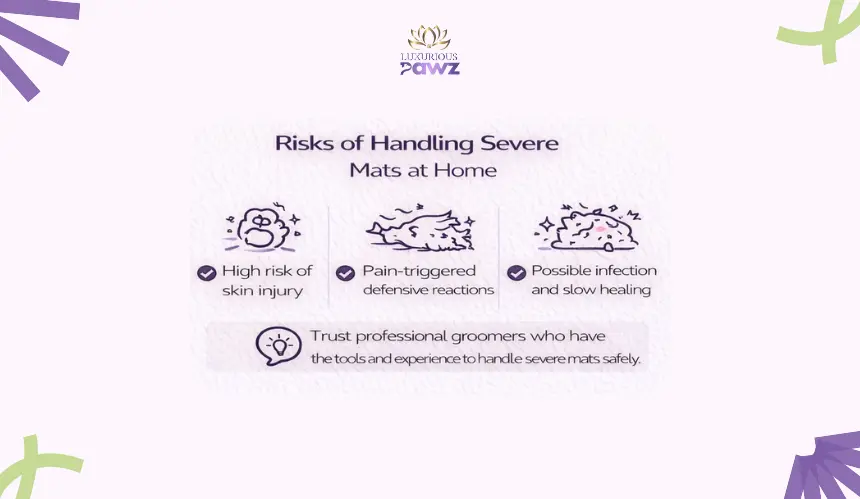
Severe matting creates risks that are easy to underestimate without professional training. What seems manageable at home can quickly turn dangerous once tools touch compacted fur near the skin.
- High Risk of Skin Injury: Household scissors and clippers lack the control needed to work around tight mats, increasing the chance of cuts, tears, or accidental punctures.
- Hidden Skin Folds and Tension Points: Matted areas often conceal stretched or folded skin that can be pulled into cutting tools without warning.
- Pain-Triggered Defensive Reactions: Pets experiencing chronic discomfort may react suddenly, making injuries more likely for both the animal and the handler.
- Infection and Healing Complications: Improper mat removal can leave micro-injuries that trap bacteria and delay healing when skin is already compromised.
Because these risks are not always visible from the surface, severe matting requires professional handling rather than trial-and-error attempts at home.
When matting reaches a point where comfort and health are at risk, waiting or guessing can make things worse. At Luxurious Pawz, every grooming decision is guided by compassion, experience, and respect for your pet’s well-being.
If your pet is struggling with severe matting, professional care can bring immediate relief and restore comfort faster than you may expect. Sometimes, the kindest choice is simply trusting trained hands to do what’s best.
Frequently Asked Questions
How long does it take for a coat to grow back after severe matting is shaved?
Coat regrowth depends on breed, coat type, age, and overall health. Many pets show visible regrowth within a few weeks, while full coat recovery can take several months. Consistent brushing during regrowth and proper nutrition help the coat return more evenly.
Can severe matting cause long-term changes to a pet’s coat or skin?
In most cases, the coat and skin recover fully once matting is removed and proper care resumes. However, prolonged matting can sometimes affect coat texture temporarily, especially in breeds with fine or curly hair. Healthy skin care during regrowth plays a key role in normalization.
Does frequent bathing increase the risk of matting?
Bathing alone does not cause matting, but bathing without thorough drying and brushing can accelerate it. Wet hair tightens existing tangles, and friction during drying can worsen them. Proper coat preparation and post-bath brushing are essential to prevent mat formation.
Are some pets more prone to severe matting than others?
Yes, pets with curly, fine, or double coats tend to mat more easily, especially if shedding hair is not regularly removed. Lifestyle factors such as frequent harness use, swimming, or limited brushing also increase matting risk regardless of breed.
How often should professional grooming be scheduled to prevent severe matting?
The ideal schedule varies by coat type and daily maintenance habits. Pets with high-maintenance coats often benefit from professional grooming every four to six weeks. Regular appointments help catch early matting before it becomes severe or uncomfortable.