
- admin
Step-by-Step Guide to Safely Remove Mats from Dogs
Safely removing mats from your dog’s coat starts with gentle separation, proper tools, and knowing when to stop. The safest method focuses on loosening hair gradually from the ends, minimizing tension on the skin, and avoiding cutting tools near tight mats. When done correctly, mat removal protects comfort, prevents skin injury, and reduces grooming-related stress.
Matted fur is more than a cosmetic issue. It can pull at the skin, trap moisture, and make everyday movement uncomfortable for a dog. Many pet owners want to help at home but worry about causing pain or making the problem worse. That concern is valid, because not every mat can be handled the same way.
This guide explains how to approach mat removal safely, how to recognize when home care is appropriate, and how to protect your dog’s comfort throughout the process.
Understanding What Dog Coat Mats Are and Why They Form
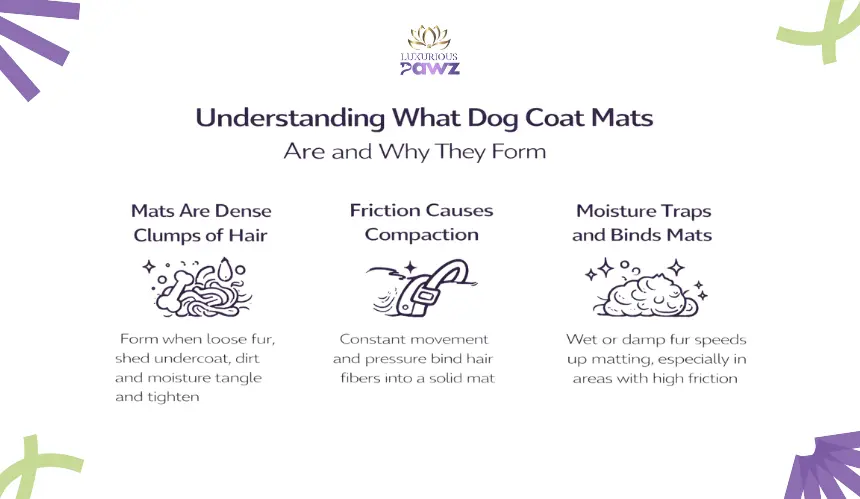
Before any safe removal method makes sense, it helps to understand what mats actually are at a structural level. Dog coat mats are not random clumps of hair.
They are compacted tangles formed when loose fur, shed undercoat, moisture, and external debris bind together and tighten over time. Once this binding begins, normal movement causes the hair fibers to compress further, making the mat denser and harder to separate.
How Dog Hair Transforms From Tangles Into Mats
Early tangles form when shed hair is not fully released from the coat. In double-coated and curly-coated dogs, loose undercoats often get trapped beneath longer topcoat strands.
Friction from walking, lying down, or wearing harnesses causes these strands to twist together. Without brushing, these tangles tighten and transition into mats that resist simple combing.
This process accelerates when hair fibers overlap repeatedly in the same area. Over time, the mat behaves like a single mass rather than individual strands, which is why pulling on it tugs directly at the skin underneath.
Why Moisture and Environment Accelerate Mat Formation
Moisture plays a major role in mat development. Damp fur from bathing, rain, or humidity softens the hair shaft, allowing strands to bind more easily. When moisture is trapped, especially close to the skin, it increases friction and speeds up compaction. Dirt, dust, and outdoor debris act as binding agents, reinforcing the mat structure as the coat dries.
High-friction zones such as behind the ears, under the collar, along the chest, and around joints are especially vulnerable. These areas experience constant movement and pressure, which encourages matting even in dogs that are brushed regularly elsewhere.
Why Some Coat Types Mat Faster Than Others
Coat texture strongly influences how quickly mats form. Fine hair tangles faster than coarse hair, and curly or wavy coats naturally interlock more easily.
Double coats are prone to matting during seasonal shedding when loose undercoat becomes trapped beneath longer guard hairs, which is why structured pet de-shedding treatments can help control buildup before it tightens. Long-haired breeds experience more surface friction, while dense coats restrict airflow, increasing moisture retention.
Understanding these coat-specific behaviors explains why mat prevention and removal require different approaches depending on hair type. It also sets the foundation for choosing safe removal techniques that match how the mat formed in the first place.
Pro Tip: Mats often begin forming weeks before they are visible. Running your fingers against the natural hair growth direction helps detect early resistance that brushes can miss, especially in double-coated and curly-haired dogs. |
Why Removing Mats Incorrectly Can Hurt Your Dog
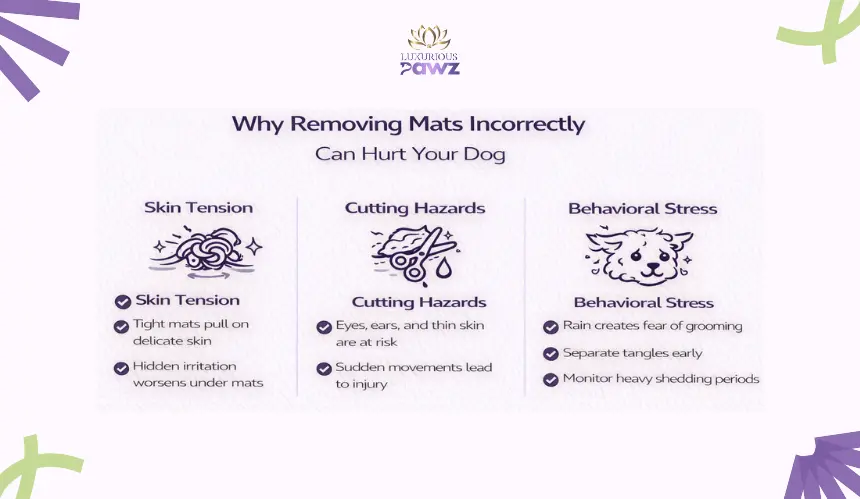
Improper mat removal affects both the skin and the dog’s emotional response to grooming. Mats anchor tightly at the root, so forceful handling shifts pressure from hair to sensitive skin tissue. This is where pain, injury, and long-term grooming resistance often begin.
How Improper Mat Removal Impacts Physical Comfort
- Direct skin tension: Tight mats pull multiple hair follicles together, stretching the skin underneath when brushed or tugged.
- Restricted airflow: Dense mats trap heat and moisture, making skin more sensitive and reactive to touch.
- Hidden irritation: Redness, soreness, or inflammation may exist beneath mats and worsen when pressure is applied.
Why Cutting Mats Is Especially Risky
- Skin folding under mats: Loose skin can bunch inside dense hair, making depth hard to judge.
- High injury potential: Scissors or clippers can catch thin skin concealed within the mat.
- Sudden movement response: Dogs may jerk instinctively when they feel pain, increasing the chance of accidental cuts.
Behavioral Stress and Grooming Avoidance
- Pain-linked fear: Rough mat removal can create lasting anxiety around brushing or handling.
- Reduced cooperation: Dogs may resist future grooming, allowing mats to worsen over time.
These risks explain why safe mat removal depends on controlled techniques and careful assessment rather than force.
Pro Tip: Dogs feel mat-related pain more intensely than normal brushing because multiple hair follicles are pulled simultaneously. This is similar to pulling several hairs at once instead of one, which explains why even gentle force can trigger a strong reaction. |
How to Assess the Severity of Mats Before Removal
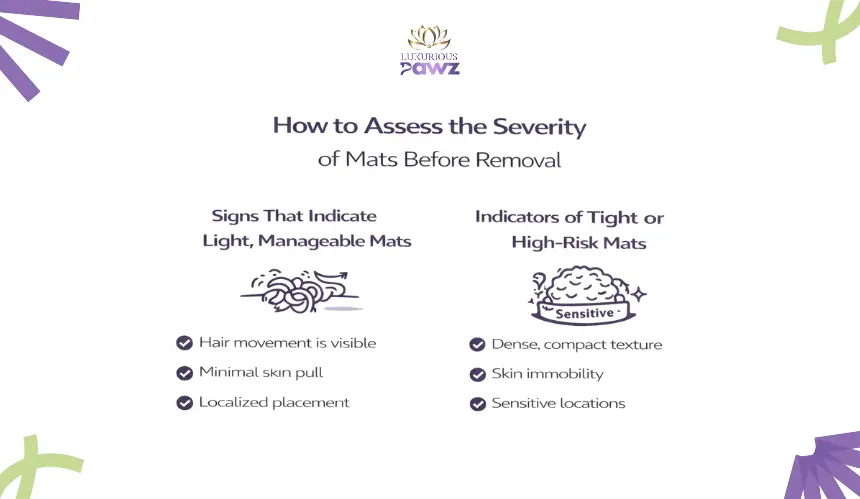
Before attempting any removal, it is essential to evaluate how tightly the mat is formed and how close it sits to the skin. This assessment determines whether gentle home care is appropriate or if removal could cause discomfort or injury. Severity is not about size alone. It is about density, mobility, and skin involvement.
Signs That Indicate Light, Manageable Mats
Light mats are early-stage formations that have not yet compressed into a solid mass. These mats respond better to controlled separation and carry a lower risk when handled carefully.
- Hair movement is visible: Individual strands can still shift when gently touched.
- Minimal skin pull: The mat lifts slightly away from the skin instead of anchoring tightly.
- Localized placement: Mats appear in small sections rather than spreading across an area.
These mats typically form from missed brushing sessions and can often be addressed without causing discomfort when proper techniques are used.
Indicators of Tight or High-Risk Mats
Severe mats behave as a single structure rather than separate strands and may sometimes require a carefully performed professional pet haircut instead of manual detangling. These mats should not be forced apart because tension transfers directly to the skin.
- Dense, compact texture: The mat feels solid and does not loosen when gently manipulated.
- Skin immobility: The mat does not lift away from the body when touched.
- Sensitive locations: Mats around ears, joints, tail base, or under the collar increase risk due to skin movement and thin tissue.
When mats show these characteristics, removal attempts at home can quickly escalate into pain or injury, which is why professional groomers often follow structured techniques for handling severe matting safely. Recognizing this threshold helps protect the dog and prevents avoidable grooming trauma.
Pro Tip: Try gently pinching the mat and the surrounding loose hair separately. If the skin moves with the mat but not with loose hair, the mat is skin-bound and should not be handled aggressively at home. |
Tools That Support Safe and Controlled Mat Removal
Once mat severity is understood, the next step is choosing tools that reduce tension rather than increase it. The right tools support gradual separation of hair fibers while protecting the skin underneath. Unsafe tools or incorrect tool use often turn manageable mats into painful grooming experiences.
Grooming Tools Designed to Reduce Skin Stress
Each tool serves a specific function and should be selected based on how tightly the hair is compacted.
- Wide-tooth combs: Help loosen outer layers of a mat without pulling at the root, making them useful for early-stage matting.
- Slicker brushes: Designed to separate hair strands gently when used with light pressure and short strokes.
- Mat splitters: Allow controlled splitting of dense mats into smaller sections, reducing tension before any brushing occurs.
- Detangling sprays: Lower friction between hair fibers, allowing strands to slide apart instead of resisting movement.
Why Improper Tools Increase Risk
Household scissors and sharp blades create unnecessary danger when visibility is limited. Without a clear view of where the skin begins, depth control becomes guesswork. Even tools intended for grooming can cause discomfort if used aggressively or without proper positioning.
Using purpose-built grooming tools encourages patience and precision. This controlled approach keeps pressure focused on the hair rather than the skin, which is essential for safe mat removal and a calmer grooming experience.
Pro Tip: A tool’s safety depends more on how it distributes pressure than how sharp it is. Tools designed with flexible pins or staggered teeth reduce pressure concentration, which is why they are safer than rigid blades near sensitive skin. |
Step-by-Step Process for Safely Removing Light Mats at Home
When mats are mild and not tightly anchored to the skin, a structured and calm approach helps prevent discomfort. The goal is not speed. It is controlled separation that protects the coat and keeps the dog relaxed throughout the process.
1. Preparing the Coat and Your Dog for Mat Removal
Proper preparation reduces resistance before any tool touches the coat.
- Create a calm setting: Choose a quiet space where the dog feels secure and is less likely to shift suddenly.
- Position for stability: Support the body area being groomed so the skin stays flat and relaxed.
- Use friction control: Apply a light detangling product to help hair strands slide apart instead of snagging.
- Confirm coat condition: Work on dry or lightly conditioned fur, since fully wet hair tightens tangles rather than loosening them.
2. Working Through Mats Without Pulling at the Skin
Technique matters more than pressure during this stage.
- Start at the outer ends: Loosen the tips of the mat first instead of attacking the base.
- Isolate small sections: Hold the hair above the mat to shield the skin from tension while working below it.
- Use short, controlled motions: Gentle strokes allow fibers to separate gradually without creating pain.
- Split before brushing: If the mat resists, divide it into thinner sections before continuing.
3. Monitoring Comfort and Knowing When to Pause
Safe mat removal depends on constant feedback.
- Watch body language: Head turning, stiff posture, or sudden stillness often signal discomfort.
- Check skin response: Redness or warmth beneath the mat indicates rising sensitivity.
- Stop when resistance increases: If the mat tightens instead of loosens, forcing progress increases risk.
This step-by-step approach works only when mats remain flexible and skin movement is minimal. Recognizing when progress slows protects both the coat and the dog’s trust during grooming.
How to Prevent Mats from Returning After Removal
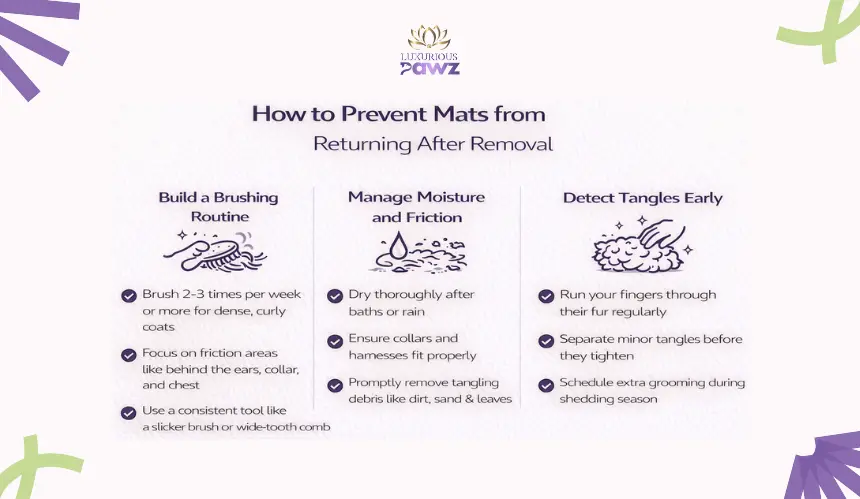
Once mats are safely removed, prevention becomes the most important part of coat care. Preventing matting is less stressful than correcting it and helps maintain both comfort and coat health. Effective prevention focuses on consistency, friction control, and early detection rather than occasional intensive grooming.
Building a Brushing Routine That Matches the Coat Type
Regular brushing keeps loose hair from binding into new mats.
- Adjust frequency to coat structure: Long, curly, or double coats require more frequent brushing than short or coarse coats.
- Target high-risk areas: Focus on zones that experience constant movement, such as behind the ears, under the collar, along the chest, and around joints.
- Use the right tool consistently: Switching between incompatible brushes can miss shed undercoat and allow tangles to form unnoticed.
Managing Moisture and Daily Friction
Environmental factors often trigger repeat matting if left unaddressed.
- Dry the coat thoroughly: Damp fur increases fiber bonding and tightens small tangles quickly.
- Limit friction points: Collars, harnesses, and clothing should fit properly to avoid constant rubbing.
- Remove debris promptly: Dirt, sand, and plant material act as binding agents when left in the coat.
Early Detection as a Preventive Strategy
Catching tangles early prevents them from becoming compact mats.
- Run fingers through the coat regularly: Hands often detect resistance before brushes do.
- Address small tangles immediately, as consistent coat maintenance between grooming visits keeps small tangles from turning into compact mats.
- Monitor seasonal shedding periods: Increased undercoat release raises mat risk if not managed proactively through brushing or scheduled professional dog grooming.
Preventive care shifts grooming from a corrective task to a maintenance habit, reducing discomfort and preserving the natural movement of the coat over time.
If mat removal feels stressful or you are worried about causing discomfort, you do not have to handle it alone. Luxurious Pawz is here to help restore your dog’s comfort with calm, patient, and coat-safe grooming care.
Every dog deserves to feel light, comfortable, and confident again, and the right hands can make all the difference. Reach out today and let your dog feel the relief of gentle, professional care.
Frequently Asked Questions
How long does it usually take to safely remove mats from a dog’s coat?
The time required depends on coat density, mat severity, and the dog’s tolerance for grooming. Light mats may take only a few minutes, while more involved detangling sessions often need breaks spread over multiple sittings to avoid stress and discomfort.
Can bathing a dog before mat removal make the problem worse?
Bathing a dog with existing mats can tighten them further as wet hair contracts and binds together. Mats should always be loosened or removed before bathing to prevent increased compaction and additional strain on the skin.
Are certain seasons worse for mat formation in dogs?
Yes, matting tends to increase during seasonal shedding periods and humid weather. Increased undercoat release, combined with moisture and reduced airflow, creates ideal conditions for mats to develop more quickly if grooming routines are not adjusted.
Is matting a sign of an underlying skin or health issue?
While matting is often related to grooming frequency and coat type, sudden or excessive matting can sometimes indicate mobility issues, discomfort, or changes in skin condition. Dogs that avoid movement or grooming due to pain may develop mats more rapidly.
How often should dogs with high-maintenance coats be professionally groomed?
Dogs with long, curly, or double coats typically benefit from scheduled professional dog grooming every four to eight weeks. Regular professional care helps manage undercoat buildup, maintain coat structure, and reduce the risk of severe matting between sessions.