
- admin
Key Takeaways
|
Powerful Deshedding Treatments for a Healthy Pet Coat
Shedding is often treated as an unavoidable part of pet ownership, but excessive hair loss usually signals an imbalance within the coat rather than a normal cycle. The shedding and regrowth cycle can take up to six or seven weeks, which is one reason coat changes often feel delayed rather than immediate.
This is why a deshedding is not as a cosmetic add-on, but as a corrective step that supports proper coat behavior. This blog will break down these effects clearly, focusing on how deshedding supports healthier coat performance without overlapping into unrelated grooming concepts.
What a Deshedding Treatment Actually Does to the Coat
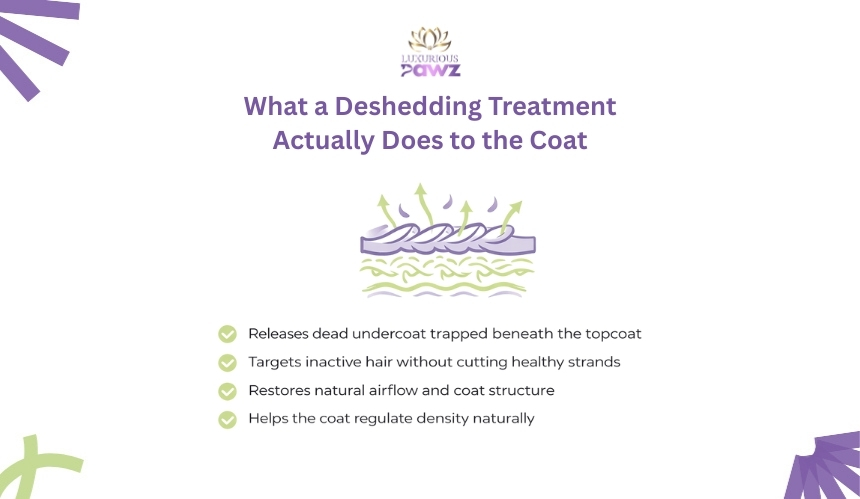
Before looking at visible results, it is important to understand what happens within the coat during a deshedding treatment. This process works at the structural level of the coat rather than focusing on surface hair alone, which is why its impact extends beyond simple hair reduction.
How Deshedding Targets Trapped Undercoat Without Affecting Healthy Hair
A deshedding treatment focuses on loosening and releasing dead undercoat that has already separated from the growth cycle but remains trapped beneath the topcoat. This hair is no longer serving an insulating or protective purpose, yet it interferes with natural coat function when it accumulates.
Specialized techniques and coat-appropriate tools help lift this loose undercoat without cutting, thinning, or disrupting healthy guard hairs.
By clearing out retained undercoat, the coat regains its ability to regulate density and airflow. Hair that is still actively growing remains intact, while inactive hair is guided out in a controlled way. The result is a coat that behaves more predictably, releases hair when it should, and maintains its natural structure over time.
How Deshedding Improves Coat Texture and Appearance
Once the excess undercoat is properly released, changes in how the coat looks and feels become noticeable. These improvements are not cosmetic tricks but the result of restoring balance between hair layers. When the coat is no longer weighed down by retained undercoat, it can settle into a more natural and functional state.
How Removing Excess Undercoat Creates a Smoother Coat Surface
Loose undercoat that remains trapped beneath the top layer often causes the coat to feel rough, uneven, or bulky in certain areas. Deshedding clears this hidden buildup, allowing the topcoat to lie flatter and move more freely. As a result, the coat develops a smoother surface that reflects light more evenly, which contributes to a healthier and more consistent appearance.
With fewer loose hairs pushing outward, the coat gains better definition rather than appearing puffy or irregular. This smoother texture also makes routine brushing more effective, since tools can glide through the coat instead of catching on compacted hair beneath the surface.
Why Balanced Hair Layers Improve Overall Coat Uniformity
A healthy coat relies on proper separation between the undercoat and the outer hair layer. When these layers blend due to excess shedding buildup, the coat can appear patchy or inconsistent across different areas of the body. Deshedding restores this separation, helping each layer function as intended.
As the undercoat volume stabilizes, hair density becomes more even from shoulders to hindquarters. This balance reduces visual inconsistencies and supports a coat that looks uniform rather than uneven or clumped.
Over time, consistent deshedding helps maintain this balanced structure, allowing the coat to retain its natural shape and texture between grooming sessions.
The Role of Deshedding in Supporting Skin Health
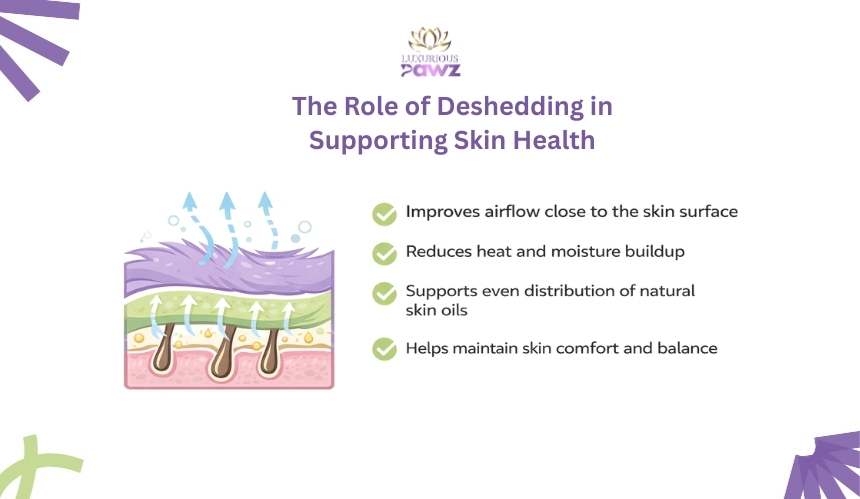
Coat condition and skin health are closely connected, even though skin concerns often remain hidden beneath layers of hair. When undercoat buildup is left unmanaged, it can interfere with how the skin functions on a daily basis. Deshedding addresses this issue indirectly by improving the environment surrounding the skin rather than treating the skin itself.
How Improved Airflow Helps Maintain Healthy Skin Conditions
Inactive coat layer forms a dense barrier that limits airflow near the skin’s surface. Reduced ventilation can cause heat and moisture to linger, creating conditions that make the skin more prone to irritation. Deshedding removes this excess layer, allowing air to circulate more freely through the coat and reach the skin evenly.
Better airflow helps regulate surface temperature and reduces prolonged dampness after activity or professional pet bathing sessions When the skin can breathe properly, it is better able to maintain its natural balance, which supports comfort and reduces stress caused by constant warmth or moisture retention.
How Deshedding Supports Natural Oil Distribution Across the Coat
The skin produces natural oils that protect hair strands and help maintain flexibility and shine. Excess undercoat can block these oils from spreading evenly, causing some areas of the coat to appear dry while others feel greasy.
Deshedding clears pathways through the coat, allowing oils to move naturally from the skin along the hair shaft.
Even oil distribution helps strengthen hair fibers and prevents dryness-related breakage. This balance also supports a healthier skin surface, as oils are less likely to accumulate in one area and clog pores.
Over time, consistent deshedding contributes to a more stable skin and coat environment without relying on topical products or treatments.
Why Deshedding Reduces Excess Shedding Over Time
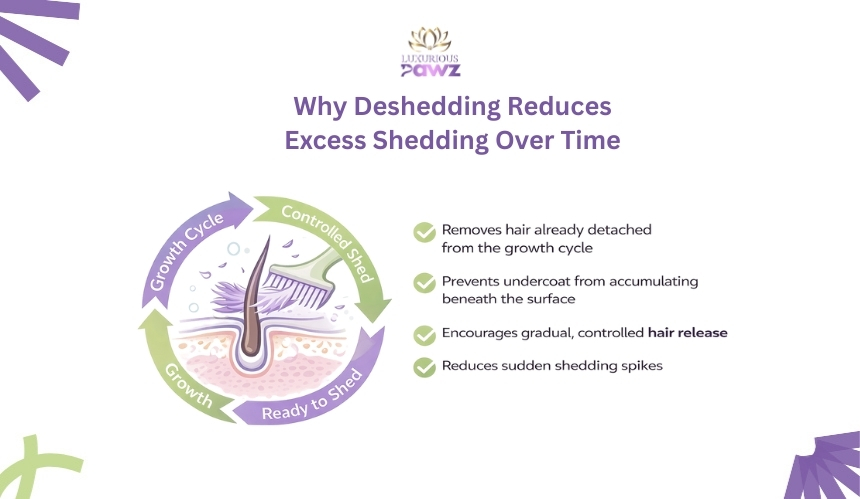
Shedding often feels unpredictable because loose hair does not always release when it should. In many pets, the undercoat separates from the growth cycle but remains lodged within the coat, leading to sudden shedding spikes later.
Deshedding helps correct this timing issue, which is why its effects become more noticeable over time rather than instantly disappearing after one session.
How Controlled Hair Release Stabilizes the Natural Shedding Cycle
A deshedding treatment encourages inactive hair to release gradually instead of accumulating beneath the surface. When this trapped undercoat is removed in a controlled way, the coat no longer holds onto hair that is ready to shed. This helps avoid sharp increases in loose hair that usually follow long periods of undercoat buildup.
In areas like Pasadena, where mild seasonal shifts still trigger coat changes, pets often experience uneven shedding rather than a clear seasonal drop.
Deshedding helps align hair release with these subtle transitions, keeping the shedding cycle more consistent and manageable.
Did You Know: In a classic canine coat study, peak shedding occurred in spring and fall, matching times when more hair follicles were in the telogen (resting) phase, which is when hairs are more likely to release. |
Why Regular Deshedding Prevents Delayed Shedding Buildup
When the undercoat is not cleared regularly, it continues to collect over multiple growth cycles. This delayed buildup places extra stress on the coat and leads to prolonged shedding periods.
Deshedding interrupts this pattern by removing loose hair before it becomes compacted, preventing long-term accumulation beneath the topcoat.
In warmer, urban-adjacent areas such as Burbank, where coats may not shed all at once due to stable temperatures, this buildup is especially common. Consistent deshedding helps prevent gradual overload, allowing the coat to shed steadily instead of releasing excessive hair all at once.
Over time, this approach leads to noticeable reductions in loose hair around the home and a coat that sheds in a more predictable, controlled manner.
How Deshedding Helps Maintain Coat Balance Between Grooming Sessions
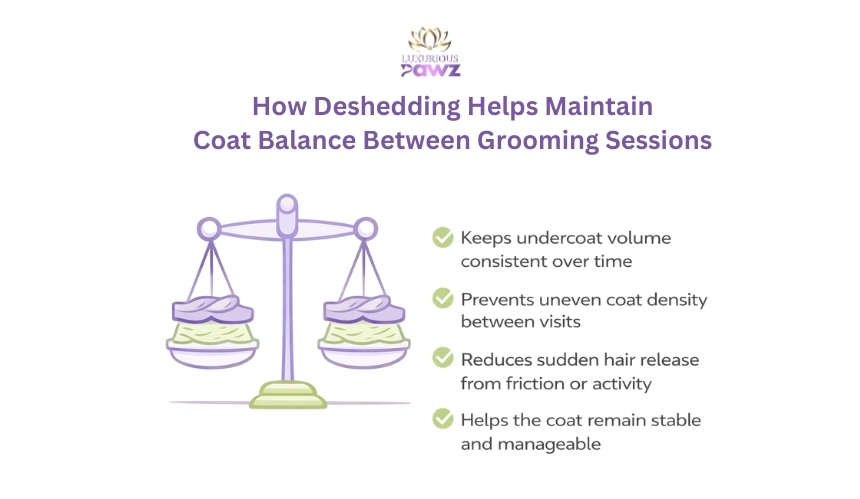
Even after a thorough dog grooming appointment, coat conditions continue to change as hair grows, releases, and shifts. Without proper undercoat control, these changes can lead to uneven density and sudden shedding between visits. Deshedding plays a stabilizing role by helping the coat maintain balance long after the initial treatment is complete, especially when paired with guidance on maintaining coat health between grooming visits.
How Undercoat Control Prevents Uneven Coat Density Between Visits
As new hair growth occurs, the at that has already seploose undercoat can begin collecting beneath the surface if it is not guided out properly. This buildup often causes certain areas of the coat to feel thicker or heavier than others.
Deshedding reduces this imbalance by removing hair that has already detached from the growth cycle, allowing remaining hair to settle evenly across the body.
In foothill-adjacent areas like Altadena, where temperature shifts between day and night are more noticeable, coats can loosen unevenly over short periods.
Deshedding helps counter this effect by keeping undercoat volume consistent, which supports a more uniform coat structure between grooming sessions.
Why Deshedding Reduces Sudden Shedding Spikes Between Appointments
Without regular undercoat management, loose hair often stays trapped until friction, seasonal change, or activity causes it to release all at once. This is why shedding can seem minimal for weeks and then suddenly increase.
Deshedding minimizes this cycle by gradually removing inactive hair before it accumulates to disruptive levels, which is why many owners explore the benefits of regular deshedding treatments for long-term coat balance.
In areas such as Glendale, where pets may experience steady indoor climates paired with outdoor exposure, coats tend to release hair inconsistently.
Deshedding helps smooth out these fluctuations, reducing unexpected shedding bursts and helping the coat remain stable, manageable, and predictable between grooming visits.
Coat Types That Benefit Most From Deshedding Treatments
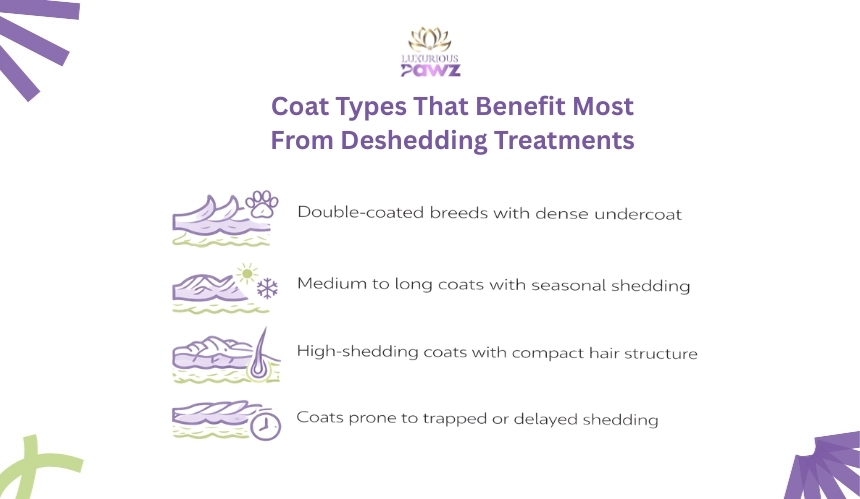
Not all coats behave the same way, but certain coat structures are more prone to undercoat retention and uneven shedding. Deshedding is especially effective for pets whose coats naturally hold onto loose hair instead of releasing it efficiently on their own.
1. Double-Coated and Dense Undercoat Breeds
Breeds with a double coat tend to produce a soft, insulating underlayer beneath a more protective outer coat. When this undercoat sheds unevenly, it can become trapped and compacted, leading to excessive hair buildup.
Professional pet deshedding helps these coats release inactive undercoat without disrupting the protective top layer, keeping density balanced and functional.
2. Medium- to Long-Haired Coats With Seasonal Shedding Patterns
Pets with longer or thicker coats often experience shedding in waves rather than evenly. Loose hair can remain hidden until it suddenly releases, creating heavy shedding periods.
Deshedding supports steady undercoat removal, which is particularly helpful in areas like La Cañada Flintridge, where subtle seasonal shifts can trigger irregular coat changes.
3. High-Shedding Breeds With Compact Coat Structures
Some breeds shed consistently but struggle to release hair cleanly due to tight or compact coat structures. Deshedding improves hair release efficiency in these coats, preventing buildup and helping the coat maintain balance without thinning healthy hair.
Important: In a U.S. home survey, dog and cat allergens were detected in almost every home tested, including many homes that did not report having pets recently, which shows how easily these particles travel and linger. |
If you are tired of fur taking over your home and want your pet’s coat to feel lighter, healthier, and more comfortable, it may be time to experience the difference firsthand. At Luxurious Pawz, deshedding is treated as coat care, not just hair removal. Book a session and give your pet the relief, balance, and comfort their coat has been missing.
Frequently Asked Questions
How long does a deshedding treatment session usually take?
The length of a deshedding session depends on coat density, hair length, and how much undercoat has accumulated over time. Pets with thicker coats generally require more time to fully release loose hair, while lighter coats can be completed more quickly without compromising results.
Can deshedding help pets that spend most of their time indoors?
Indoor environments often reduce natural friction and airflow that help coats release loose hair. Deshedding can be especially helpful for indoor pets because it compensates for these missing factors and helps the coat stay regulated despite limited outdoor exposure.
Is deshedding suitable for senior pets?
Senior pets often experience slower coat turnover, which can lead to undercoat retention. Deshedding supports gentle hair release without pulling or thinning healthy hair, making it a practical option for maintaining coat comfort as pets age.
Does deshedding change how often a pet needs bathing?
Deshedding does not replace bathing, but it can improve how the coat responds to it. With excess undercoat removed, water and shampoo distribute more evenly, which often makes baths more effective and easier to manage at home.
Can deshedding support coat comfort in warmer neighborhoods?
In areas like Eagle Rock, where warmer conditions can persist for long periods, coats may hold onto loose hair longer than needed. Deshedding helps reduce that excess insulation, allowing the coat to feel lighter and more comfortable during extended warm spells.