
- admin
Key Takeaways
Coats with dense underlayers, plush textures, or seasonal undercoat release are structurally prone to trapping shed hair, which makes deshedding a functional requirement rather than an optional grooming step.
When loose hair cannot exit the coat on its own, it accumulates beneath the surface, interfering with airflow, temperature regulation, and overall coat balance over time.
Single-layer coats shed hair more freely and generally do not retain undercoat, making routine grooming sufficient without the need for targeted deshedding.
Skipping deshedding allows undercoat compaction, heat retention, moisture buildup, and uneven shedding patterns to develop gradually, making future grooming more difficult.
Aligning deshedding frequency with seasonal transitions and environmental conditions helps maintain coat performance consistently instead of reacting to excessive shedding after problems appear. |
Essential Deshedding Techniques for Specific Breeds
Shedding is often treated as a surface-level inconvenience, something to manage with frequent vacuuming or quick brushing. For certain breeds, however, shedding is tied directly to how their coat functions and how comfortable they feel in everyday conditions.
This is where professional pet de-shedding treatments become essential rather than optional. Unlike basic grooming, deshedding addresses coat behavior that brushing alone cannot manage, especially in breeds with dense or layered fur.
This article explains the role deshedding plays for specific coat types, why skipping it creates problems over time, and how breed characteristics determine when and why it matters.
Understanding How Shedding Works at the Coat Level
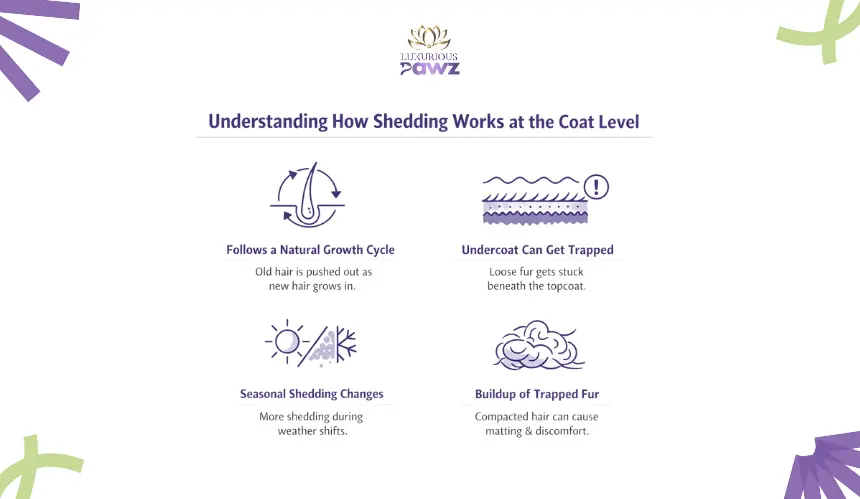
Shedding is a natural biological process tied to how a dog’s coat grows, renews, and adapts to environmental conditions. Hair does not fall out randomly. It follows a predictable growth cycle where older hair is pushed out as new hair forms within the follicle.
In healthy coats, this process happens gradually and evenly, allowing loose hair to release without disrupting skin function.
Problems begin when this cycle is affected by coat density and structure. In many breeds, especially those with insulating undercoats, shed hair does not always separate cleanly from the rest of the coat. Instead of falling away, it becomes trapped beneath the top layer.
This trapped undercoat continues to loosen over time but remains compacted against the skin, altering how the coat performs.
Seasonal changes intensify this process. As temperatures shift, the body adjusts insulation levels by releasing larger amounts of undercoat. In indoor environments with stable temperatures, this release can become inconsistent, causing shedding to stretch out rather than complete itself.
When the natural shedding cycle cannot finish properly, loose fur accumulates within the coat, setting the stage for discomfort, excessive hair loss, and coat imbalance that routine brushing alone does not resolve.
Which Coat Types Require Deshedding and Why Breed Structure Matters
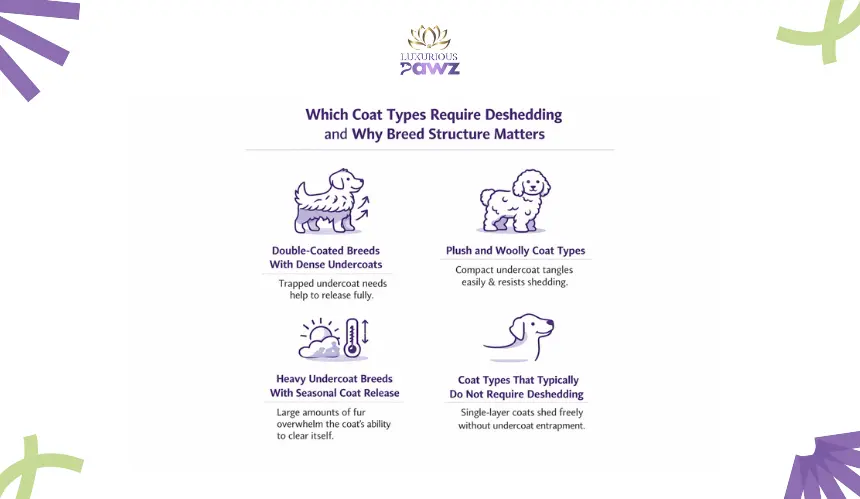
Not all coats release shed hair in the same way, which is why deshedding is closely tied to coat structure rather than grooming preference.
Breed characteristics and specific dog coat types determine how hair layers interact, how easily loose fur separates, and whether shedding completes itself naturally or stalls within the coat.
Double-Coated Breeds With Dense Undercoats
Double-coated dogs have two distinct hair layers that serve different functions. The inner layer is soft, dense, and designed for insulation, while the outer layer is longer and more protective.
When shedding occurs, the undercoat loosens first, but the topcoat often prevents that loose hair from falling away naturally. This causes shed undercoat to remain trapped close to the skin, making deshedding necessary to fully clear it without damaging the outer coat.
Plush and Woolly Coat Types
Plush or woolly coats have a high concentration of fine undercoat fibers that grow closely together. These coats tend to hold onto shed hair even during normal shedding cycles.
Because the hair texture is softer and more compact, loose undercoat easily tangles into the surrounding coat rather than releasing. Deshedding helps separate and remove this trapped hair before it compacts and restricts airflow.
Heavy Undercoat Breeds With Seasonal Coat Release
Some coat types are designed to release large volumes of undercoat during seasonal transitions. In these coats, shedding happens in bursts rather than gradually.
The sheer volume of released hair often overwhelms the coat’s ability to self-clear, leaving loose undercoat embedded beneath the surface. Deshedding supports complete seasonal coat release instead of allowing partial shedding to drag on for months.
Coat Types That Typically Do Not Require Deshedding
Single-layer coats behave differently because they lack an insulating undercoat. Hair sheds individually and exits the coat more freely, reducing the chance of buildup beneath the surface.
While these coats still require regular grooming for cleanliness and skin health, deshedding is generally unnecessary because there is no secondary layer trapping loose hair.
Distinguishing between coat types helps prevent over-grooming and ensures that deshedding is used only where it provides clear functional benefits.
What Happens When Deshedding Is Skipped or Delayed
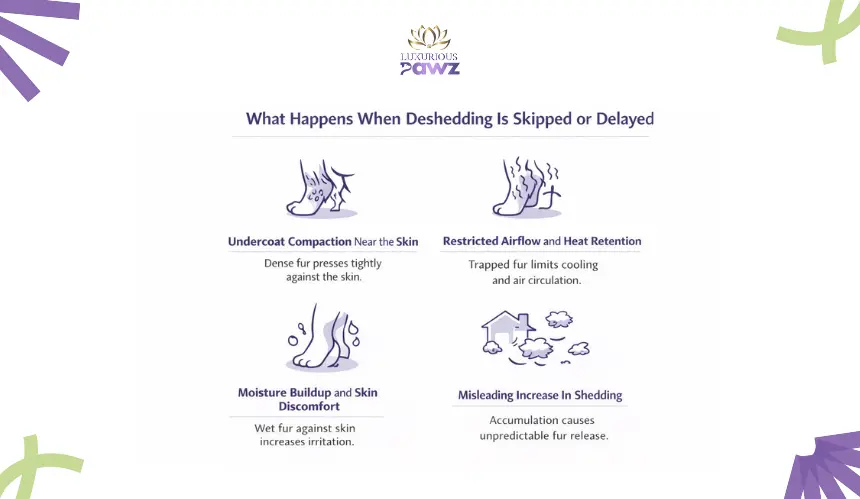
When deshedding is skipped, the impact is rarely immediate, but it becomes increasingly noticeable as the coat continues to hold onto the loose undercoat.
Instead of completing its natural release cycle, shed hair accumulates beneath the surface, changing how the coat functions and feels over time. The following issues commonly develop when deshedding is delayed.
- Undercoat Compaction Near the Skin: Loose undercoat collects beneath the topcoat and presses closer to the skin, forming dense layers that reduce natural coat movement and flexibility.
- Restricted Airflow and Heat Retention: Compacted fur limits air circulation along the skin, causing heat to remain trapped and making temperature regulation less effective, especially in warmer conditions.
- Moisture Buildup and Skin Discomfort: Trapped hair holds moisture against the skin after bathing, humidity exposure, or activity, increasing irritation and creating an environment where discomfort escalates.
- Misleading Increase in Shedding Around the Home: Surface brushing loosens some hair but leaves a deeper undercoat intact, causing fur to release unpredictably throughout the day rather than during controlled grooming.
- Decline in Coat Texture and Appearance: As buildup increases, the coat often looks dull, uneven, or bulky, making routine grooming more difficult and less effective with each session.
Addressing deshedding at the right time prevents these layered issues from developing and helps maintain a coat that functions as intended rather than working against the dog’s comfort.
How Deshedding Improves Coat Health and Comfort
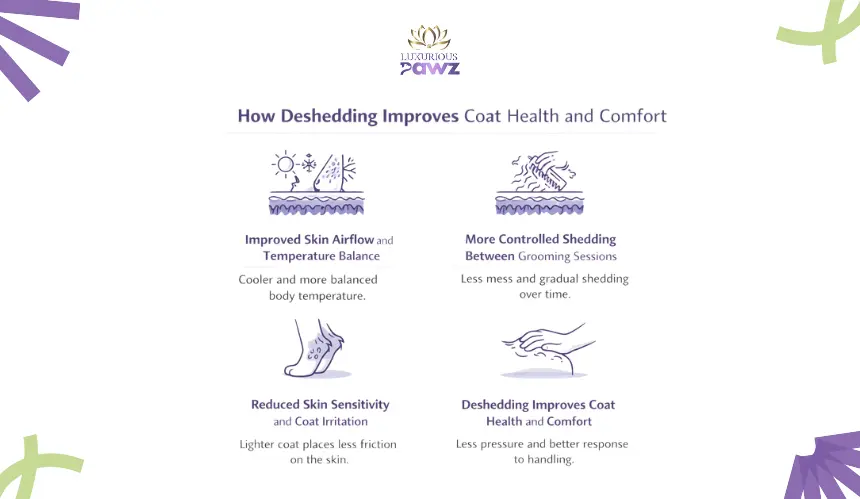
Once excess undercoat is properly removed, the coat begins to function the way it was designed to. Deshedding does not change the coat structure.
It restores balance by allowing each layer to perform its role without obstruction. The benefits extend beyond appearance and directly affect how the dog feels on a daily basis.
Improved Skin Airflow and Temperature Balance
Removing a trapped undercoat opens space between hair layers, allowing air to circulate naturally along the skin. This improved airflow helps regulate body temperature during warm weather and prevents overheating caused by retained insulation.
With less heat trapped near the skin, dogs are often more comfortable during activity and rest, especially in climate-controlled indoor environments.
More Controlled Shedding Between Grooming Sessions
Deshedding removes hair that is already detached from the follicle but unable to escape the coat on its own. Once this loose undercoat is cleared, shedding becomes more predictable and gradual.
Instead of constant fur release throughout the home, hair loss decreases between grooming sessions when excess undercoat is properly cleared and shedding is controlled more effectively.
Reduced Skin Sensitivity and Coat Irritation
A lighter, better-balanced coat places less pressure on the skin. This reduces friction, pulling, and moisture retention that can lead to irritation.
Dogs with properly deshed coats often show fewer signs of discomfort during brushing, petting, or movement, since the coat lies more naturally and responds better to handling.
Deshedding Compared to Regular Brushing and Why the Difference Matters
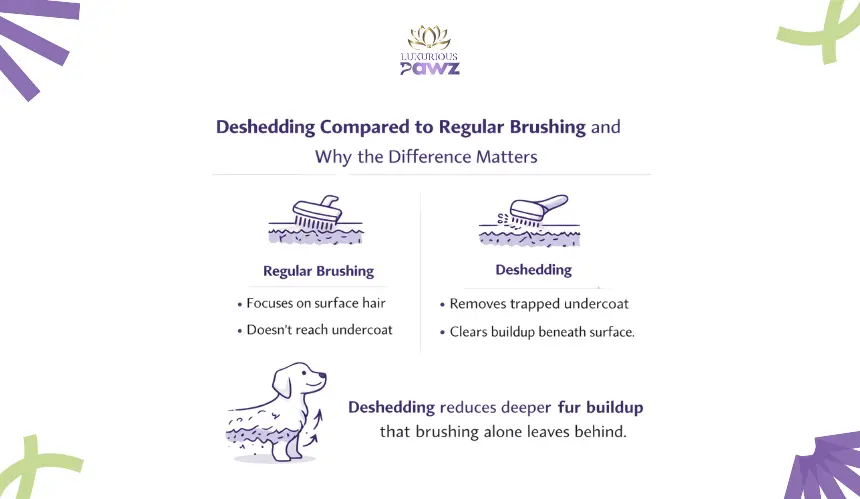
Many owners rely on brushing as their primary grooming method instead of scheduling structured dog grooming services, assuming it addresses shedding at all levels of the coat. While brushing plays an important role in routine maintenance, it serves a different purpose than deshedding.
Regular brushing focuses on surface-level maintenance. It removes loose topcoat hair, smooths the coat’s appearance, and helps distribute natural oils along the hair shaft. This process improves coat presentation and reduces minor tangles, but it has limited reach.
In dense or layered coats, brushing rarely penetrates deep enough to lift loose undercoat that has already separated from the skin.
Deshedding targets what brushing cannot reach. It works below the surface to remove undercoat hair that is no longer attached but remains trapped beneath the top layer.
By addressing this deeper layer, deshedding reduces internal buildup rather than just managing what is visible. The result is a coat that sheds less unpredictably and responds better to routine brushing afterward.
The difference becomes most noticeable over time. Brushing alone often leads to repeated shedding cycles without resolution, while deshedding completes the release process.
How Coat Behavior and Environment Determine Deshedding Frequency
Deshedding is most effective when it follows a defined timeline based on how a coat releases undercoat and how local conditions influence that process. Rather than reacting to visible shedding, structured intervals help prevent buildup before it affects comfort, airflow, and coat balance.
Deshedding schedules are generally shaped by two factors: seasonal coat transitions and ongoing environmental exposure. When these factors are understood together, grooming becomes preventive instead of corrective.
Deshedding Timing During Seasonal Coat Transitions
Coats with undercoat layers typically go through major shedding cycles twice a year, most often during spring and fall. During these transition periods, deshedding is most effective when performed every 4 to 6 weeks until loose undercoat release stabilizes.
This timing allows the coat to complete its natural adjustment phase instead of shedding unevenly over an extended period. Missing this window often results in prolonged fur loss that feels difficult to manage later.
Maintenance-Based Deshedding Outside Peak Seasons
Outside of heavy seasonal transitions, coats that retain loose undercoat benefit from deshedding on a maintenance cycle of every 8 to 12 weeks.
Allowing longer gaps often leads to denser buildup, which increases grooming time and reduces coat comfort between scheduled grooming visits.
How Local Climate Patterns Influence Deshedding Needs
Environmental conditions play a direct role in how consistently undercoat releases, particularly across parts of Southern California where temperature shifts are common.
In areas such as Pasadena and Altadena, warm daytime conditions followed by cooler evenings can interrupt normal shedding cycles. This fluctuation often causes undercoat to loosen unevenly, making 6 to 8 week deshedding intervals more effective even outside traditional seasonal peaks.
Urban-adjacent communities like Glendale and Burbank tend to experience longer warm periods due to heat retention from surrounding infrastructure. In these environments, undercoat release is often gradual rather than concentrated, which supports consistent 8-week deshedding schedules to prevent slow accumulation beneath the surface.
In slightly cooler or elevated locations such as La Cañada Flintridge, coats may retain insulation longer before shedding begins. When release finally occurs, undercoat volume can be higher, making timely deshedding during transition phases especially important to avoid sudden compaction.
When shedding starts affecting comfort, energy, and coat balance, it’s time for care that goes deeper than surface brushing. At Luxurious Pawz, our structured pet de-shedding services in La Cañada Flintridge focus on restoring airflow, reducing buildup, and supporting long-term coat health. Give your dog the comfort and relief their coat is meant to provide with expert-guided deshedding care.
Frequently Asked Questions
Does deshedding affect coat regrowth or long-term hair thickness?
Deshedding does not interfere with hair regrowth or reduce coat density. It only removes hair that has already completed its growth cycle, allowing new hair to grow evenly without being blocked by retained undercoat.
Is deshedding appropriate for senior dogs with aging coats?
Older dogs often experience changes in coat texture and uneven shedding. When performed gently and at proper intervals, deshedding can reduce coat heaviness and improve comfort without stressing aging skin or joints.
Can incorrect deshedding tools damage a dog’s coat?
Yes, using tools that are too aggressive for a specific coat structure can weaken guard hairs or irritate the skin. Proper deshedding depends on matching tool design to coat density and hair type rather than using a one-size-fits-all approach.
Does deshedding help control pet odors inside the home?
Trapped undercoat often holds moisture, debris, and environmental particles that contribute to lingering odors. Removing this buildup through deshedding helps the coat stay cleaner longer and reduces odor retention between baths.
Is deshedding helpful for dogs with seasonal skin sensitivity?
Seasonal sensitivity is often aggravated by heat and moisture trapped in dense coats. Deshedding can relieve pressure on the skin and improve airflow when timed carefully, reducing discomfort without overstimulating sensitive areas.
How does deshedding align with allergy-conscious pet care trends?
Deshedding helps limit the accumulation of loose hair and dander within the coat, which are common allergen carriers. While it does not eliminate allergens, it supports better indoor control by reducing uncontrolled shedding.
Can deshedding support coat recovery after relocation or climate changes?
Environmental shifts often disrupt normal shedding patterns, causing undercoat retention. Deshedding helps restore coat balance by clearing accumulated loose hair that builds up during periods of temperature or routine changes.