
- admin
Preparing Your Cat for Grooming: Tips for Stress-Free Visits
Key Takeaways
|
If a cat bolts under the bed the moment the carrier appears, that reaction is not stubbornness. It is a stress response. Grooming introduces unfamiliar handling, new environments, and close physical contact, all of which can trigger anxiety in even the calmest feline.
For many owners, the real concern is simple: how can grooming happen without fear, scratching, or emotional distress?
This guide focuses on practical, step-by-step strategies that help owners build tolerance, confidence, and comfort before, during, and after grooming visits.
Understanding Why Cats Become Stressed During Grooming
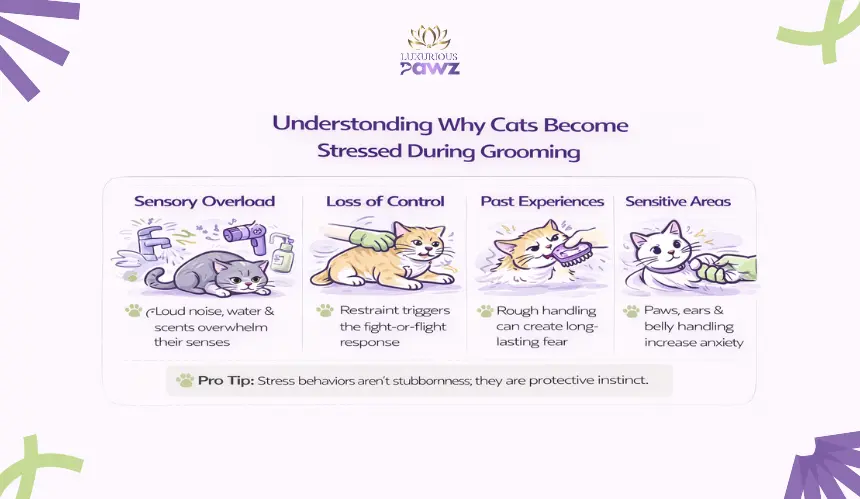
Before solving grooming anxiety, it helps to understand what is actually happening inside a cat’s body and mind. Feline behavior is deeply rooted in instinct. When a situation feels unpredictable or physically restrictive, the nervous system shifts into a protective mode.
Recognizing the specific triggers behind grooming stress allows owners to respond strategically instead of reactively. If your pet displays intense fear responses, you may also want to read our guide on signs your pet is anxious about grooming and how to fix it for additional calming strategies.
Sensory Changes Trigger Grooming Anxiety
Cats rely heavily on heightened sensory perception. Loud dryers, running water, unfamiliar scents, and bright lighting can overwhelm their auditory and olfactory systems. What seems like normal salon activity to humans may register as overstimulation to a feline nervous system.
Environmental change is another key factor. A grooming table, metal surfaces, or new textures under their paws can disrupt their sense of stability.
Feline sensory processing is sensitive by design, which explains why some cats vocalize, freeze, or attempt to escape during grooming sessions. These reactions are not misbehavior. They are stress signals.
How Does Physical Handling Affect a Cat’s Stress Response?
Grooming requires restraint, close contact, and manipulation of sensitive areas such as paws, ears, tail, and abdomen. For many cats, losing control over movement activates the fight-or-flight response. Defensive scratching, biting, or rigid body posture are common behavioral cues tied to perceived vulnerability.
Nail trimming resistance, mat removal discomfort, and ear cleaning sensitivity are particularly common triggers. Cats instinctively guard areas that feel exposed. When those areas are handled without prior conditioning, tension escalates quickly.
Past Experiences Influence Grooming Behavior
Yes, conditioning plays a powerful role in feline behavior. A single negative grooming experience can create a fear memory that carries into future visits. Cats form associations rapidly. If a previous session involved pain, rough handling, or prolonged restraint, avoidance behaviors may intensify over time.
Lack of early socialization also contributes. Kittens who are not gradually introduced to brushing tools, gentle restraint, and routine handling may struggle more as adults. Grooming anxiety is often shaped by experience rather than personality alone.
Understanding these triggers sets the foundation for effective preparation. Once the root causes of stress are clear, practical solutions become far more achievable.
How to Prepare Your Cat at Home Before the Appointment
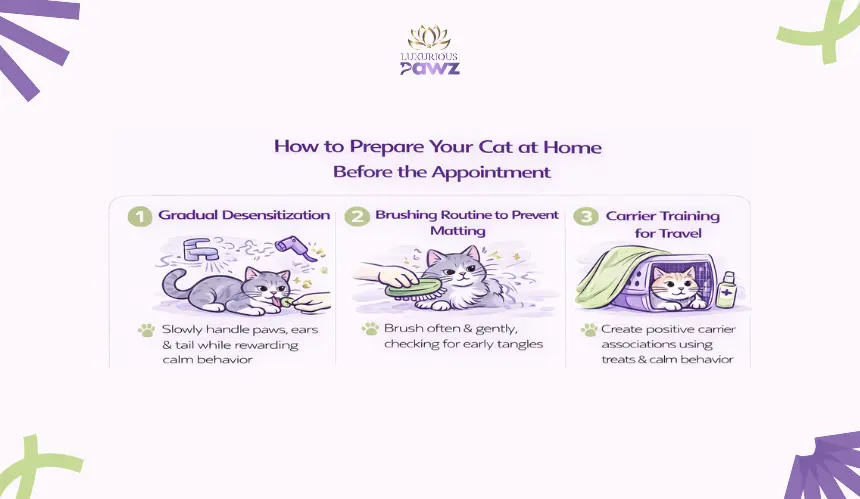
Preparation begins long before the grooming table. A cat that feels secure at home is more likely to tolerate handling in an unfamiliar environment.
The goal is to build familiarity with touch, tools, and transport in small, controlled steps. Consistency and calm repetition create behavioral stability that carries into the grooming session.
Gradual Desensitization to Touch and Tools
Cats are highly responsive to repeated, low-intensity exposure. Start by gently handling paws for a few seconds each day without attempting to trim nails. Lightly touch the ears, lift the tail briefly, and stroke areas that are often sensitive. Keep sessions short and predictable to avoid overstimulation.
Introduce grooming tools passively at first. Allow the cat to sniff the brush or nail clippers while offering treats or calm verbal praise. This positive reinforcement training technique builds neutral or positive associations with grooming equipment.
Over time, gradual exposure reduces defensive scratching and resistance because the interaction no longer feels sudden or threatening.
Brushing Routine to Prevent Matting
Matting is one of the leading causes of grooming discomfort. When tangles tighten against the skin, they create pulling sensations that increase irritability during professional grooming. Establishing a brushing routine supports coat maintenance and reduces the likelihood of painful de-matting sessions.
Long-haired breeds often require frequent undercoat maintenance to prevent compacted fur. Short-haired cats benefit from regular brushing to manage shedding and distribute natural oils.
Preventive coat care not only protects skin health but also normalizes physical contact, which strengthens tolerance during professional grooming procedures. For cats with dense undercoats, a structured cat de-shedding treatment can significantly reduce loose fur and prevent painful mat buildup.
Did you know? Cats can spend roughly 30–50% of their day grooming. That’s why coat changes often build gradually, and owners may miss early matting or skin irritation until it becomes obvious. This supports routine coat checks between visits. |
Carrier Training to Reduce Travel Anxiety
Transportation stress can elevate a cat’s heart rate before the appointment even begins. If the carrier only appears before stressful events, it becomes a conditioned trigger for anxiety.
Place the carrier in a familiar area of the home and keep it open. Add soft bedding with a familiar scent and allow voluntary exploration. Feeding small treats near or inside the carrier builds positive associations. Short practice car rides can further reduce noise sensitivity and motion-related stress.
Some owners use synthetic feline pheromone products inside the carrier to support calm behavior. Synthetic feline facial pheromone use has been studied for transport stress, with research indicating it can alleviate short-distance transport-related stress in cats with higher stress scores. This can be positioned as a “support tool,” not a magic fix.
Pro tip: Before leaving, cover the carrier with a light towel/blanket (leaving airflow clear). A low-stress transport protocol used in research included keeping the carrier covered and stable, and pheromone-in-carrier approaches have been studied for reducing transport-related stress behaviors. |
Choosing the Right Groomer for a Stress-Free Experience
Preparation is not only about conditioning a cat at home. The grooming environment itself plays a major role in how a cat responds. A calm, experienced professional can make the difference between a tense appointment and a smooth visit. Selecting the right groomer requires attention to qualifications, handling methods, and the overall atmosphere.
What to Look for in a Professional Cat Groomer
Not every pet groomer specializes in feline grooming. Cats require different restraint techniques, quieter handling, and a deeper understanding of feline behavior. Look for a professional cat groomer who advertises experience with cats specifically, not just general pet grooming.
Certifications in pet grooming or low-stress handling indicate formal training in humane restraint techniques. Groomers who understand feline body language can identify early stress signals such as tail flicking, ear flattening, or pupil dilation before escalation occurs.
It is also helpful to ask how they handle anxious cats. Do they allow short breaks? Do they avoid excessive restraint? A professional who prioritizes stress-minimized grooming demonstrates awareness of both safety and emotional well-being.
Mobile Grooming vs Salon Grooming
The grooming setting can influence a cat’s comfort level. Each option offers distinct advantages depending on the cat’s temperament.
Mobile Grooming
Mobile grooming units often reduce exposure to other animals and loud salon activity. Because the service typically happens close to home, transportation stress may decrease. For highly sensitive cats, a quieter and more controlled environment can limit overstimulation.
Salon Grooming
Professional salons usually provide structured workflows and specialized equipment. Experienced staff members can assist if a cat becomes reactive. Some salons also have feline-only scheduling blocks to minimize interaction with dogs. For cats accustomed to handling, this environment can be efficient and well-managed.
Choosing between mobile grooming and salon grooming depends on individual personality, anxiety levels, and prior experiences. Matching the environment to the cat’s temperament supports a more predictable and stable grooming outcome.
What to Do on the Day of the Grooming Appointment
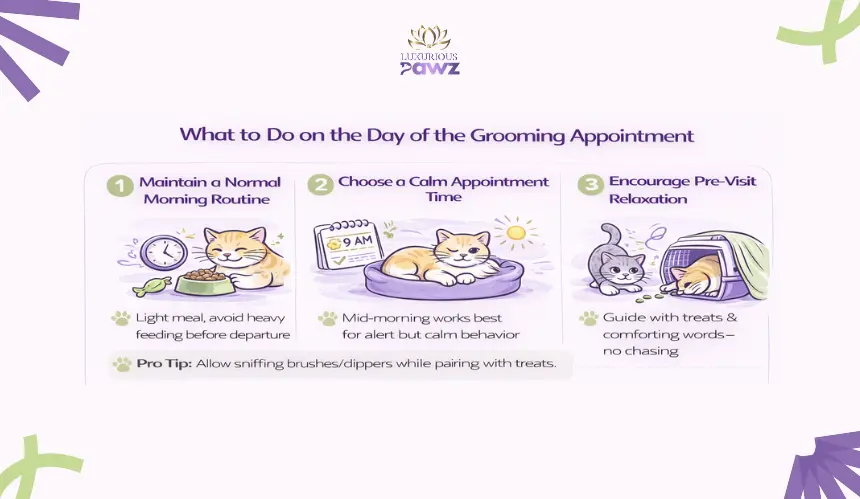
The grooming day should feel calm and predictable, not rushed or chaotic. Cats are highly sensitive to changes in routine, and even subtle tension from their owner can influence their behavior. A structured, low-stimulation approach keeps stress levels manageable and supports smoother handling at the salon or mobile unit.
- Maintain a Normal Morning Routine: Feed your cat at the usual time, but avoid a heavy meal immediately before departure. Keeping feeding predictable supports emotional stability while preventing motion-related discomfort during travel.
- Choose a Calm Appointment Time: Mid-morning slots often work well because cats are alert but not overstimulated. Avoid scheduling during loud household activity or when the home environment feels rushed.
- Encourage Gentle Pre-Visit Relaxation: A short, low-intensity play session can release nervous energy. Avoid overly stimulating games that increase arousal. Calm interaction helps regulate the feline stress response before transport.
- Use Proven Calming Aids if Needed: Synthetic feline pheromone sprays inside the carrier may promote a sense of security. Vet-approved calming supplements can be considered for highly anxious cats, but only under professional guidance.
- Handle the Carrier Transition Calmly: Never chase or force your cat into the carrier. Guide them confidently using treats or familiar cues. Forced restraint elevates cortisol levels and reinforces fear conditioning.
- Communicate Key Behavioral Details to the Groomer: Share any history of nail trimming resistance, mat sensitivity, arthritis, or previous grooming reactions. Clear communication allows the groomer to apply stress-minimized handling techniques and monitor behavioral cues more effectively.
A composed, structured approach on grooming day reinforces all prior preparation. When routine, calm handling, and clear communication come together, the overall experience becomes safer and significantly less stressful for your cat.
During the Grooming Session: What Happens and How Cats React
Many owners feel anxious simply because they do not know what happens once their cat goes behind the grooming room door. Understanding the process reduces uncertainty and helps set realistic expectations. Professional feline grooming follows a structured sequence designed to balance hygiene, coat health, and safety while monitoring stress signals throughout the session.
- Initial Coat and Skin Assessment: The groomer begins with a coat condition evaluation, checking for matting, undercoat density, skin irritation, parasites, or sensitivity. This assessment determines whether light brushing, de-shedding, or more careful de-matting techniques are required.
- Brushing and De-Matting: Loose fur and minor tangles are removed first to reduce discomfort during bathing. Severe matting may require careful trimming or a professional lion haircut or sanitary trim for cats rather than aggressive pulling, as excessive tension can cause pain and defensive reactions.
- Bathing and Controlled Drying: Cats are bathed using feline-safe shampoos formulated for skin pH balance. Drying methods vary. Some groomers use low-noise dryers, while others rely on towel drying for highly sensitive cats to minimize auditory stress.
- Nail Trimming and Hygiene Care: Nail trimming, ear cleaning, and sanitary trims are typically performed with steady restraint and minimal pressure. Skilled groomers monitor body language such as ear position, muscle stiffness, and tail movement to prevent escalation.
- Continuous Stress Monitoring: Throughout the session, professionals observe breathing rate, vocalization patterns, and tension cues. Short breaks may be provided if overstimulation appears. Humane restraint techniques prioritize stability without excessive force.
It is also normal for cats to show temporary behavioral changes after grooming. Mild vocalization, hiding, or short-term fatigue can occur as cortisol levels settle. These responses typically resolve within hours as the cat returns to a familiar environment.
Post-Grooming Care and Reinforcement for Cats
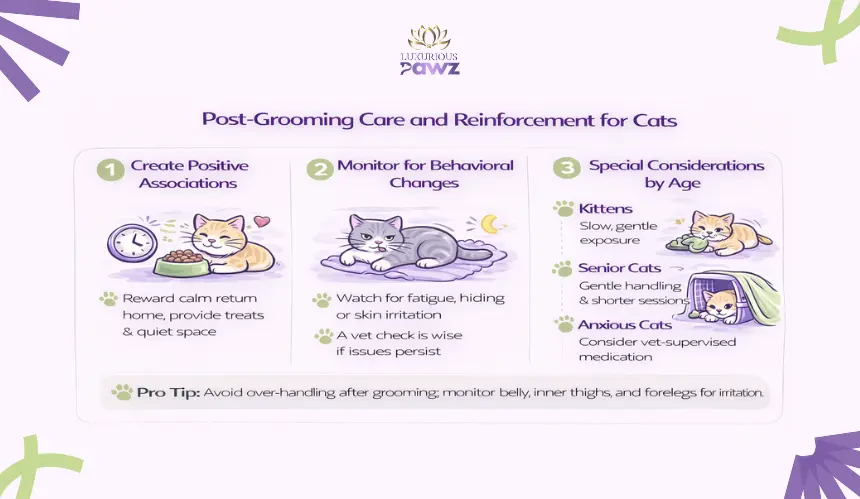
The grooming appointment may be over, but the experience does not end when you walk through the door. The hours immediately after grooming shape how your cat remembers the event. Positive reinforcement and careful observation help prevent lingering anxiety and build better tolerance for future visits.
1. Creating Positive Associations
When your cat returns home, allow quiet decompression time. Avoid loud environments or sudden interaction with children or other pets. A calm room with familiar scents helps regulate their nervous system.
Offer a favorite treat, gentle petting, or soft verbal praise once your cat settles. This reinforcement links grooming with a safe and rewarding outcome. Consistent positive associations reduce fear memory formation and support long-term behavioral conditioning.
Keep handling minimal for a few hours. Overhandling immediately after restraint can prolong stress recovery.
2. Monitoring Physical and Behavioral Changes
Observe your cat for subtle signs of irritation or sensitivity. Mild fatigue is common as adrenaline levels decline, but symptoms such as excessive licking, redness, or swelling should be monitored closely.
Watch for behavioral shifts such as hiding, appetite reduction, or unusual vocalization. Most stress responses normalize within several hours. If changes persist beyond a day, consulting a veterinarian is advisable to rule out discomfort or skin sensitivity.
Post-groom monitoring protects both physical health and emotional stability. When owners respond thoughtfully after each session, cats are less likely to develop escalating grooming anxiety over time.
Pro tip: Watch for over-grooming after stressful events. Veterinary guidance notes that because cats groom so frequently, stress-related over-grooming can escalate before owners notice, sometimes showing up as hair loss or skin lesions. Add a simple “check the belly, inner thighs, and forelegs” note. |
Special Considerations for Kittens, Senior Cats, and Anxious Cats
Not all cats respond to grooming in the same way. Age, health status, and temperament significantly influence tolerance levels. Adjusting preparation and expectations based on life stage or anxiety level helps prevent unnecessary stress and supports safer grooming outcomes.
First Grooming Visits for Kittens
Early exposure plays a powerful role in long-term grooming tolerance. Kittens are in a critical socialization window during their first months of life. Introducing brushing, gentle paw handling, and short restraint sessions during this stage builds familiarity rather than fear.
Keep sessions brief and positive. Avoid full baths unless medically necessary. Focus on touch conditioning, light brushing, and calm reinforcement. Kittens that experience gradual exposure are less likely to develop grooming anxiety as adults.
Grooming Senior Cats Safely
Senior cats often require modified grooming approaches. Arthritis, reduced flexibility, and thinner skin increase sensitivity during handling. Extended standing on grooming tables can cause joint discomfort, especially in aging cats.
Shorter sessions with breaks are beneficial. Inform the groomer about mobility issues or chronic conditions such as kidney disease or hyperthyroidism. Gentle restraint techniques and minimal manipulation reduce physical strain. Monitoring for post-groom fatigue is especially important in older felines.
Managing Highly Anxious or Reactive Cats
Some cats exhibit intense fear responses, including hissing, lunging, or extreme muscle rigidity. In these cases, behavioral training may be necessary before professional grooming becomes manageable.
Gradual desensitization at home should be extended over weeks rather than days. Veterinary consultation can help determine whether anxiety stems from past trauma, underlying pain, or generalized stress disorder. In severe cases, veterinarian-supervised calming medication may be considered, but this should always be a last resort under medical guidance.
Local Considerations for Pet Grooming in Southern California
Southern California’s foothill and metro-adjacent communities share environmental factors that directly affect feline coat health. Across the San Gabriel Valley and surrounding hillside neighborhoods near the Angeles National Forest, warmer temperatures and extended shedding seasons often lead to heavier undercoat buildup. This makes regular brushing and de-shedding maintenance especially important.
Dry air conditions common throughout foothill corridors can contribute to skin dryness and static in the coat. Cats living in areas near canyon zones or elevated residential hillsides may also collect more outdoor dust and fine debris, even if they spend limited time outside. This increases the need for consistent coat checks between professional grooming visits.
In mixed suburban-urban environments throughout the greater Pasadena and Glendale region, lifestyle exposure varies from indoor-only apartments to homes with patio or backyard access. Owners in these communities should monitor seasonal coat changes closely to prevent mat formation and maintain healthy skin balance year-round.
Grooming should feel calm, not chaotic. With the right preparation and the right hands, your cat can experience care that protects both their coat and their confidence. At Luxurious Pawz, every session is handled with patience, low-stress techniques, and genuine feline understanding.
Frequently Asked Questions
What health benefits does professional grooming provide?
Professional grooming supports skin and coat health by removing loose undercoat, reducing hairball formation, and preventing compacted matting that can irritate the skin. Groomers are also trained to notice early signs of parasites, lumps, rashes, or ear buildup that may require veterinary attention. Early detection adds preventive value beyond appearance alone.
How often should a cat be professionally groomed?
Grooming frequency depends on coat type, age, and shedding patterns. Long-haired breeds often benefit from appointments every 4 to 6 weeks, while short-haired cats may only require grooming every 6 to 8 weeks. Cats with dense undercoats or seasonal shedding cycles may need more structured maintenance during peak shedding periods.
Is professional grooming necessary for indoor-only cats?
Indoor cats still produce dander, shed fur, and develop undercoat buildup. Limited outdoor exposure does not eliminate the need for coat maintenance. Professional grooming reduces loose hair in the home, supports healthy skin circulation, and keeps the coat free from developing tangles that may go unnoticed.
What certifications should a cat groomer have?
Look for groomers with feline-specific training or certifications from recognized grooming organizations. Credentials that focus on low-stress handling and feline safety indicate an advanced understanding of cat behavior, anatomy, and humane restraint techniques. Experience working specifically with cats is equally important.
When should a veterinarian be consulted instead of a groomer?
If a cat has open wounds, severe skin infections, extreme matting attached tightly to the skin, or underlying medical conditions such as heart disease or respiratory issues, veterinary guidance should come first. Groomers handle cosmetic and maintenance care, while medical concerns require clinical evaluation.