
- admin
Must-Have Grooming Kit Items for Every Cat Owner
A Quick answer: Every cat owner needs a grooming kit that supports coat health, skin comfort, and stress-free maintenance. The essentials focus on routine care rather than cosmetic extras.
|
A well-chosen grooming kit helps manage shedding, especially when combined with strategies for reducing heavy undercoat buildup, prevents mat formation, reduces hairball buildup, and keeps cats comfortable during routine handling. The right tools also lower grooming stress by matching a cat’s coat type, skin sensitivity, and tolerance for touch.
Instead of collecting unnecessary accessories, cat owners benefit most from a focused set of grooming tools designed specifically for feline anatomy and behavior.
This guide breaks down what belongs in a cat grooming kit, why each item matters, and how to choose tools that support long-term coat and skin health without overwhelming the cat between professional cat grooming services.
Why Every Cat Needs a Dedicated Grooming Kit
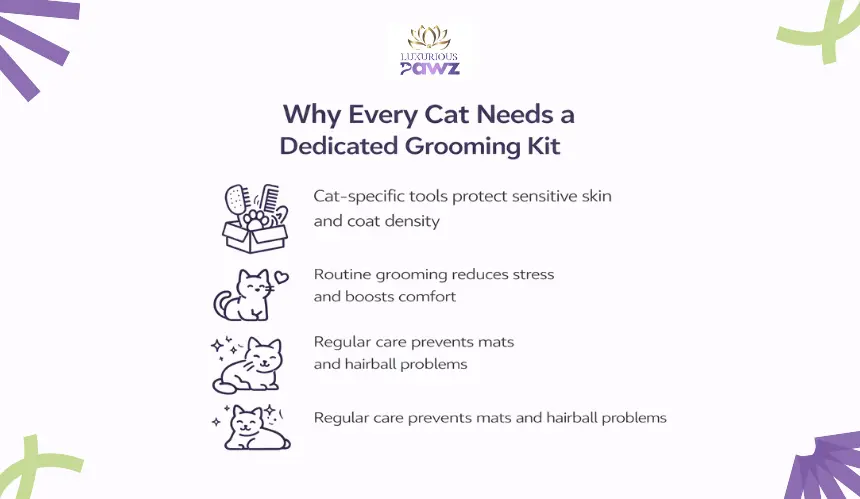
Grooming is often misunderstood as an optional task because cats appear independent and self-cleaning. In reality, a dedicated grooming kit plays a quiet but essential role in maintaining a cat’s physical comfort and emotional well-being.
Unlike improvised or shared tools, cat-specific grooming items are designed around feline skin structure, coat density, and natural behaviors. This difference directly affects how comfortable grooming feels and how effective it is over time.
How Does a Grooming Kit Support a Cat’s Natural Coat and Skin Balance
A cat’s coat relies on natural oils produced by the skin to stay healthy and protective. Regular brushing with the right tools helps distribute these oils evenly across the fur, preventing dry patches and dull areas.
Without proper grooming tools, loose hair tends to stay trapped close to the skin, increasing the risk of matting and uneven oil buildup. Over time, this imbalance can lead to discomfort that cats cannot easily communicate but clearly feel.
Why Routine Grooming Matters Even for Indoor Cats
Indoor cats may avoid outdoor dirt, but they still shed continuously and groom themselves by licking. Loose fur that is not removed through brushing often ends up swallowed, contributing to frequent hairballs and digestive irritation.
A grooming kit allows owners to remove excess hair before it becomes a problem, keeping the coat lighter and the cat more comfortable. For indoor cats, grooming becomes a form of preventive care rather than a response to visible mess.
How Grooming Tools Reduce Stress During Regular Handling
Cats are highly sensitive to touch and unfamiliar sensations, which is why understanding grooming anxiety signals in pets helps make handling calmer and more predictable. When grooming is done with tools designed for their body and introduced gradually, it becomes predictable and calming rather than overwhelming. A consistent grooming kit helps establish a routine that builds trust, especially for cats that are naturally cautious or anxious.
Over time, grooming sessions can feel less like a restraint and more like a moment of quiet connection, which strengthens the bond between the cat and its owner.
This foundational understanding sets the stage for choosing the right grooming tools, ensuring that each item in the kit serves a clear purpose without adding unnecessary complexity.
Core Grooming Tools Every Cat Owner Should Have
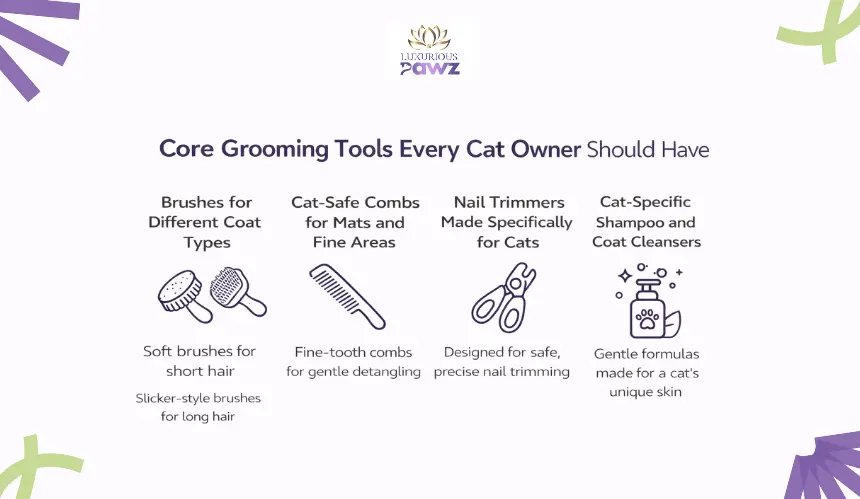
A grooming kit is most effective when it focuses on tools that address everyday needs without adding unnecessary complexity. Each essential item plays a distinct role in maintaining coat condition, skin comfort, and basic hygiene.
When these tools are used correctly, grooming becomes a predictable routine that supports a cat’s well-being rather than a stressful interruption.
1. Brushes Designed for Different Coat Types
Brushes form the foundation of routine cat grooming because they manage shedding and support coat health. Short-haired cats benefit from soft bristle or rubber brushes that lift loose hair while staying gentle on the skin.
Long-haired cats require slicker-style brushes that reach deeper into dense coats to prevent tangles from tightening into mats. Choosing a brush based on coat length and density reduces pulling, keeps grooming comfortable, and helps distribute natural oils evenly across the fur.
2. Cat-Safe Combs for Mats and Fine Areas
Combs are essential for grooming areas that brushes cannot handle with enough precision. Fine-tooth combs work well around the ears, chest, underarms, and tail base, where fur is more prone to knotting.
Regular combing helps detect early mat formation and separates hair gently before tangles become painful or require guidance on safely removing stubborn mats. This level of detail grooming protects sensitive spots without overworking the rest of the coat.
3. Nail Trimmers Made Specifically for Cats
Cat nails require tools designed for their smaller size and curved structure. Cat-specific nail trimmers provide better visibility and control, allowing gradual trimming without cutting too close to the quick.
Consistent nail care helps prevent accidental scratches, snagging on furniture, and discomfort while walking. Using the right trimmers makes the process calmer and safer for both the cat and the owner.
4. Cat-Specific Shampoo and Coat Cleansers
While cats rarely need frequent baths, a feline-safe shampoo is an important part of a complete grooming kit. Cat skin has a unique pH balance that can be disrupted by human or dog products. Gentle, hypoallergenic shampoos clean the coat without stripping protective oils.
For cats that resist water, waterless coat cleansers provide a low-stress way to manage odor and light soiling when needed.
These core tools cover the essential aspects of at-home cat grooming. Once these basics are in place, owners can evaluate whether additional grooming items are necessary based on individual coat conditions or behavioral needs.
Optional but High-Value Additions To Cat Grooming Kit Based on Cat Needs
Once the core grooming tools are in place, some cats benefit from a few carefully chosen additions. These tools are not essential for every household, but they can significantly improve comfort and grooming efficiency when specific coat patterns, shedding levels, or behavioral traits are present.
1. Deshedding Tools for Heavy Shedders
Cats with thick undercoats or seasonal shedding cycles often release more loose fur than standard brushes can manage. Tools used by professional cat deshedding services are designed to reach beneath the topcoat and remove excess undercoat hair without cutting or damaging the fur.
When used sparingly and with proper technique, these tools reduce shedding around the home and help limit hairball formation.
Well-known examples include undercoat tools similar in design to those from FURminator and Hertzko, which are built to target loose hair efficiently while staying gentle on the skin.
2. Grooming Wipes and Ear Care Products
Some grooming needs fall outside full brushing or bathing routines. Grooming wipes offer a simple way to clean paws, facial areas, and coat surfaces after minor messes or litter box contact. Ear care products, when used correctly, help manage wax buildup and keep ears comfortable without deep cleaning.
These items are especially useful for senior cats or those with limited mobility, allowing light hygiene maintenance without causing unnecessary stress.
3. Grooming Gloves for Nervous or Senior Cats
Not all cats respond well to traditional grooming tools. Grooming gloves provide a softer, more familiar sensation that mimics petting, making them ideal for anxious or aging cats.
While they do not replace brushes or combs, gloves help remove loose hair during bonding moments and encourage tolerance for touch. For cats that resist structured grooming sessions, this option offers a gentle bridge toward better coat maintenance.
How to Choose the Right Grooming Tools for Your Cat
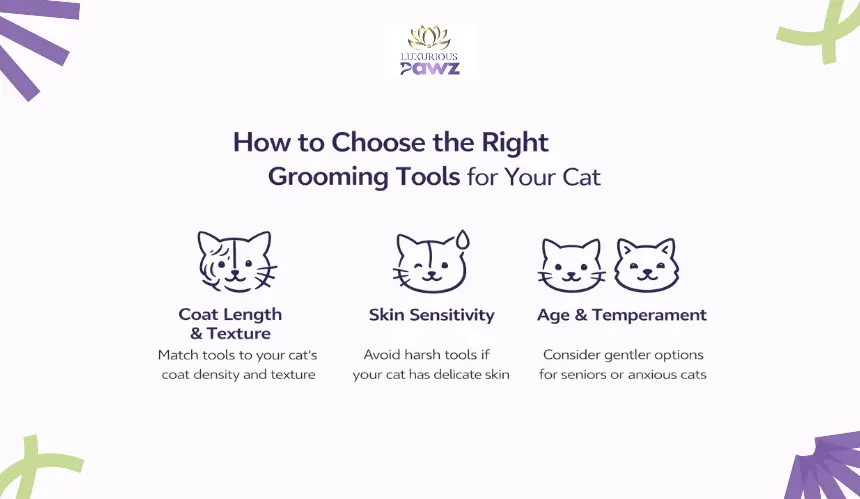
Choosing grooming tools works best when decisions are based on the cat rather than trends or convenience. Coat structure, skin condition, and behavioral comfort all influence how effective a grooming routine will be. When tools align with these factors, grooming becomes calmer and more consistent instead of something a cat tries to avoid.
What Role Coat Length and Texture Play in Tool Selection
Coat length is easy to notice, but texture determines how grooming tools interact with the fur. Fine or silky coats respond better to soft brushes that glide smoothly without tugging. Dense or double coats require tools capable of reaching beneath the surface to lift trapped hair.
Selecting tools that match both length and texture prevents skin irritation and ensures loose fur is removed efficiently.
How Skin Sensitivity Affects Grooming Tool Choices
Cats with sensitive skin often react strongly to pressure or sharp edges. Rubber brushes, wide-tooth combs, and gentle grooming products reduce friction and lower the risk of irritation.
Paying attention to a cat’s body language during grooming helps identify discomfort early. Subtle signs such as twitching or sudden stillness usually signal the need for a softer approach.
Why Age and Temperament Matter When Selecting Tools
Age changes how a cat experiences grooming. Kittens benefit from lightweight tools that help build familiarity, while senior cats often need gentler options that account for stiffness or thinning skin.
Temperament also plays a role, as confident cats may accept structured brushing, while anxious cats respond better to slower, less intrusive methods. Choosing tools that respect these differences helps maintain trust and long-term grooming success.
How Often Should Each Cat Grooming Tool Be Used
Even the right grooming tools can cause discomfort if they are used too frequently or at the wrong time. Cats thrive on balance and predictability, and grooming schedules should respect the natural rhythm of the coat and skin.
Understanding how often each tool should be used helps maintain coat health while avoiding overstimulation or irritation.
How Frequently Should Brushes Be Used for Coat Maintenance
Most cats benefit from brushing several times a week, while long-haired cats often need daily sessions to prevent tangles from forming. Short-haired cats usually require less frequent brushing, but consistency still matters for shedding control and oil distribution.
Regular brushing keeps loose hair from accumulating near the skin and reduces the amount of fur a cat ingests during self-grooming.
When Combing Should Be Part of the Pet Grooming Routine
Combs are best used on an as-needed basis rather than daily. Focused combing once or twice a week helps manage fine areas prone to matting, such as behind the ears or along the chest.
Overusing a comb on the same spots can irritate sensitive skin, so gentle, targeted sessions are more effective than frequent full-coat combing.
How Often Nail Trimming Is Typically Needed for Cats
Most cats require nail trimming every two to four weeks, depending on growth rate and activity level. Indoor cats often need more frequent trims because their claws experience less natural wear. Keeping nails at a manageable length prevents snagging, accidental scratches, and discomfort while walking or stretching.
When to Use Shampoos and Coat Cleansers on Cats
Bathing should remain occasional and purpose-driven rather than routine. For most cats, a full bath is only necessary every 6 to 12 weeks, and only when the coat becomes noticeably soiled, greasy, or contaminated with substances that brushing alone cannot remove. Overbathing within shorter intervals can strip natural oils and lead to dry, irritated skin.
Waterless coat cleansers fit into a lighter maintenance timeline and can be used every 2 to 3 weeks between baths to freshen the coat and manage minor odors or surface debris. These products help maintain cleanliness without disrupting the skin’s protective oil balance.
Using grooming tools at appropriate intervals keeps care effective without overwhelming the cat. A measured routine supports comfort, preserves skin health, and makes grooming feel like a natural part of daily life rather than a source of stress.
Maintaining and Cleaning Your Cat Grooming Kit
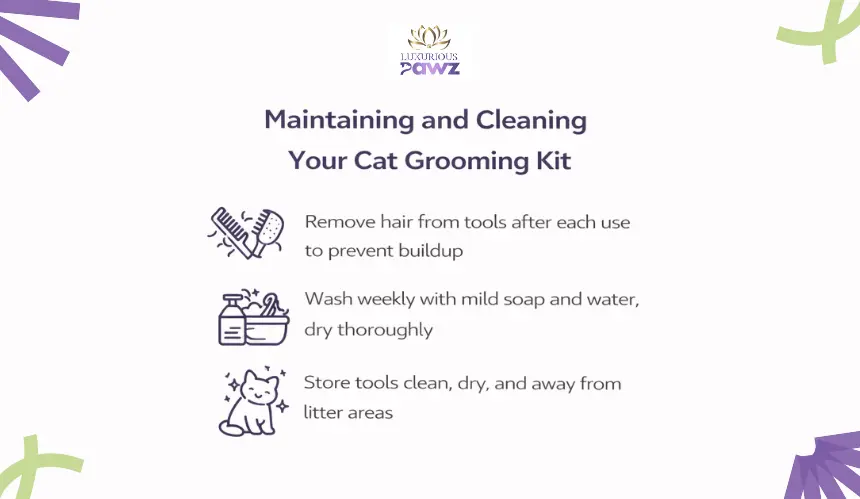
A grooming kit only stays effective when the tools themselves are kept clean and well-maintained. Hair buildup, residue, and moisture can quickly turn helpful tools into sources of irritation or contamination.
Proper maintenance protects a cat’s skin, extends tool lifespan, and ensures every grooming session remains safe and comfortable.
Why Cleaning Grooming Tools Matters for Skin Health
Loose hair, skin oils, and debris collect on brushes and combs after every use. If left uncleaned, this buildup can transfer bacteria back onto the coat and skin during the next session.
Regular cleaning prevents clogged bristles and teeth from scratching the skin or pulling fur unevenly. Clean tools glide more smoothly, making grooming feel gentler and more predictable for the cat.
How Often Should Cat Grooming Tools Be Cleaned
Brushes and combs should have loose hair removed after every grooming session. A deeper wash using warm water and mild soap is recommended once a week for tools used frequently.
Nail trimmers benefit from wiping with a clean cloth after each use and occasional sanitizing to remove residue. Shampoos, wipes, and cleansers should always be sealed properly and stored according to manufacturer guidance to maintain effectiveness.
Best Practices for Drying and Storing Grooming Tools
Moisture left on grooming tools can lead to rust, mold, or bacterial growth. After washing, tools should be thoroughly dried before being stored.
Keeping grooming items in a clean, dry container away from litter areas helps preserve hygiene. Organized storage also makes grooming sessions calmer by reducing unnecessary delays or distractions.
Maintaining a clean grooming kit ensures that care routines remain beneficial rather than counterproductive. With proper upkeep, grooming tools continue to support coat health, skin comfort, and a stress-free experience for both the cat and the owner.
Your cat trusts you with their comfort, their health, and their sense of safety. When grooming feels calm and caring, that trust grows even deeper.
If you want your cat to enjoy expert-level care without stress or guesswork, Luxurious Pawz is here to help. From gentle handling to thoughtful grooming routines tailored to your cat’s unique needs, every detail is approached with patience and love.
Frequently Asked Questions
Can a grooming kit help reduce anxiety in cats over time?
Consistency plays a major role in how cats perceive grooming. Using the same tools, setting, and routine helps cats anticipate what will happen next, which reduces fear responses. Over time, predictable grooming sessions can lower anxiety and make handling feel safer rather than intrusive.
Are electric grooming tools safe for cats?
Electric grooming tools can be safe when designed specifically for cats, but they are not suitable for every temperament. Some cats react strongly to vibration and sound, which can increase stress. For sensitive or nervous cats, manual grooming tools are often better tolerated and easier to control.
What should cat owners avoid storing in a grooming kit?
Human grooming products, scented wipes, and sharp household scissors should never be included in a cat grooming kit. These items are not formulated for feline skin or anatomy and can cause irritation or injury if used accidentally.
Does grooming frequency change during seasonal shedding?
Seasonal coat changes can increase the amount of loose fur, especially during spring and fall. While grooming tools remain the same, sessions may need to be slightly longer or more attentive during these periods to manage shedding comfortably without adding stress.
Is it normal for cats to resist grooming at first?
Initial resistance is common, especially for cats with limited grooming exposure. Short sessions, calm handling, and gradual introduction of tools help build tolerance. Patience during early attempts often leads to better long-term acceptance and cooperation.